
30 ideas
30 living room ideas around the sofa
Thirty practical ideas for arranging, lighting and styling your living room around the sofa.
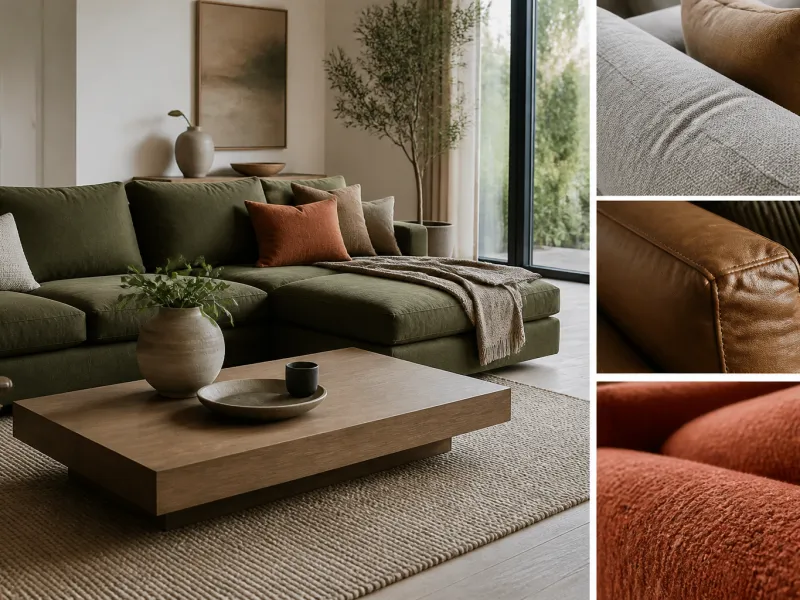
Your sofa is usually the biggest piece of furniture in the room, and it sets the tone for everything else around it. These 30 living room ideas focus on the small decisions that make the biggest difference: where you place the sofa, how you light it, what goes underfoot and what you layer on top. If you are still choosing which sofa to buy, our overview of sofa types is a good place to start.
Each idea below is tagged by style, small space, family friendly, modern, classic, scandi or cosy, and by how much effort it takes, an easy change you can make this weekend or a small project worth planning for. Unfamiliar terms such as tight back or loose cushions are explained in our glossary.
 01
01Float the sofa away from the wall
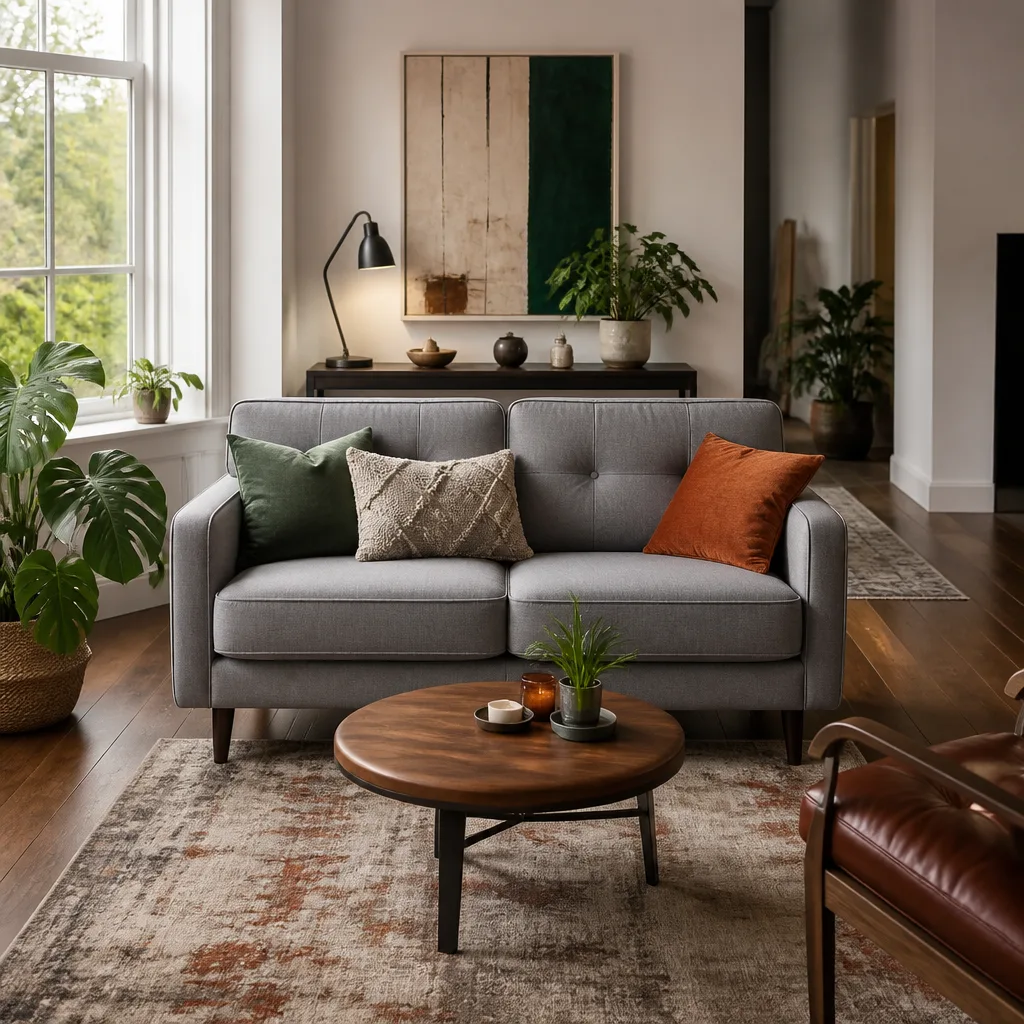
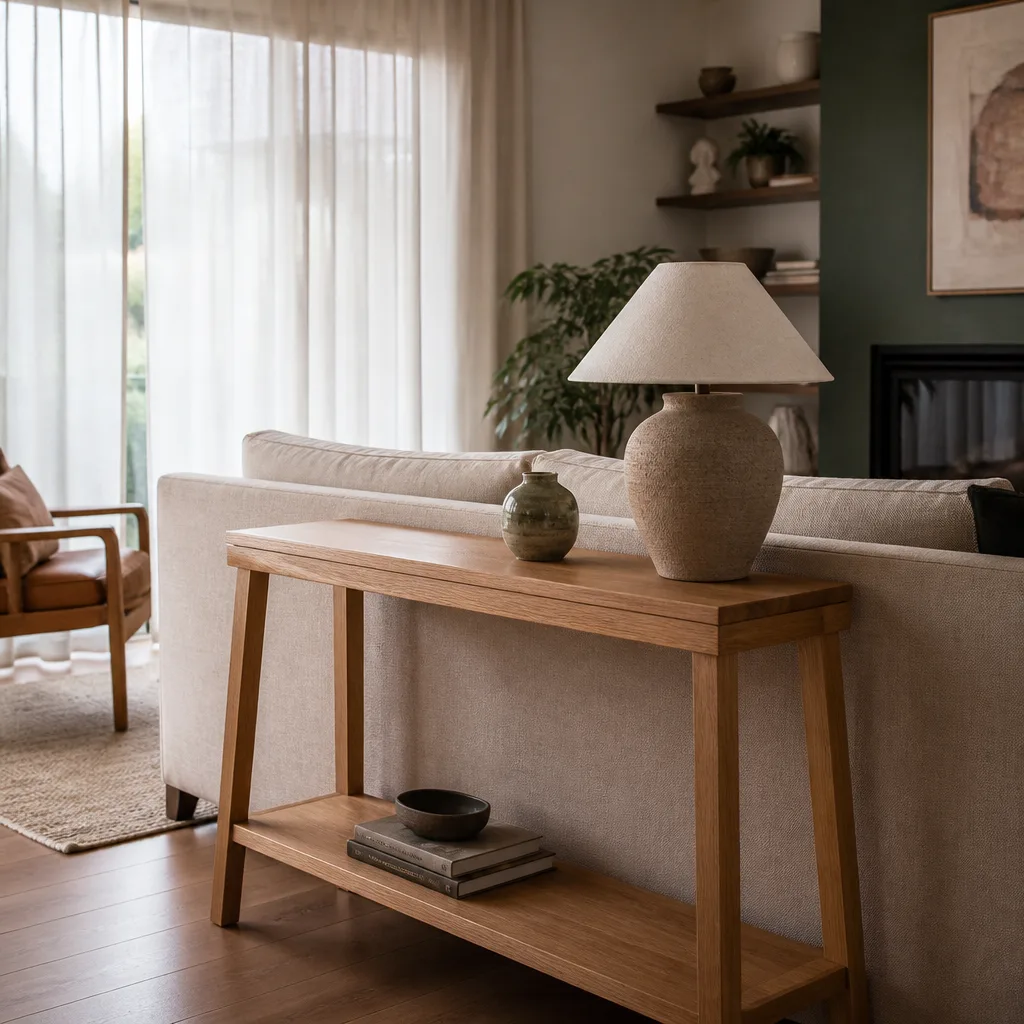
Pushing a sofa against the wall can make a small room feel like a waiting room. Floating it a short distance from the wall, even just 20 to 30 cm (8 to 12 inches), opens up a walkway behind it and lets the seating area feel like its own zone. The gap also gives you room for a slim console table or a stack of books, which adds storage without crowding the floor.
You need: A sofa with a finished back, a slim console table or shelf, and enough floor depth to spare 20 to 30 cm.
- Measure the depth of the room and mark how far the sofa can move from the wall.
- Pull the sofa forward and check the walkway behind it feels comfortable to pass through.
- Slide a slim console table or narrow shelf into the gap.
- Style the console with a lamp, a tray or a small stack of books.
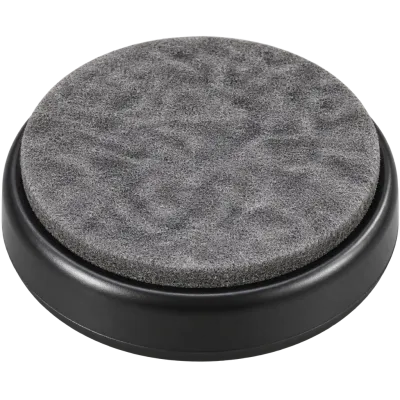 Matching productFurniture sliders and feet padsAmazon →
 02
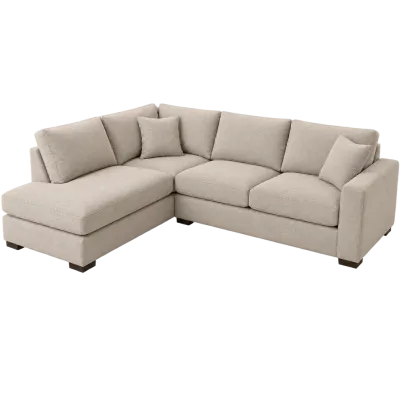
02Choose a corner sofa to hug two walls
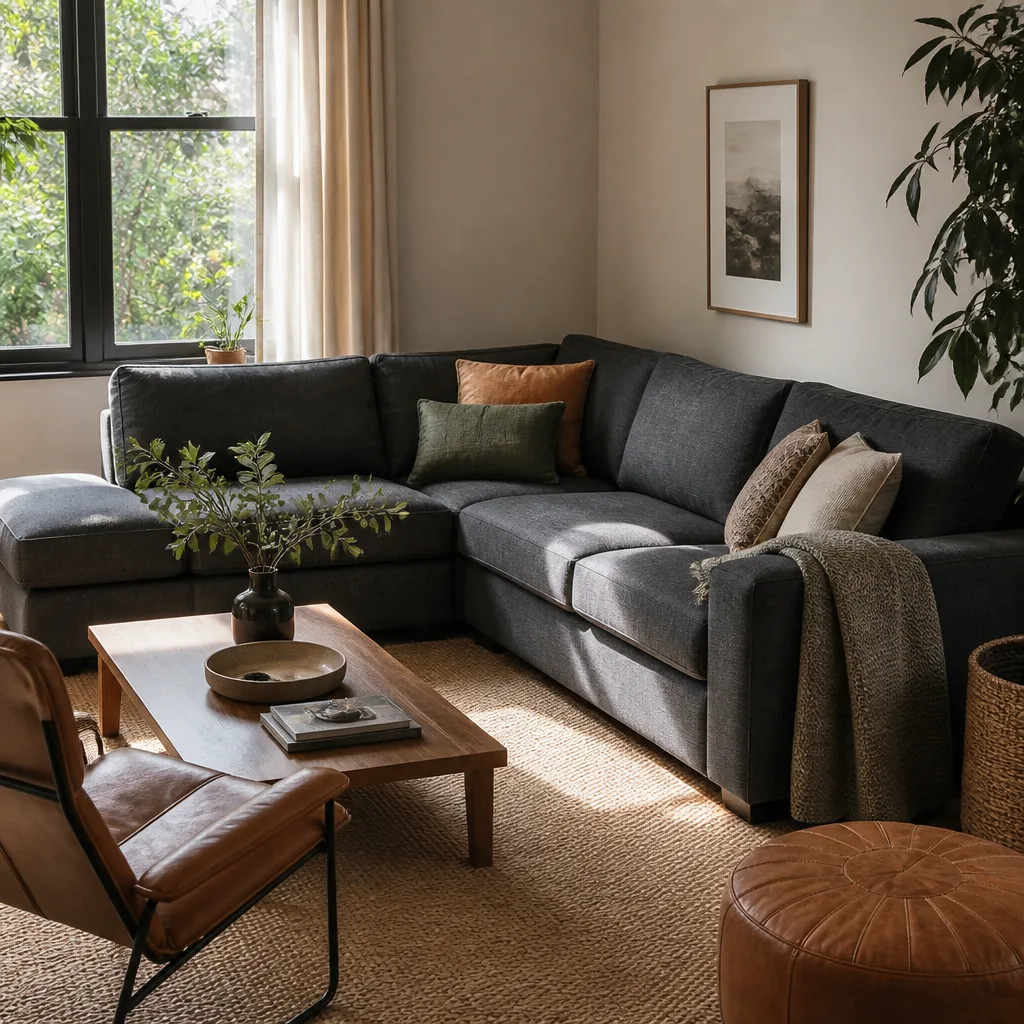
An L shaped or corner sofa uses a room's corner instead of a long wall, which frees up the rest of the floor for a rug, a chair or simply open space. Because the seating wraps around, it can seat more people than a straight sofa of a similar footprint. Choosing a version with a low back keeps sightlines open so the room does not feel boxed in.
You need: A corner or L shaped sofa sized to your room, plus a tape measure to confirm the door swing and walkway stay clear.
- Measure the corner and the clearances around doors and windows.
- Decide which side the chaise or longer arm should face for the best view and flow.
- Move the sofa into the corner and check nothing blocks natural walking paths.
- Add a small side table on the open end for drinks and lamps.
 Matching productCorner sofaAmazon →
 03
03Add a slim console table behind the sofa
When a sofa floats in the middle of a small room, a slim console table behind it fills the awkward space without eating into the walkway. It also gives you a spot for a lamp, which adds a second light source away from the ceiling fixture. Keep the table narrower than the sofa's depth so it does not jut out into the room.
You need: A console table no deeper than about 25 to 30 cm (10 to 12 inches), a table lamp, and a small tray or basket for odds and ends.
- Choose a console narrower than the sofa's back cushions.
- Place it centred behind the sofa with a small gap for airflow.
- Add a lamp at one end and a low bowl or tray at the other.
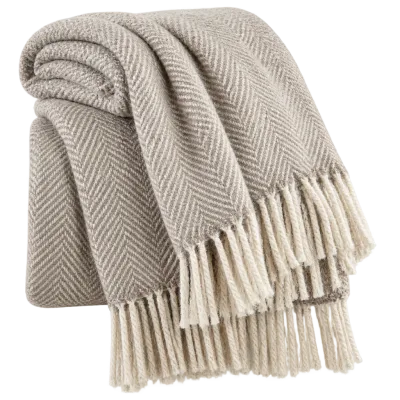
- Tuck a stool or a folded throw underneath if there is space.
 Matching productThrow blanketAmazon →
 04
04Hang a mirror opposite the sofa
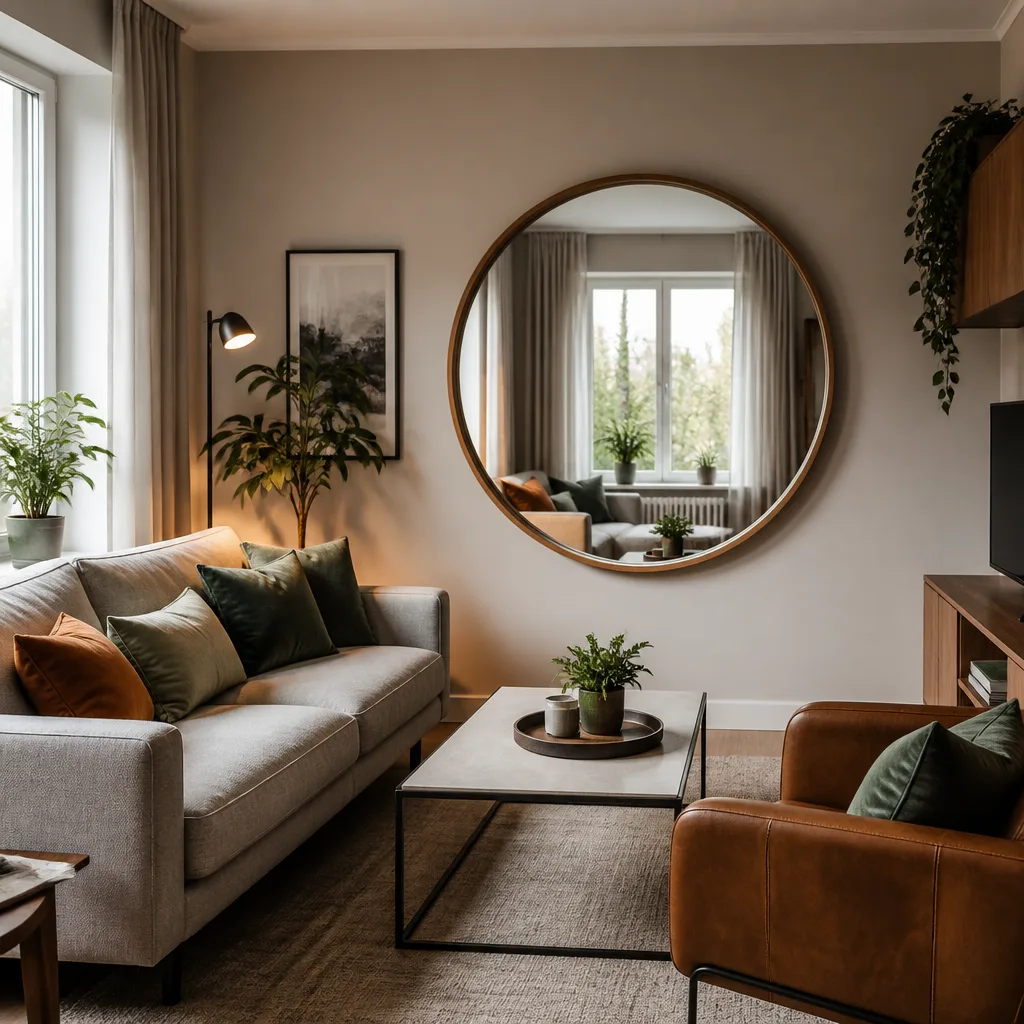
A mirror hung across from the sofa bounces daylight back into the room and doubles the sense of space, which matters most in a small living room. Position it so it reflects a window or a lamp rather than a blank wall, so the reflection actually adds light. A single large mirror tends to look calmer than a cluster of small ones.
You need: One mirror sized to roughly two thirds the width of the sofa, wall fixings rated for its weight.
- Hold the mirror up at seated eye height to check the reflection.
- Mark the fixing points and confirm they hit a stud or use suitable wall anchors.
- Hang the mirror so its centre sits roughly at eye level when seated on the sofa.
- Adjust its angle slightly to catch the window or a lamp.
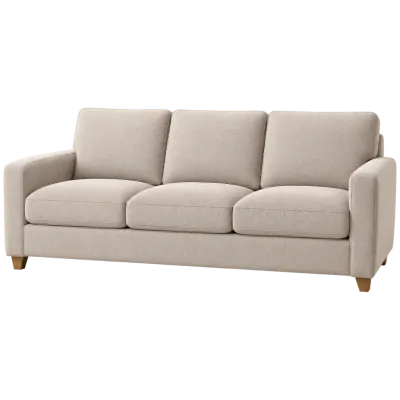 Matching productThree-seater sofaAmazon →
 05
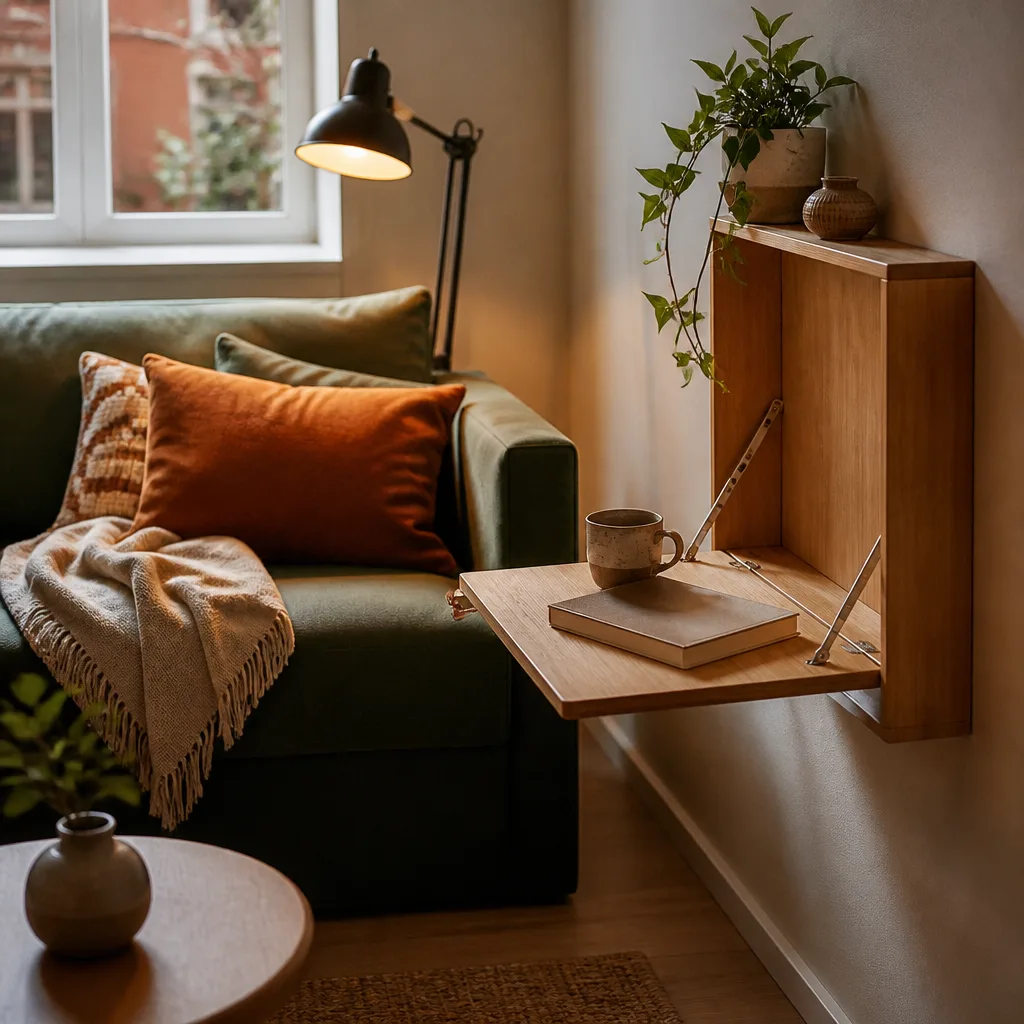
05Build a fold down shelf beside the sofa
In a small living room a fixed side table can block a doorway or a walkway when it is not needed. A fold down shelf beside the sofa gives you a landing spot for a mug or a book, then folds flat against the wall when the room needs the space back. It works especially well beside the sofa's armrest where a normal table would not fit.
You need: A fold down or drop leaf wall shelf, a spirit level, wall anchors suited to your wall type, a drill.
- Choose a wall spot within easy reach of the armrest.
- Mark the bracket height with a spirit level.
- Drill and fit the wall anchors, then attach the bracket and shelf.
- Test the fold mechanism and adjust the hinge tension if needed.
- Fold the shelf down and style it with a coaster and a small lamp.
Matching productThree-seater sofaAmazon →
 06
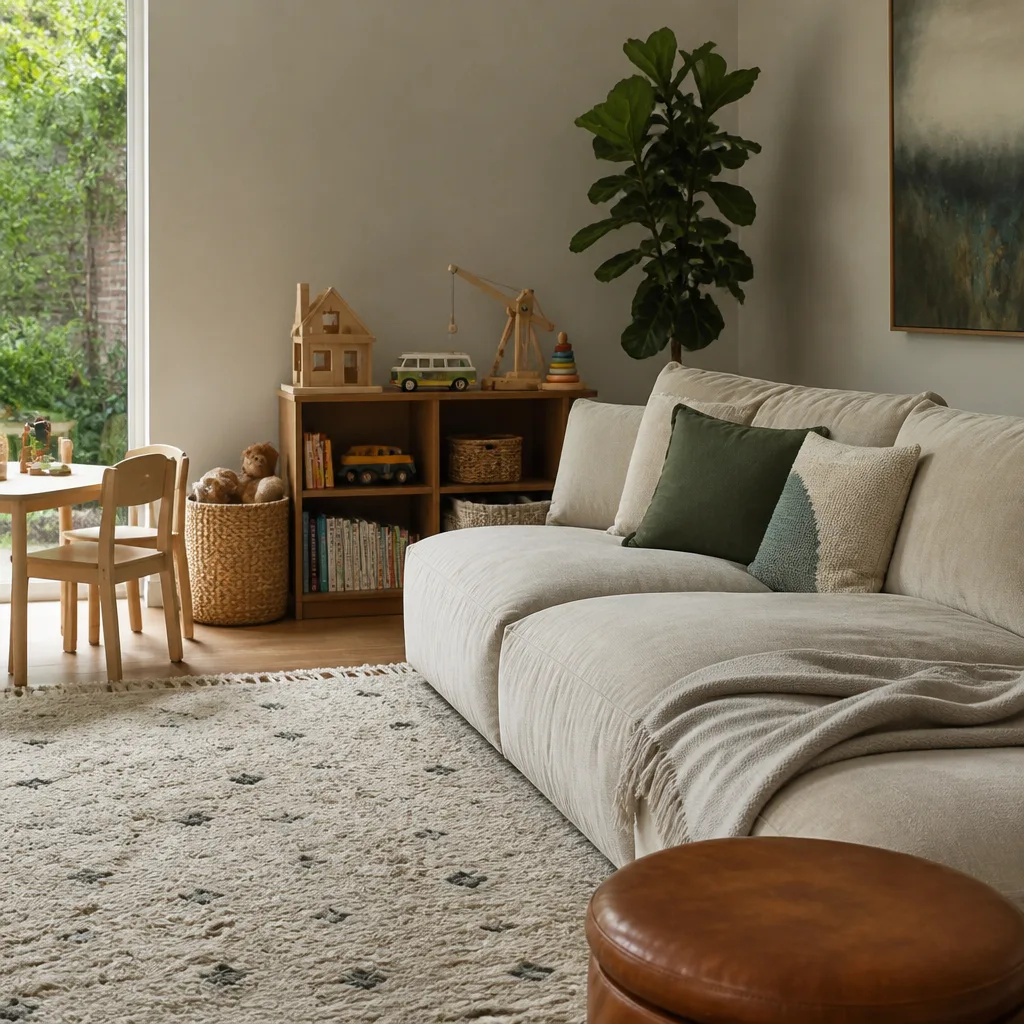
06Zone a play corner beside the sofa
Keeping the sofa within sight of a play corner means you can relax while still keeping an eye on younger children. A low open shelf at the sofa's side or behind it holds toys and books without them spreading across the whole floor. A soft, washable rug between the sofa and the shelf marks the zone clearly.
You need: A low open shelf or basket unit, a washable rug, storage baskets for smaller toys.
- Choose a corner within clear view of the main seating.
- Place the low shelf against the wall and fill it with baskets at child height.
- Lay a washable rug between the sofa and the shelf to define the zone.
- Keep a basket on hand for a quick tidy before guests arrive.
Matching productFurniture sliders and feet padsAmazon →
 07
07Dress the sofa in a performance fabric slipcover
A performance fabric slipcover protects the sofa underneath from spills, pet hair and everyday wear while still looking like a normal upholstered piece. Most are machine washable, so a stain becomes a laundry job rather than a crisis. Choosing a mid tone colour hides everyday marks better than very pale or very dark shades.
You need: A slipcover cut for your sofa's exact shape and size, plus a fabric care label check before the first wash.
- Measure the sofa's back, seat, arms and cushions.
- Order a slipcover matched to that shape rather than a generic stretch cover.
- Fit the cover starting from the back cushions, then the seat, then the arms.
- Tuck excess fabric into the seams for a snug finish.
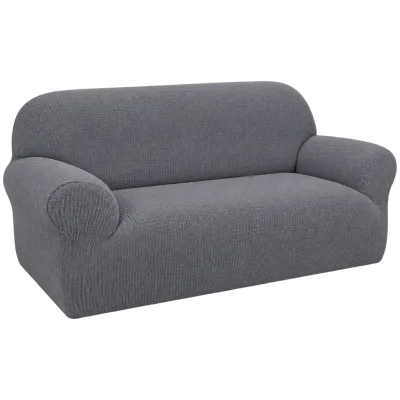 Matching productStretch sofa coverAmazon →
 08
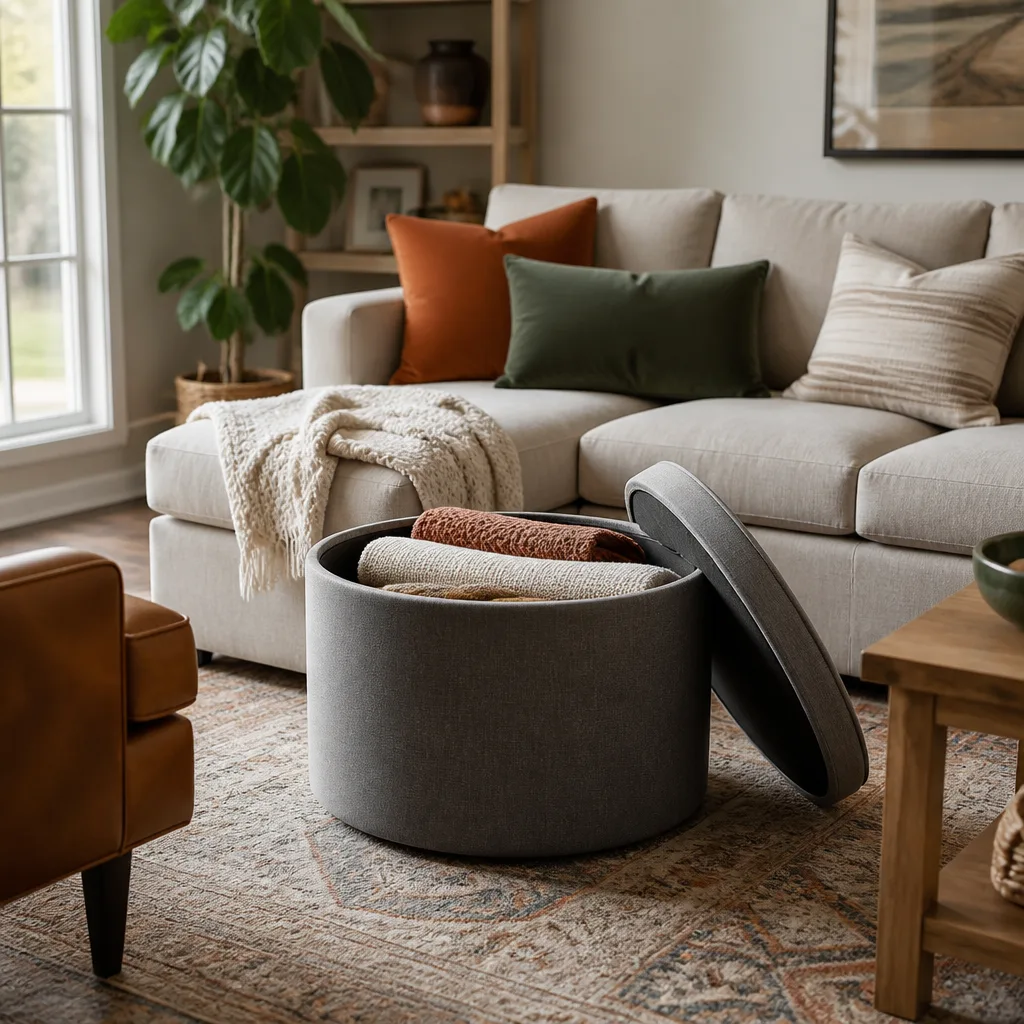
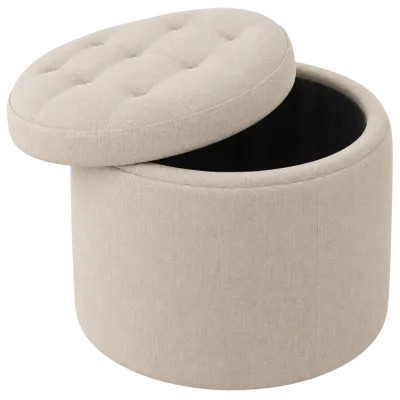
08Add a storage ottoman as a coffee table
A storage ottoman does the job of a coffee table while also swallowing the blankets, remotes and toys that tend to pile up around a family sofa. Choose one with a sturdy lid that can also take a tray, so it still works as a surface for drinks. Measure the space in front of the sofa first, since ottomans are often deeper than a slim coffee table.
You need: A storage ottoman sized for the space, a large tray for the lid, a tape measure.
- Measure the gap between the sofa and any opposite seating or the television unit.
- Choose an ottoman that leaves at least 40 cm (16 inches) of walking space around it.
- Position it centred in front of the sofa.
- Fill the interior with blankets, board games or spare cushions.
- Top the lid with a tray for cups and remotes.
 Matching productStorage ottomanAmazon →
 09
09Layer a stain resistant rug under the sofa
A busy household benefits from a rug that hides marks rather than shows every one, so a patterned, low pile, stain resistant weave works harder than a plain pale one. Positioning the front legs of the sofa on the rug anchors the seating area and stops the rug sliding when children play on it. A low pile also makes it easier to vacuum up crumbs and pet hair.
You need: A stain resistant rug at least large enough for the front legs of the sofa to sit on, a rug grip pad.
- Measure the seating area to size the rug.
- Lay a non slip grip pad underneath first.
- Position the rug so at least the front legs of the sofa rest on it.
- Square the rug to the sofa and any opposite furniture.
 Matching productUpholstery cleanerAmazon →
 10
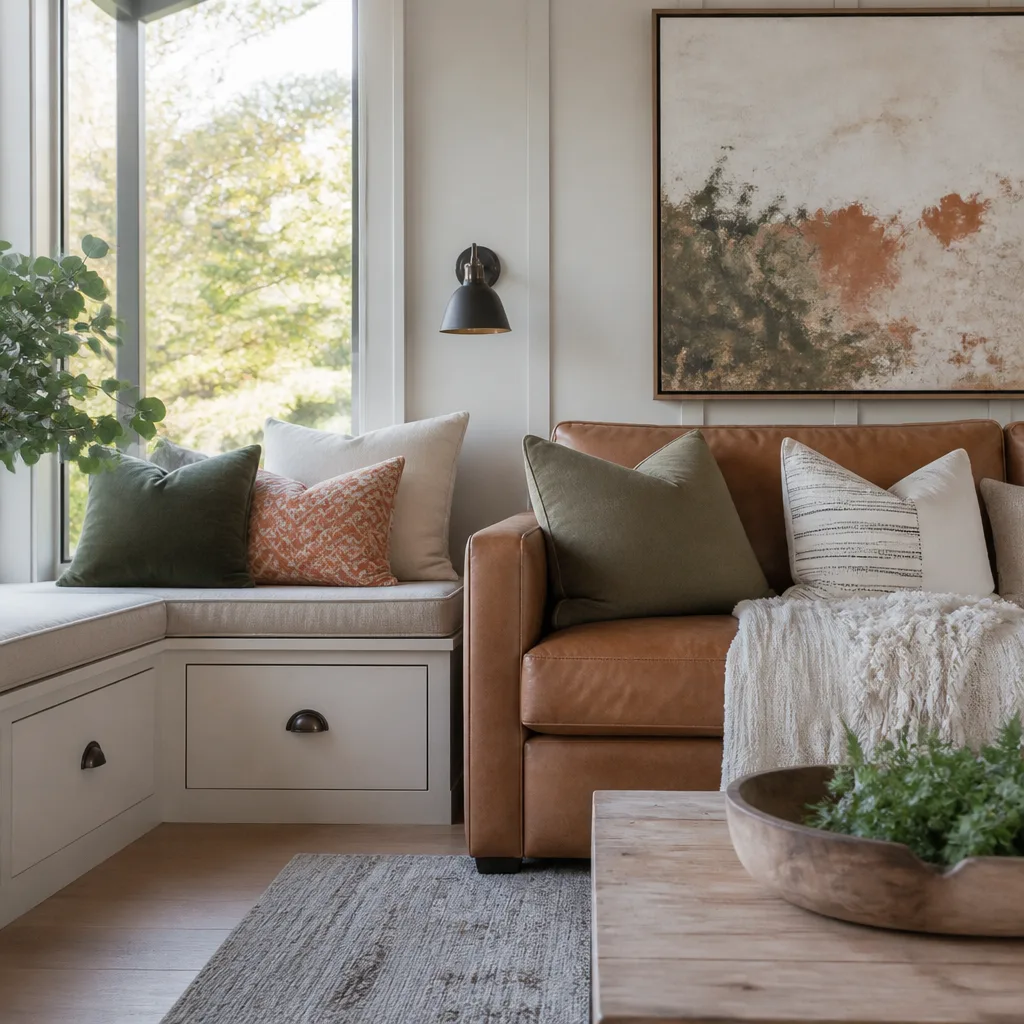
10Build a window seat beside the sofa
A built in window seat beside the sofa adds extra perching space for a family that outgrows one sofa's seat count, and drawers underneath the bench give you another place to stash toys or linens. Because it is fixed to the wall it also frees up floor space compared with adding a second chair. Keep the seat height close to the sofa's own seat height so the two feel like one continuous piece of furniture.
You need: Timber or flat pack storage bench units, cushions cut to the bench length, screws and wall fixings, a saw if the bench needs trimming to fit.
- Measure the window recess or wall run beside the sofa.
- Build or fit the storage bench units to that length.
- Secure the bench to the wall and floor for stability.
- Cut or order a cushion pad to the bench's dimensions.
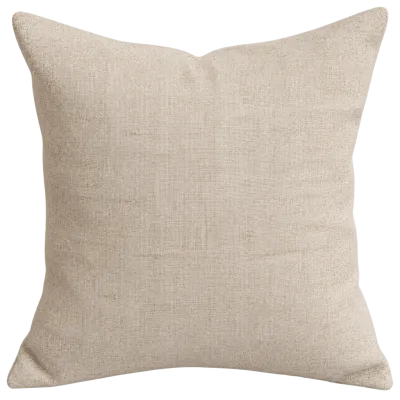
- Add cushions and a throw to match the sofa.
 Matching productScatter cushionsAmazon →
 11
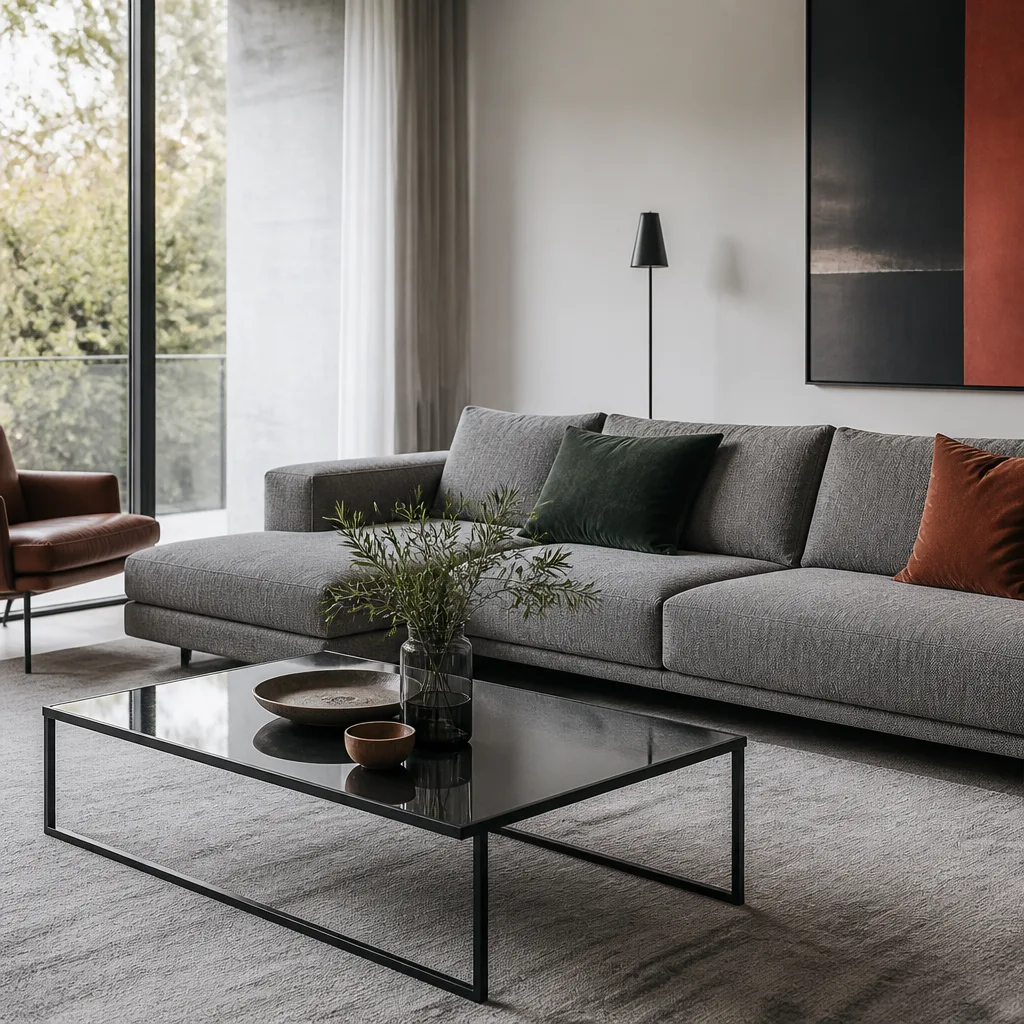
11Pair the sofa with a low slung coffee table
A contemporary sofa with a low, wide profile looks best paired with a coffee table that sits close to the same height, rather than a taller traditional table that breaks the horizontal line. Metal, glass or a slim timber top keep the look light rather than heavy. Leave enough space around the table for legs and easy movement.
You need: A coffee table roughly the same height as the sofa's seat cushions, about 40 to 45 cm (16 to 18 inches) of clearance around it.
- Measure the sofa's seat height as a guide.
- Choose a coffee table close to that height or slightly lower.
- Position it centred in front of the sofa with even clearance on both sides.
- Style the top with one or two objects rather than a crowded surface.
Matching productScatter cushionsAmazon →
 12
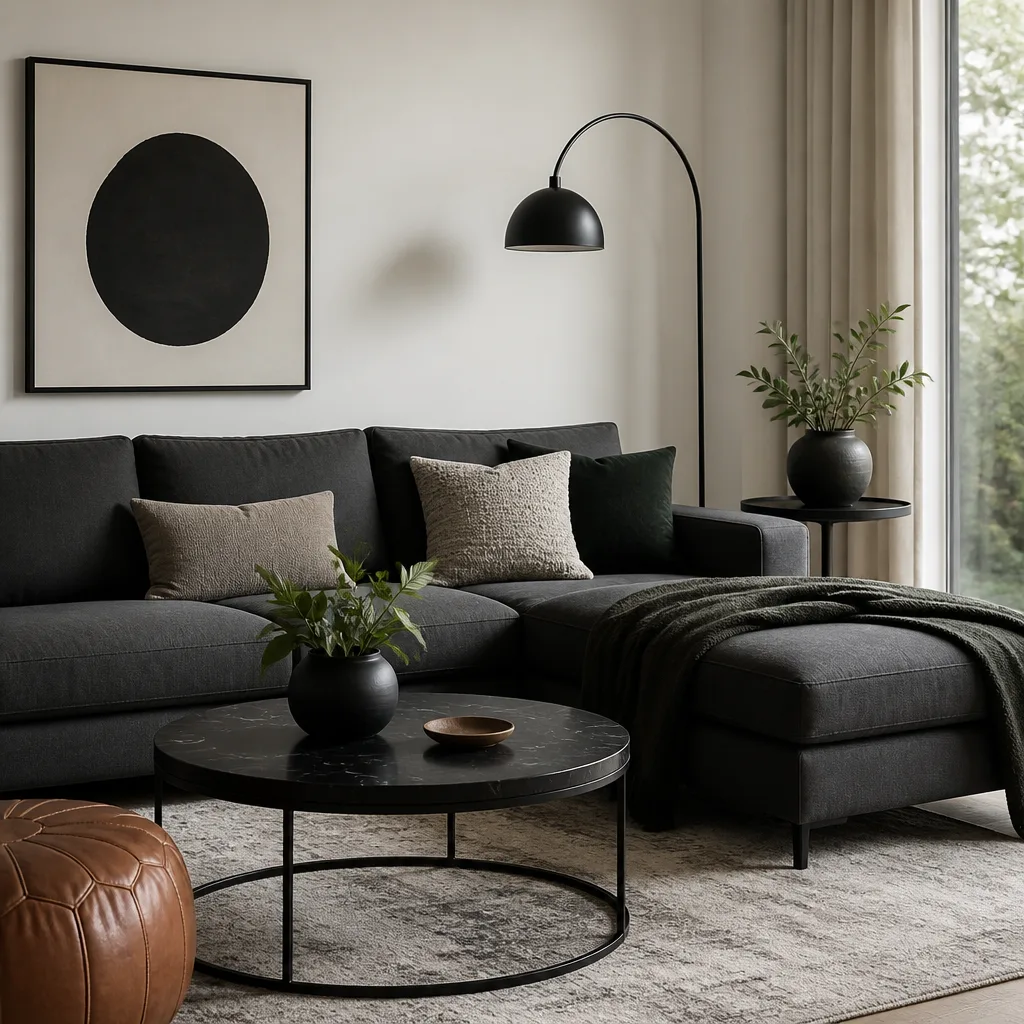
12Use a monochrome palette around the sofa
Keeping the sofa, walls, rug and accessories within a tight black, white and grey range gives a modern room a calm, considered look without needing bold colour decisions. Vary the tones through texture instead, such as a bouclé cushion against a smooth leather sofa, so the room still feels layered rather than flat. One warm wood or metal accent stops the palette feeling cold.
You need: A sofa in black, white or grey, cushions and a rug in the same tonal range, one warm accent material.
- Pick the sofa's tone as the anchor for the palette.
- Choose a rug and curtains within one or two shades of that tone.
- Layer cushions in varied textures rather than varied colours.
- Add one warm wood, brass or leather accent to balance the palette.
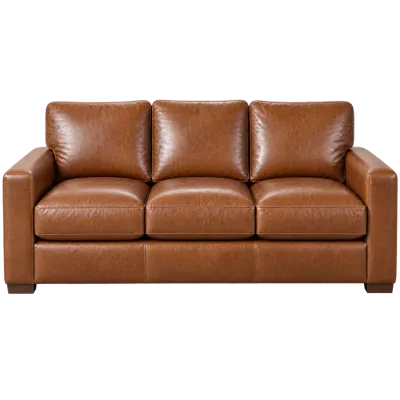 Matching productLeather sofaAmazon →
 13
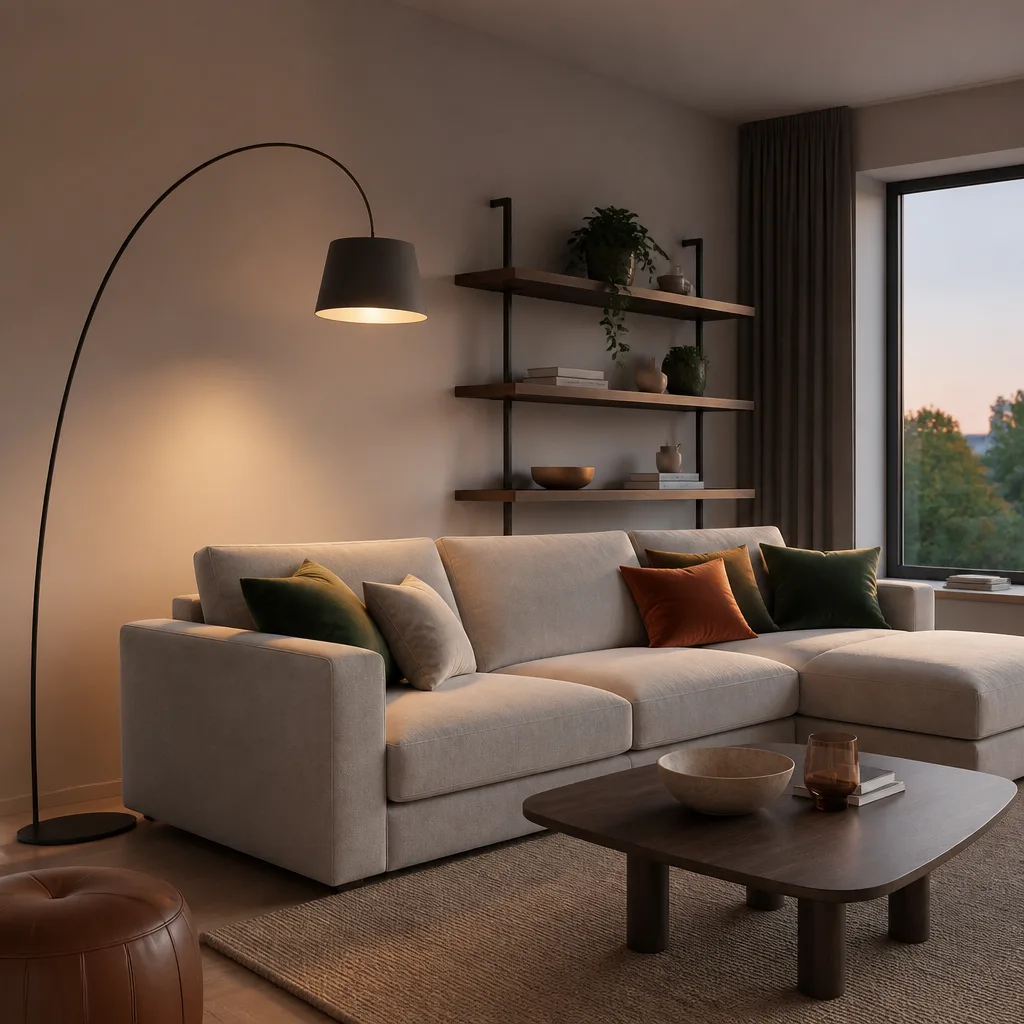
13Add a sculptural floor lamp beside the sofa
An arched or sculptural floor lamp positioned beside a modern sofa does double duty as reading light and as a piece of furniture in its own right, which suits a room with otherwise plain lines. Position the arm so the light falls over the shoulder of someone seated rather than straight down into their eyes. A dimmable bulb lets the same lamp handle both bright evenings and quiet reading.
You need: An arched or sculptural floor lamp, a dimmable warm white bulb, a nearby power socket or an extension routed neatly.
- Position the lamp base beside the armrest, out of the main walking path.
- Adjust the arm so light falls over the seated shoulder.
- Fit a dimmable warm white bulb.
- Route the cable along the skirting board or under the rug edge.
Matching productFurniture sliders and feet padsAmazon →
 14
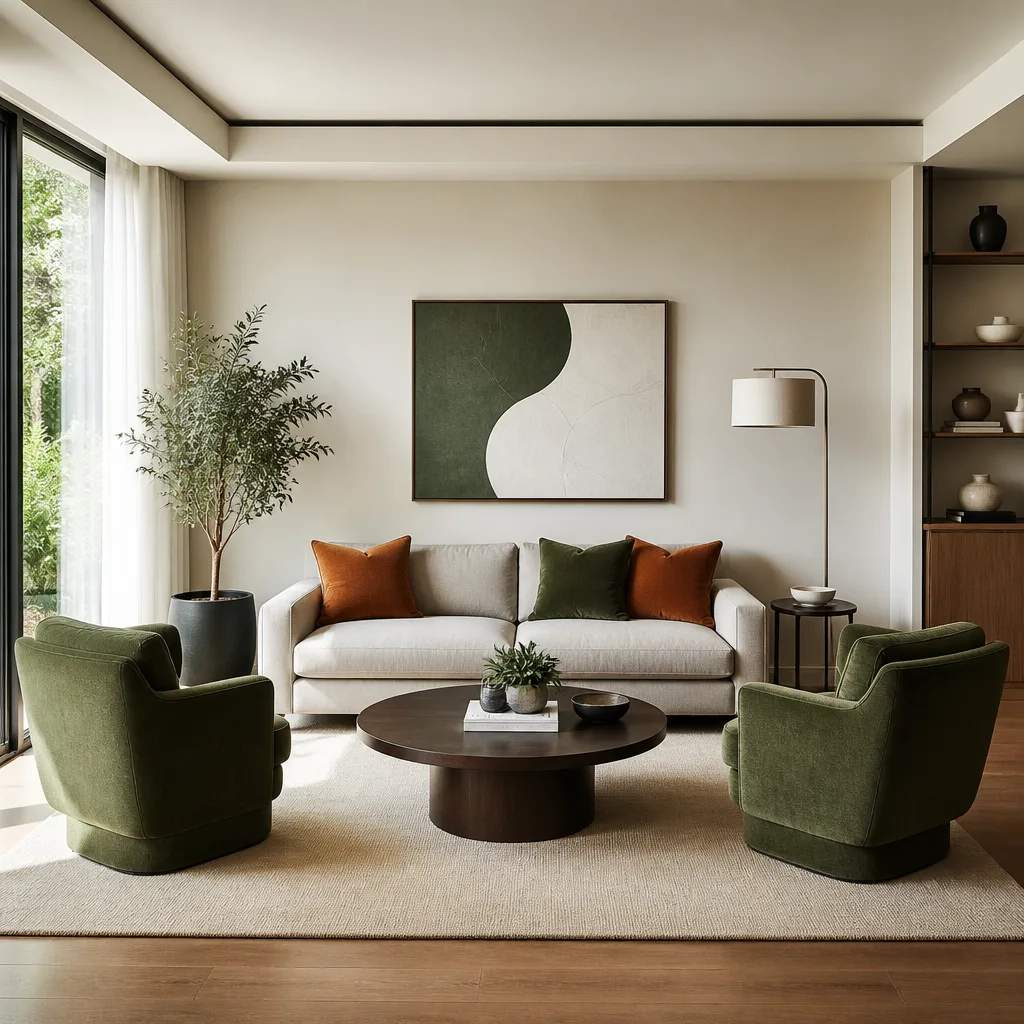
14Create a symmetric layout with two armchairs
Placing two matching armchairs directly opposite a sofa, with a coffee table between them, gives a modern living room a balanced, gallery like layout that also works well for conversation. Symmetry reads as calm and intentional, especially in a room with clean architectural lines. Keep the chairs an equal distance from the sofa so the arrangement stays visually even.
You need: A pair of matching armchairs, a coffee table sized to sit centred between the sofa and the chairs.
- Measure the space opposite the sofa for two chairs and a table.
- Position the coffee table centred on the sofa.
- Place the two armchairs at equal angles and distances facing the sofa.
- Check the layout leaves a clear walking path around the group.
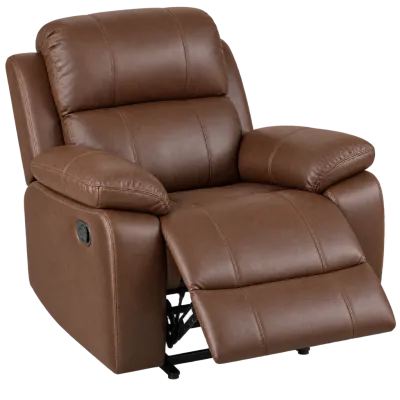 Matching productRecliner armchairAmazon →
 15
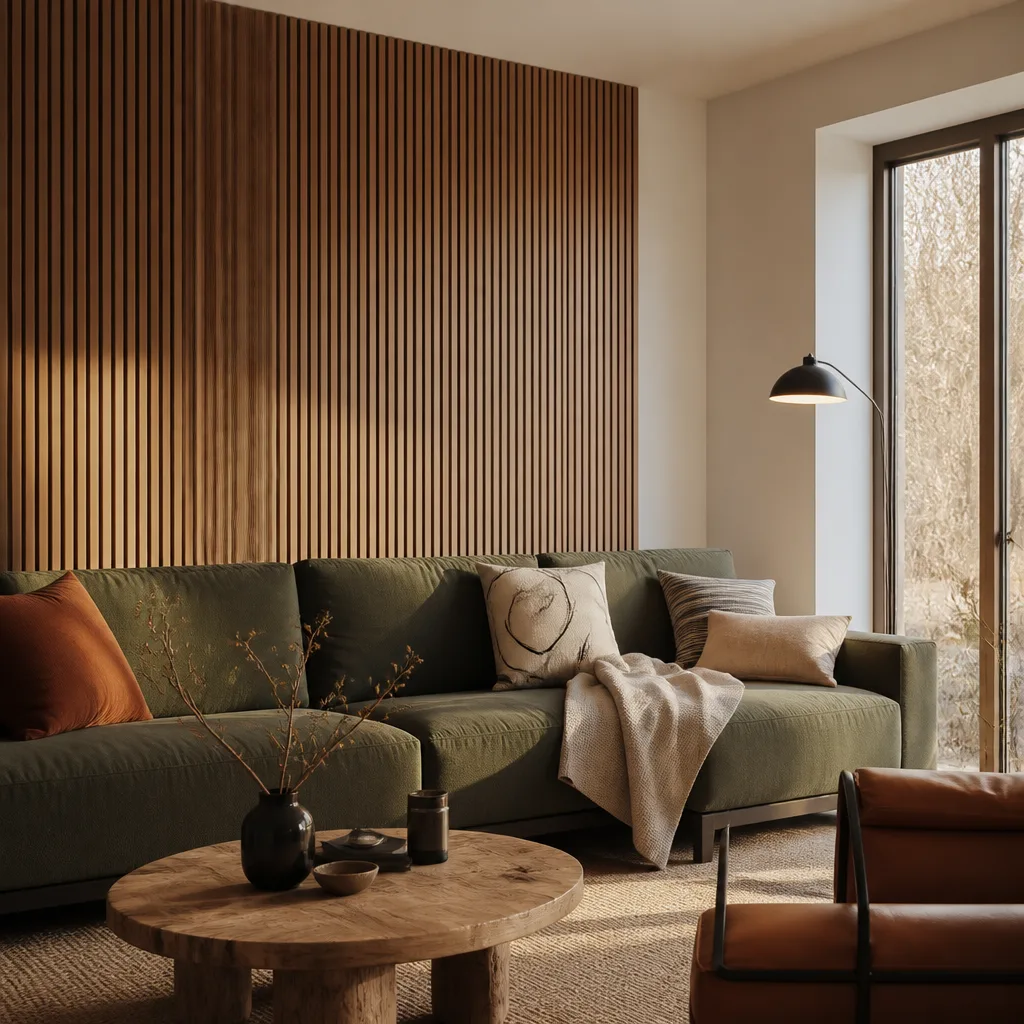
15Install a slatted wood panel behind the sofa
A slatted timber panel behind the sofa gives a plain wall texture and warmth without needing artwork, and it reads as a deliberately modern feature rather than a temporary fix. The vertical lines also make a low ceiling feel a little taller. Battens fixed first behind the slats create the depth and shadow lines that make the panel look built in rather than stuck on.
You need: Timber slats or a slat panel kit, mounting battens, wood glue or screws, a spirit level, a saw for trimming to width.
- Measure the wall width behind the sofa and plan the slat spacing.
- Fix horizontal battens to the wall at the top and bottom.
- Cut the slats to height and fix them to the battens at even spacing.
- Check each slat is level as you go.
- Finish with oil or wax if the timber is untreated.
Matching productThree-seater sofaAmazon →
 16
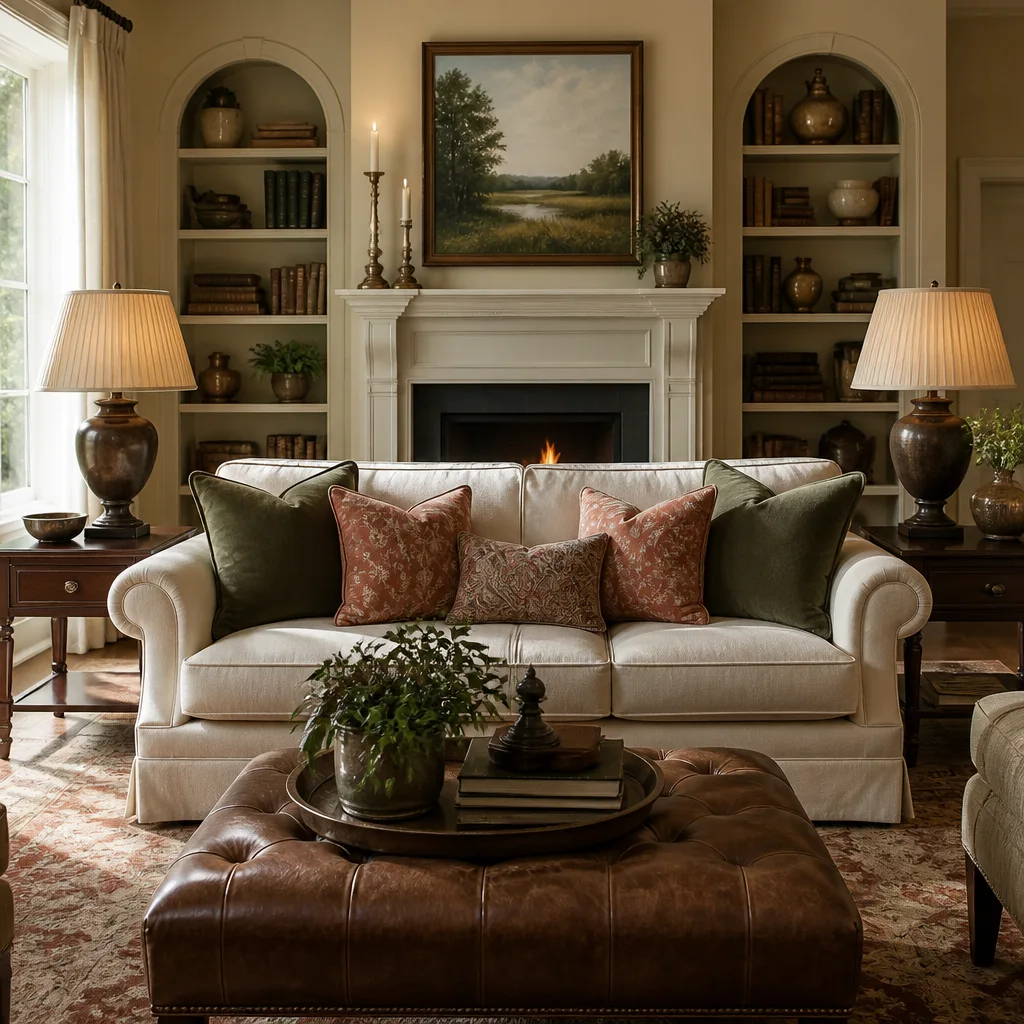
16Centre the sofa on the fireplace
A fireplace is a natural focal point in a classic living room, so centring the sofa directly opposite it, rather than off to one side, gives the room an anchored, formal balance. Flanking the sofa with a pair of side tables and matching lamps reinforces the symmetry. This layout suits rooms where the fireplace is used often, since everyone faces the warmth.
You need: A sofa sized to the fireplace wall's width, a pair of matching side tables and lamps.
- Measure the distance from the fireplace to find the room's centre line.
- Centre the sofa on that line, allowing safe clearance from the hearth.
- Add a matching side table and lamp at each end.
- Square a rug beneath the group to finish the symmetry.
Matching productThree-seater sofaAmazon →
 17
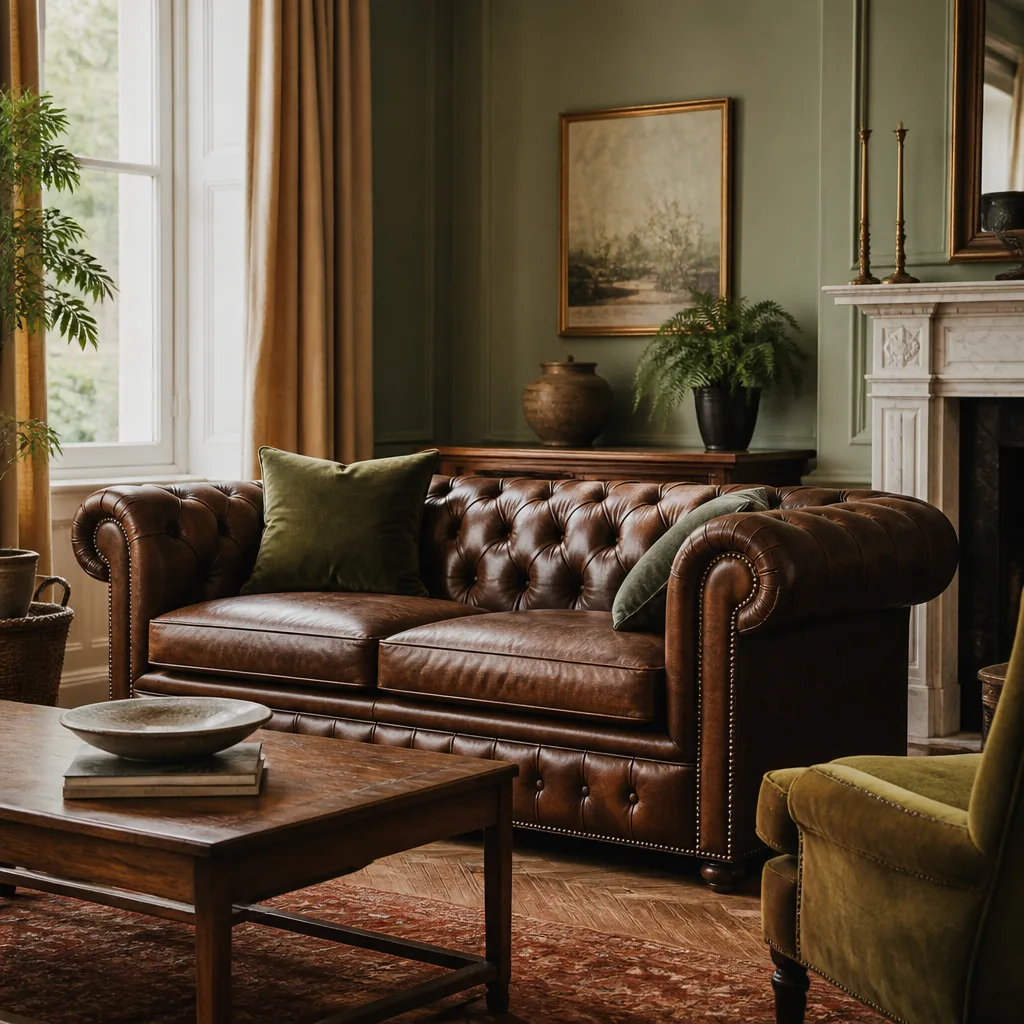
17Choose a chesterfield sofa as the anchor
A chesterfield's rolled arms and deep button tufting give a classic living room an anchor piece that needs very little else around it to look finished. Leather versions develop a patina over years of use, which suits a room built around lasting pieces rather than trend driven ones. Because the arms sit high, a chesterfield works best with a low coffee table so sightlines stay open.
You need: A chesterfield sofa in leather or a heavy woven fabric, a low coffee table, one or two simple cushions.
- Choose a chesterfield sized to the room without crowding the walking paths.
- Position it against the main wall or centred as the room's anchor.
- Add a low coffee table in front.
- Keep cushions simple so the tufting stays the focus.
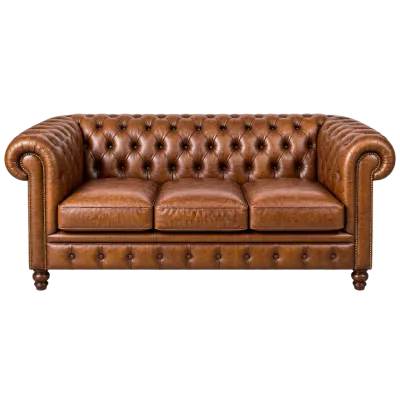 Matching productChesterfield sofaAmazon →
 18
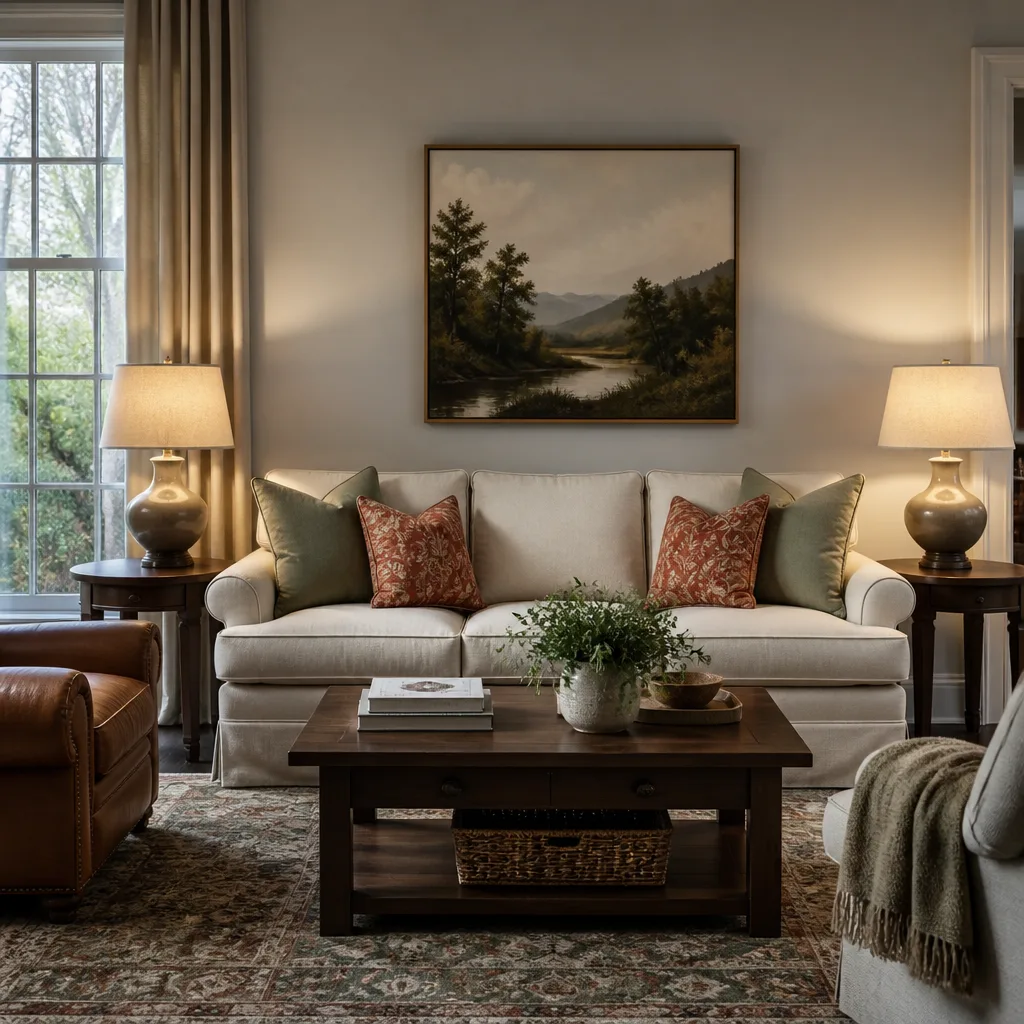
18Flank the sofa with a pair of table lamps
A matching pair of table lamps, one at each end of the sofa, gives a classic living room even, flattering light instead of relying on a single overhead fixture. The symmetry also reinforces the formal, balanced feel typical of classic interiors. Choose shades in a warm off white or cream so the light itself stays soft.
You need: Two matching table lamps, two side tables sized to sit level with the sofa's armrests, warm white bulbs.
- Place a side table at each end of the sofa.
- Set a matching lamp on each table.
- Fit warm white bulbs in both.
- Turn off the main ceiling light in the evening and rely on the lamps instead.
Matching productThree-seater sofaAmazon →
 19
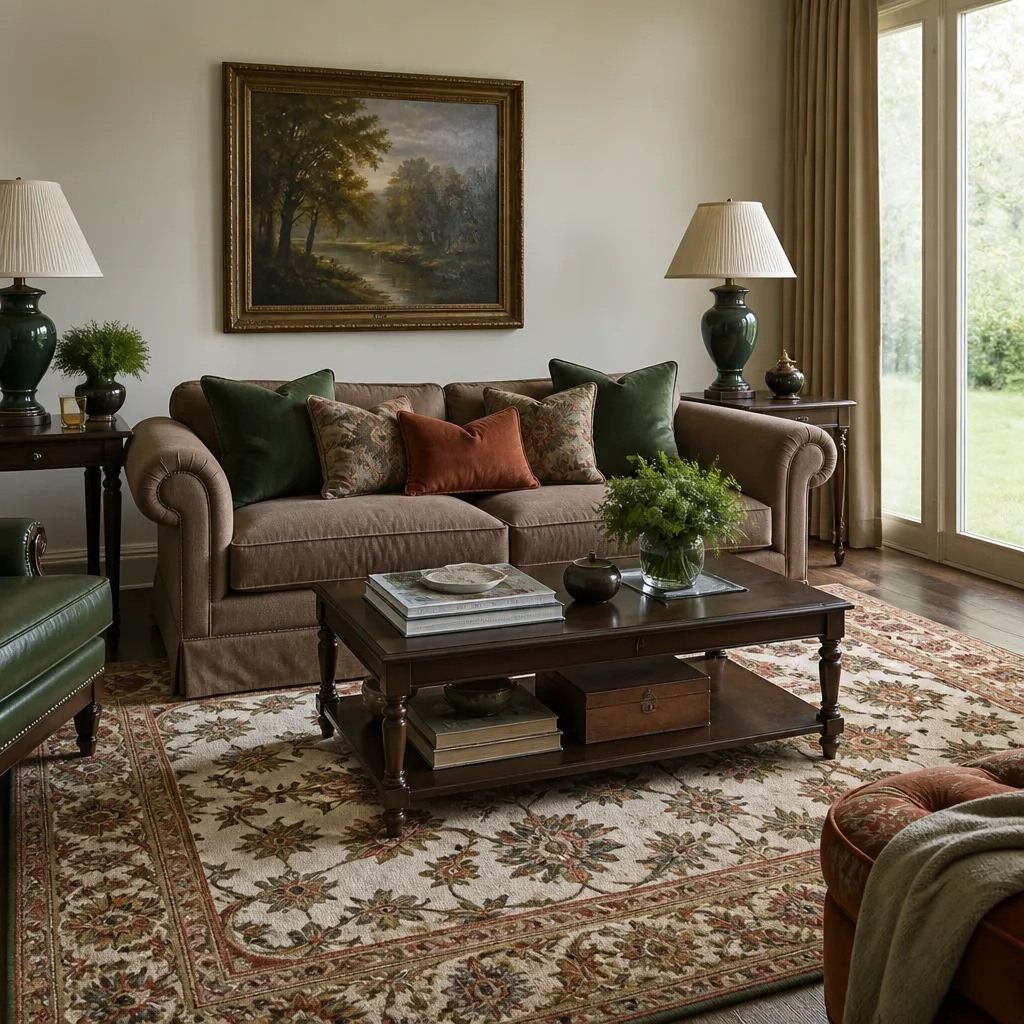
19Layer a patterned rug under a classic sofa
A patterned wool rug in traditional motifs, such as a damask or a botanical print, gives a classic living room depth underfoot and ties together the colours used on the sofa and curtains. Wool rugs of this kind are usually a considered purchase, so measuring carefully before you buy prevents an expensive mistake. Positioning all the seating group's legs on the rug, rather than just the front ones, gives the most formal, finished look.
You need: A wool rug sized to hold every leg of the sofa and any opposite chairs, a rug pad, a tape measure.
- Measure the full seating group including any armchairs.
- Choose a rug large enough for every piece's legs to sit on it.
- Lay a rug pad first to stop slipping and protect the flooring.
- Position the rug centred on the seating group.
- Square the sofa and chairs to the rug's edges.
Matching productRecliner armchairAmazon →
 20
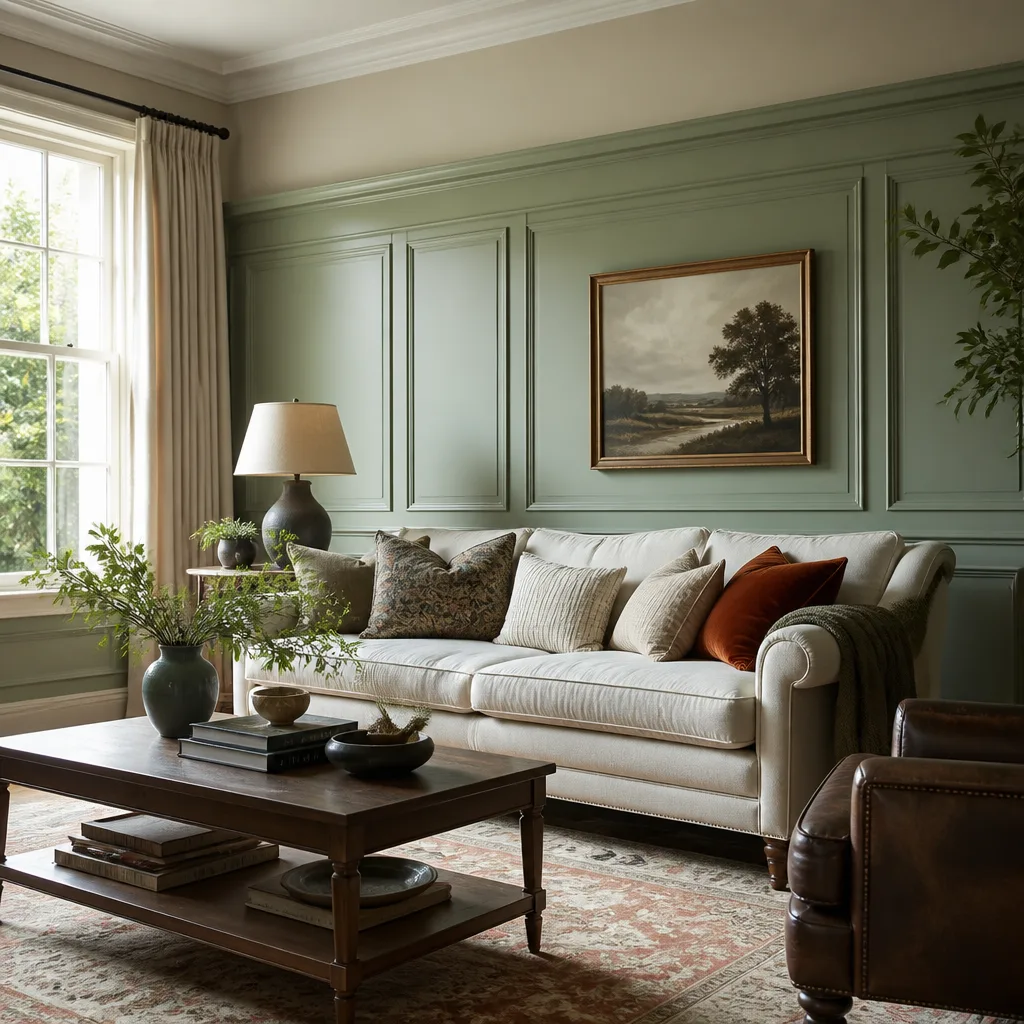
20Panel the wall behind the sofa
Wall panelling, whether a full wainscot height or a simpler picture rail treatment, gives a classic living room the kind of architectural detail that a flat plastered wall lacks. Painting the panelling a soft, muted colour rather than stark white keeps the room feeling traditional rather than clinical. Because panelling is a fixed installation, planning the exact height against the sofa's own back height first avoids an awkward line.
You need: MDF panelling kit or timber battens, filler, sandpaper, paint, a spirit level, a saw for cutting to size.
- Measure the wall and mark the panelling height relative to the sofa's back.
- Cut and fix the panel battens or MDF sections.
- Fill any gaps and sand smooth.
- Prime and paint the finished panelling.
- Reposition the sofa against the finished wall.
Matching productThree-seater sofaAmazon →
 21
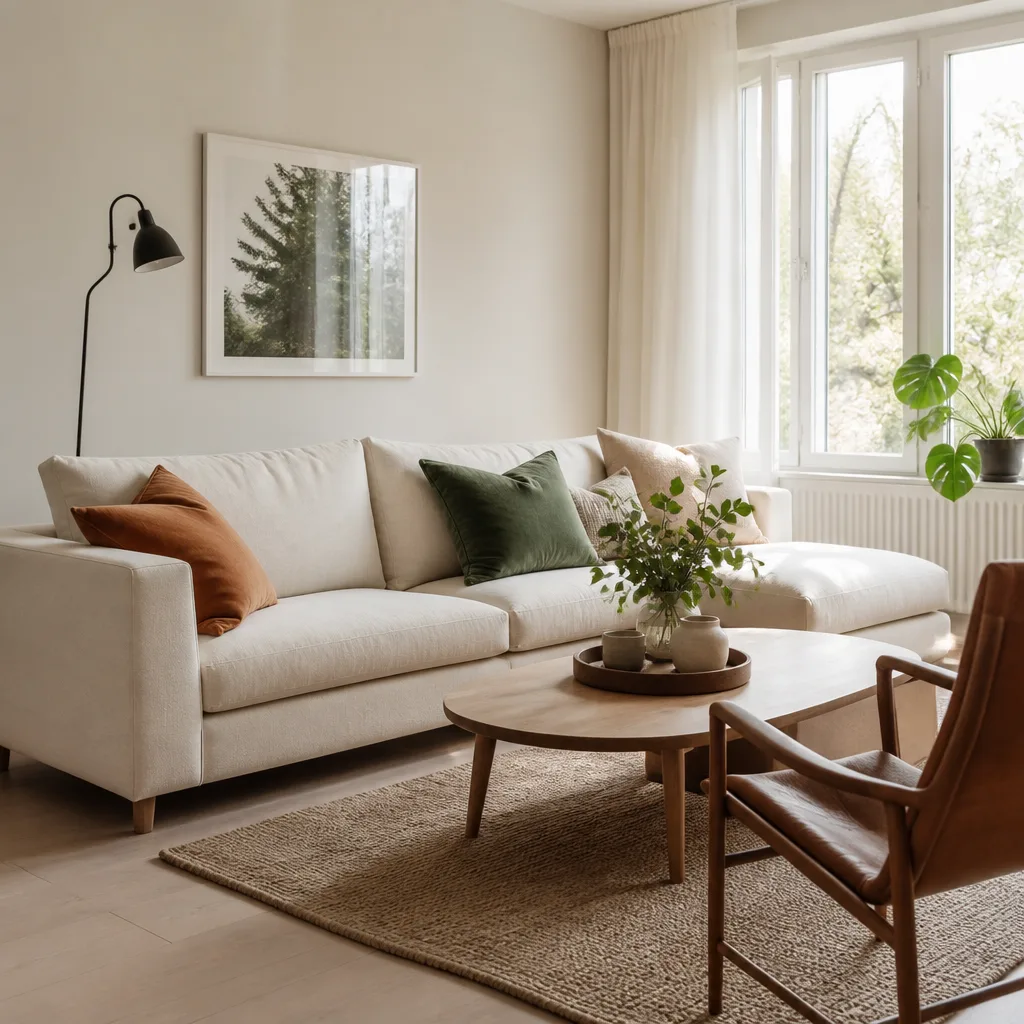
21Choose a light neutral sofa fabric
A sofa in a light oatmeal, cream or pale grey fabric reflects daylight around a room and suits the airy, uncluttered look typical of Scandinavian interiors. Choosing a hardwearing weave in a light tone, rather than assuming pale means delicate, keeps the sofa practical for everyday use. Pairing it with pale timber legs rather than a fully upholstered base keeps the silhouette visually light.
You need: A sofa in a light neutral, hardwearing fabric, ideally with exposed pale wood legs.
- Choose a fabric sample in a light neutral tone and check it against your room's daylight.
- Confirm the weave has a reasonable rub count for everyday use.
- Position the sofa away from direct strong sunlight to slow fading.
- Keep surrounding furniture in similarly pale tones.
Matching productThree-seater sofaAmazon →
 22
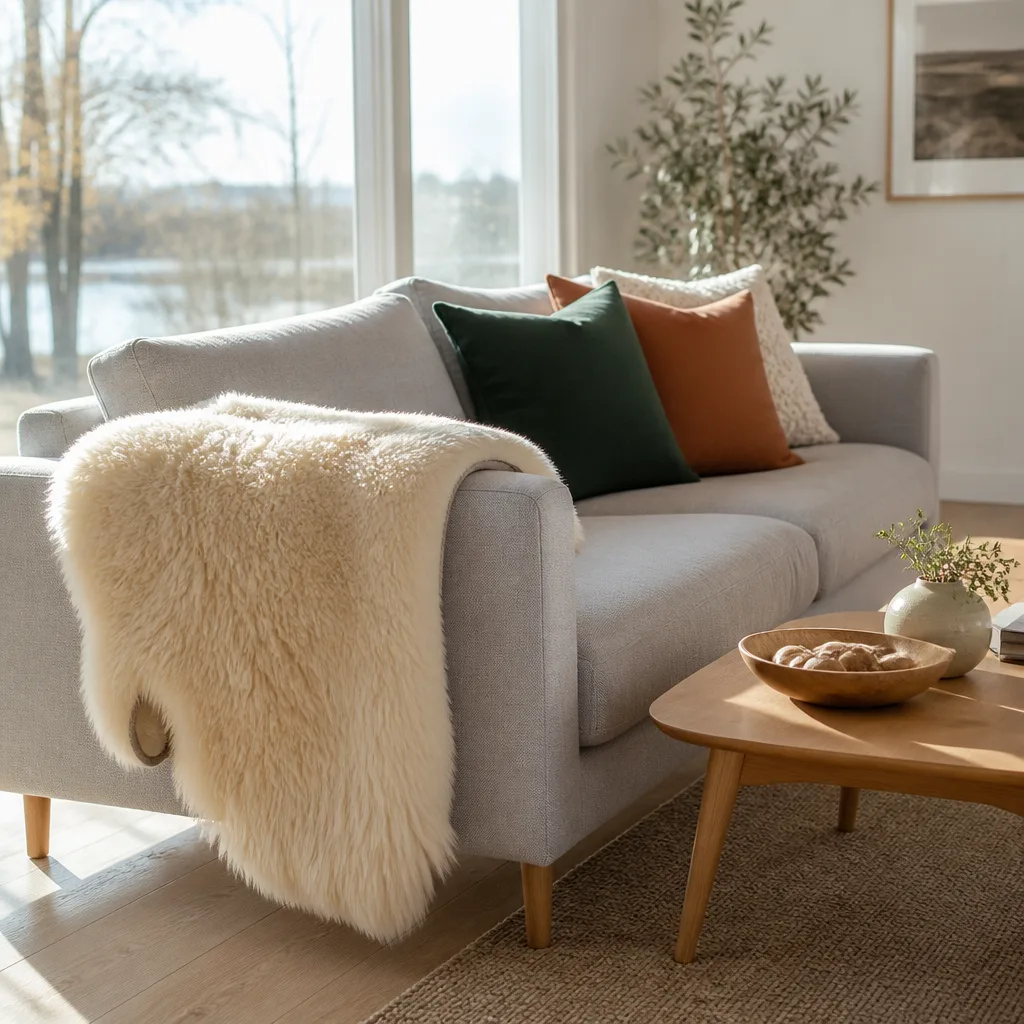
22Add a sheepskin throw for texture
A sheepskin or faux sheepskin throw draped over one arm of the sofa adds the tactile texture that a Scandinavian room needs, since the palette tends to stay pale and the furniture lines simple. It also softens a corner that might otherwise look a little sparse. Choose a single throw rather than several, so the texture reads as intentional rather than cluttered.
You need: One sheepskin or faux sheepskin throw.
- Drape the throw over one arm of the sofa, letting it fall naturally.
- Fluff the fibres so it sits loosely rather than flat.
- Shake and air the throw occasionally to keep it looking fresh.
Matching productThrow blanketAmazon →
 23
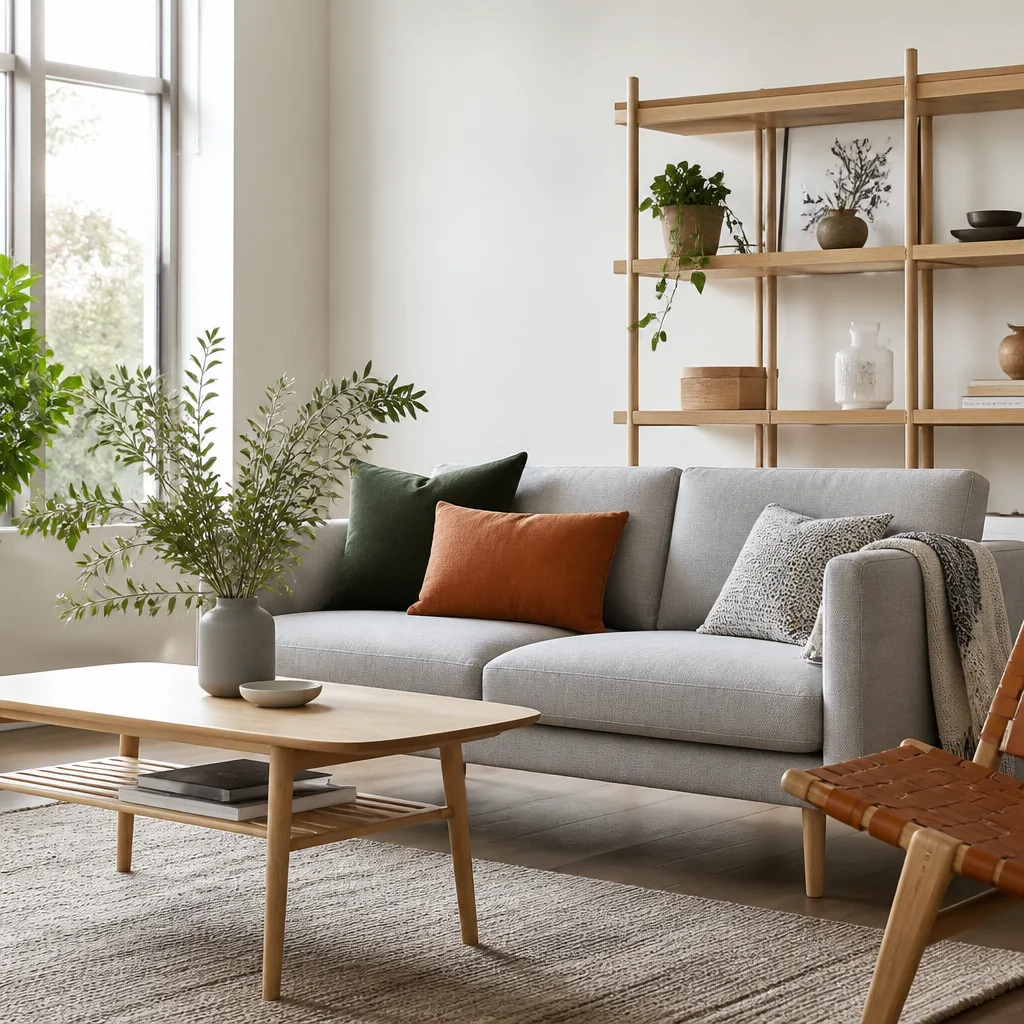
23Pair the sofa with pale wood furniture
Pale ash, birch or oak furniture around the sofa, rather than dark stained wood, keeps a Scandinavian living room feeling light and continues the palette from floor to furniture. The natural grain also adds a little visual texture without introducing pattern or colour. Choosing simple, unfussy shapes in the wood pieces keeps the focus on the materials themselves.
You need: A coffee table and one or two shelving or storage pieces in pale, untreated or lightly oiled wood.
- Choose wood pieces in pale ash, birch or oak tones.
- Position the coffee table in front of the sofa and shelving along a nearby wall.
- Keep the pieces simple in shape so the wood grain stays the visual interest.
- Oil untreated wood occasionally to keep its light tone.
Matching productUpholstery cleanerAmazon →
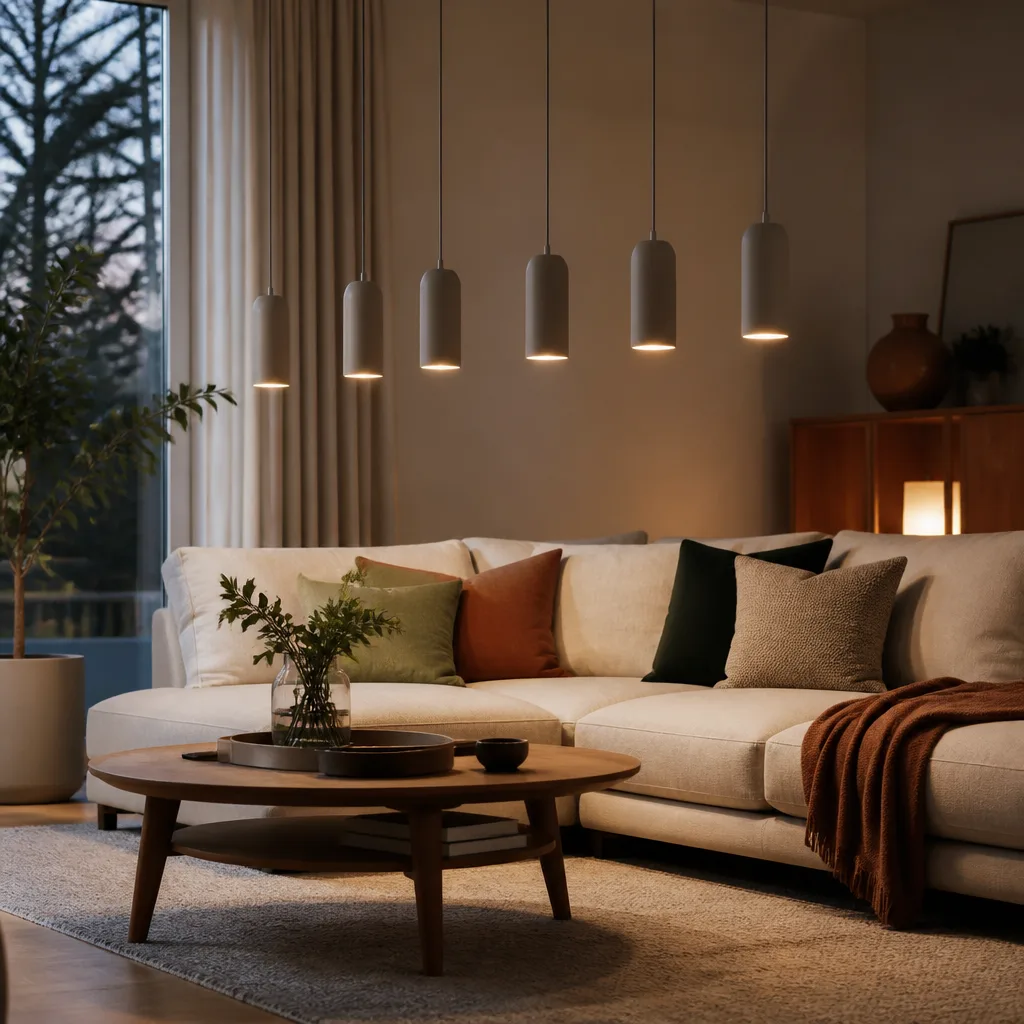 24
24Hang simple pendant lighting above the seating area
A cluster or row of simple pendant lights hung at a low height above the seating area gives a Scandinavian room warm, focused light in the evening, rather than relying on a single central ceiling light. Choose plain shades in paper, glass or matte metal rather than anything ornate, in keeping with the room's simple lines. Hanging the pendants low enough to feel intimate, but high enough to clear anyone standing, takes some careful measuring.
You need: Two or three simple pendant lights, a ceiling rose or track suited to multiple pendants, an electrician if new wiring is needed.
- Plan the pendant positions above the seating area, avoiding the walking path.
- Confirm the ceiling wiring can take the fittings, calling an electrician if needed.
- Fit the ceiling rose or track.
- Hang the pendants at a consistent, low height.
- Fit warm white bulbs and test the light levels in the evening.
Matching productThree-seater sofaAmazon →
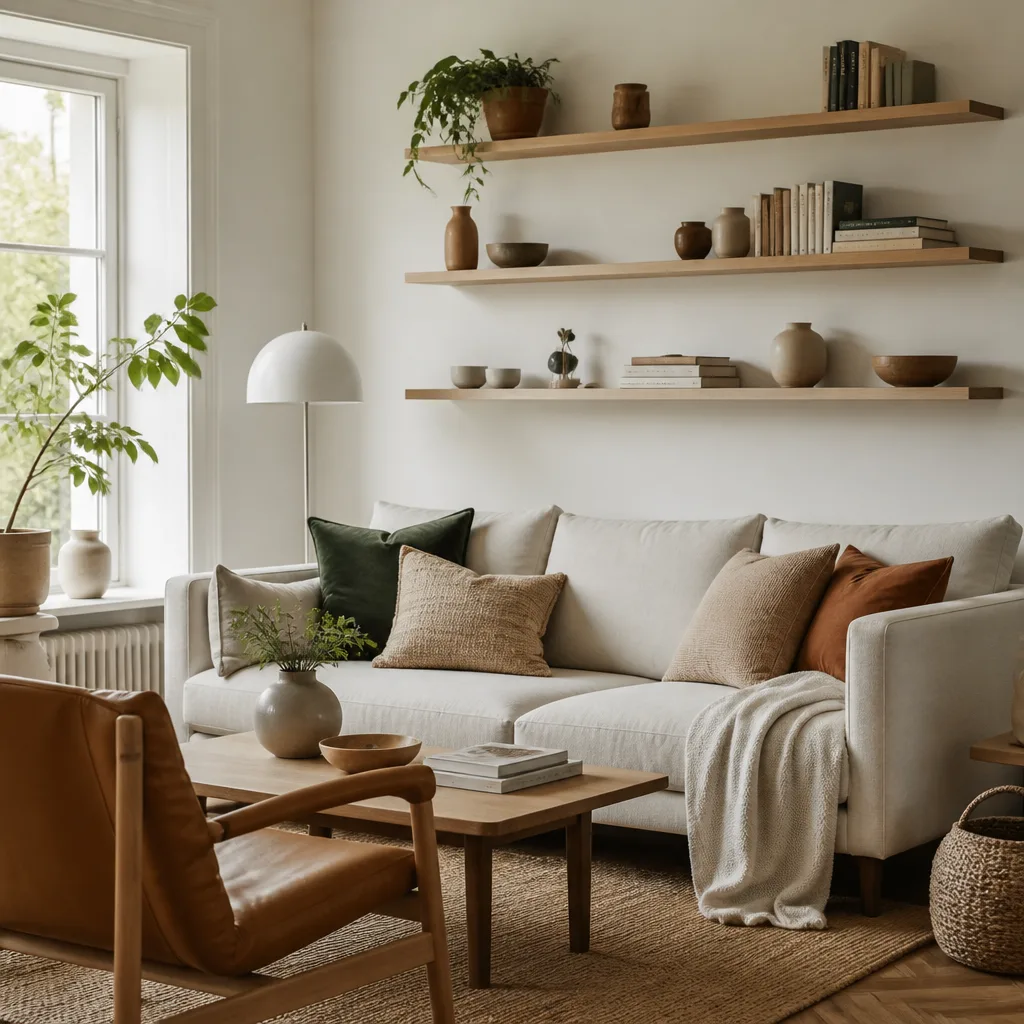 25
25Build a floating shelf gallery above the sofa
A row of slim floating shelves above the sofa gives a Scandinavian room a spot for books and simple ceramics without the visual weight of a full bookcase. Keeping the objects on the shelves few and varied in height, rather than tightly packed, matches the room's uncluttered feel. Fixing the shelves level and evenly spaced makes the biggest difference to how finished the result looks.
You need: Two or three floating shelf brackets, a spirit level, wall anchors suited to your wall type, a drill.
- Measure the wall above the sofa and mark shelf positions with even spacing.
- Check each mark is level before drilling.
- Fit wall anchors and the shelf brackets.
- Fix the shelves and check they sit flush and level.
- Style each shelf with a few books and one or two simple objects.
Matching productThree-seater sofaAmazon →
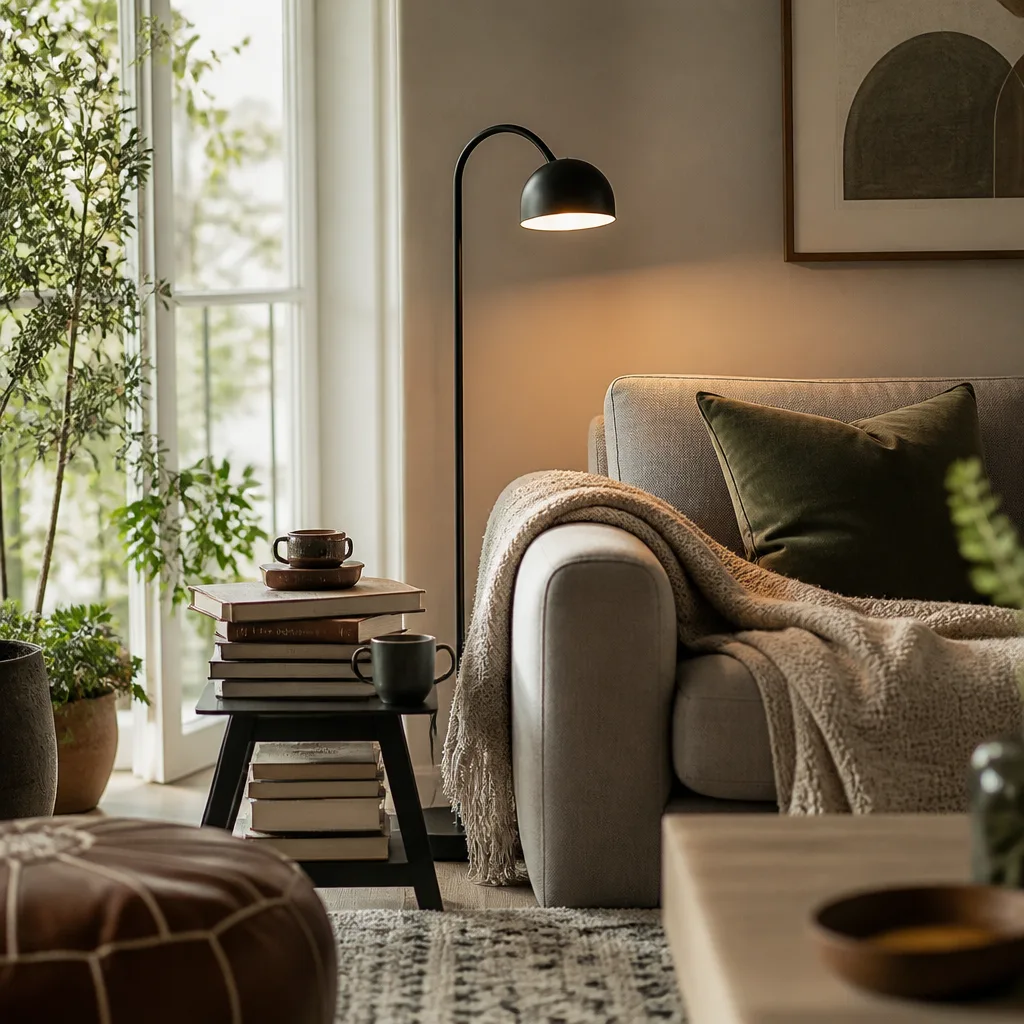 26
26Create a reading corner beside the sofa
One end of the sofa, paired with a small side table and a warm reading lamp, can become a reading corner without needing a separate chair. Stacking a few books within reach and keeping a soft throw close by makes the spot feel ready to use rather than just decorative. A warm bulb rather than a cool white one makes the biggest difference to how inviting the corner feels.
You need: A small side table, a reading lamp with a warm bulb, a stack of books, a soft throw.
- Choose the sofa end nearest a window or a quiet corner.
- Add a small side table within arm's reach.
- Place a reading lamp on the table and fit a warm bulb.
- Keep a few books and a folded throw close by.
Matching productThrow blanketAmazon →
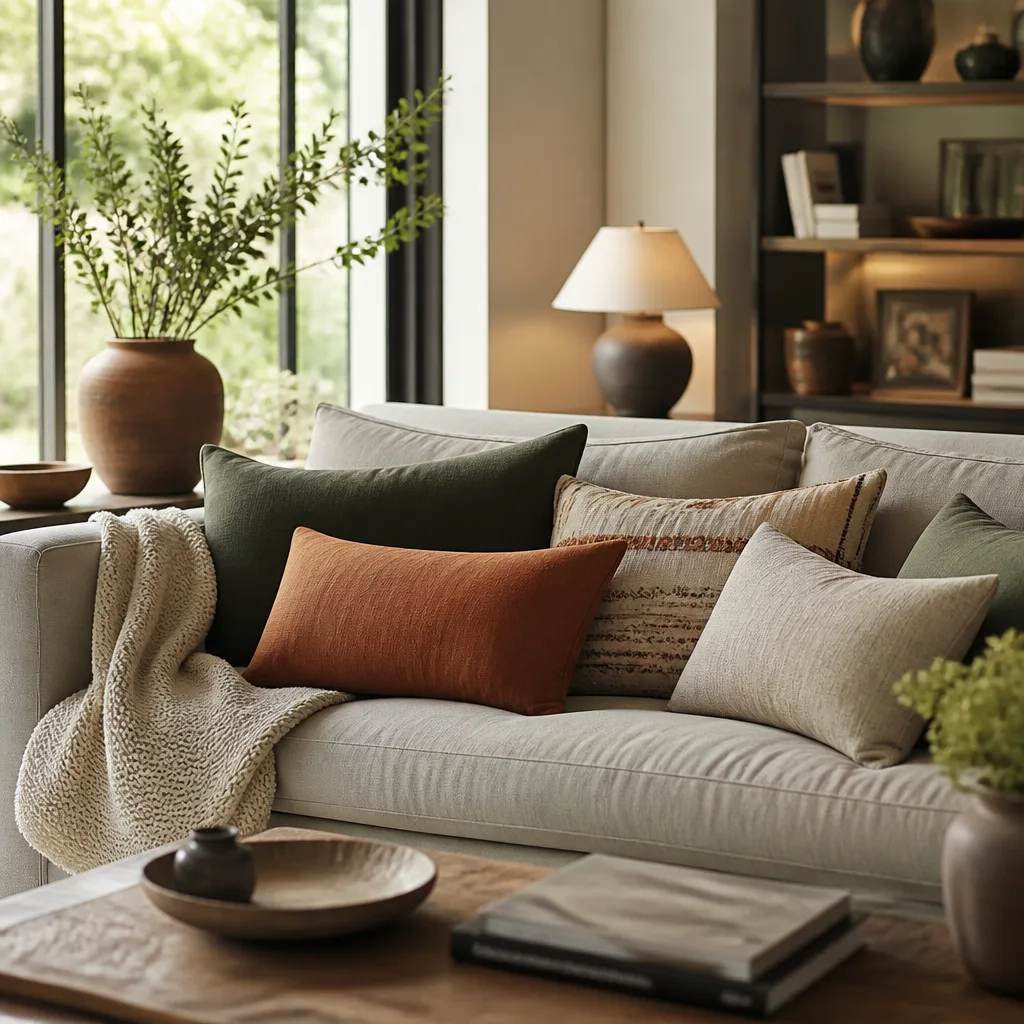 27
27Layer cushions and a throw on the sofa
Mixing cushion sizes and a couple of complementary warm tones gives a sofa an inviting, lived in look far more easily than any structural change. An odd number, such as three or five cushions, tends to look more relaxed than an even, overly matched set. A chunky knit throw folded over one arm or draped across the back finishes the layered look.
You need: An odd number of cushions in two or three complementary tones, one chunky knit or wool throw.
- Choose cushion covers in two or three tones that share a common thread with the room's colours.
- Arrange an odd number of cushions, largest at the back.
- Fluff and angle each cushion slightly rather than lining them up flat.
- Fold or drape the throw over one arm or along the back of the sofa.
Matching productThrow blanketAmazon →
 28
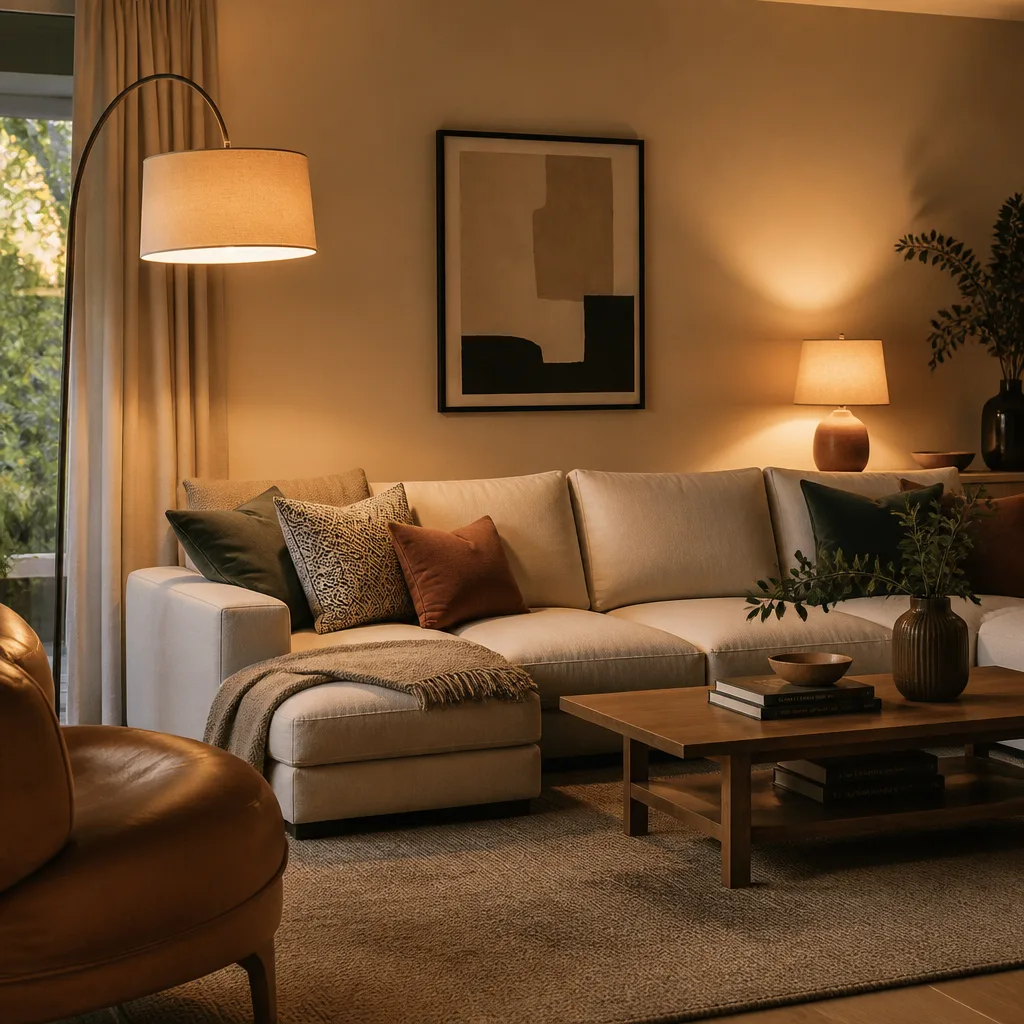
28Add warm layered lighting around the sofa
Relying on a floor lamp and a table lamp near the sofa, rather than a single bright ceiling light, gives a room a softer, cosier evening atmosphere. Layering two or three lower level light sources also lets you dim the room gradually rather than switching straight from full light to dark. Warm white bulbs, rather than cool or daylight toned ones, are the detail that makes the biggest difference.
You need: A floor lamp and a table lamp near the sofa, warm white bulbs for both.
- Position a floor lamp beside one end of the sofa.
- Add a table lamp on a nearby side table or shelf.
- Fit warm white bulbs in both fixtures.
- Turn off the main ceiling light in the evening and use the lamps instead.
Matching productFurniture sliders and feet padsAmazon →
 29
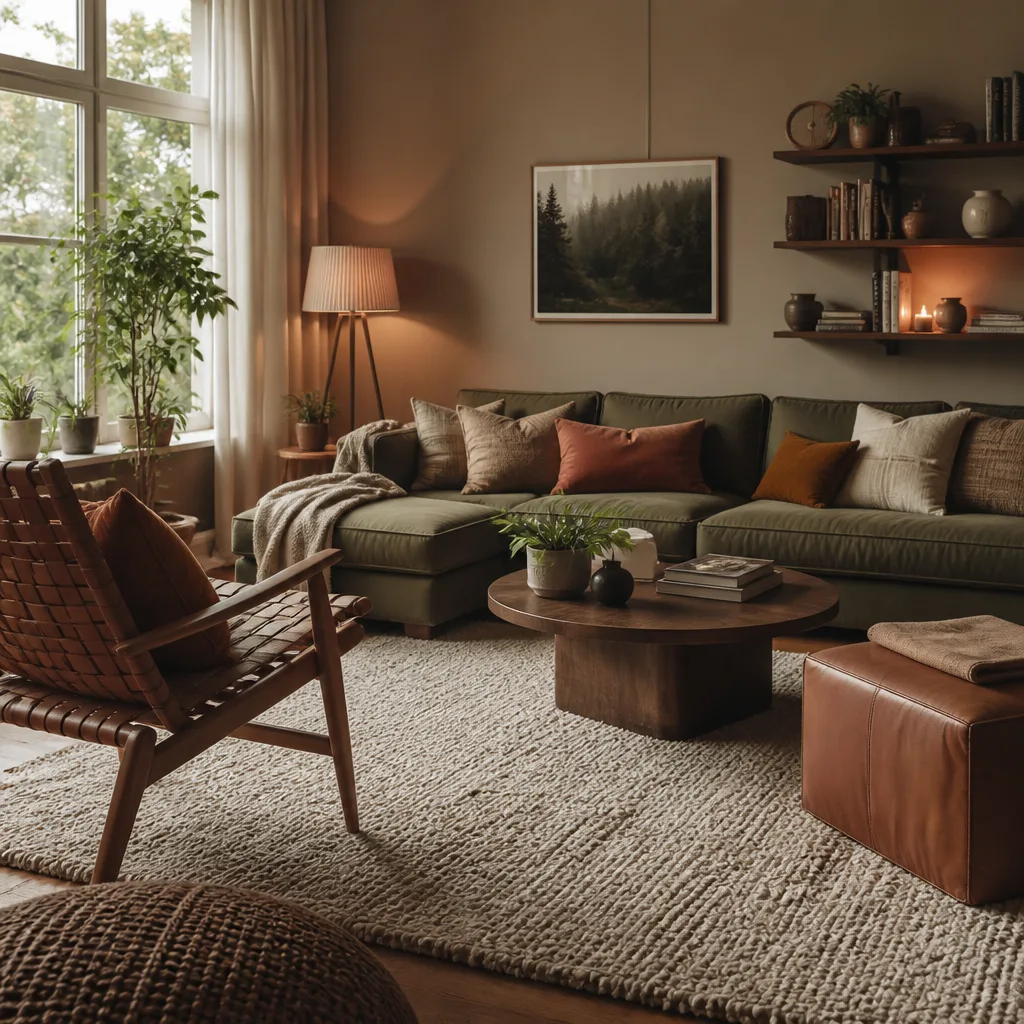
29Use a wool rug to soften the room
A thick wool rug underfoot adds both warmth and sound softening to a living room, which suits a cosy, wind down space more than a flat woven or synthetic option. Earthy tones such as rust, ochre or deep green tend to read as warmer than cool greys or blues. Choosing a pile deep enough to feel soft underfoot, but not so deep it is hard to vacuum, keeps it practical.
You need: A wool rug in a warm earthy tone, a rug pad.
- Measure the seating area to size the rug.
- Lay a rug pad first to stop slipping.
- Position the rug so the sofa's front legs rest on it.
- Vacuum regularly to keep the pile fresh.
 Matching productHandheld upholstery vacuumAmazon →
 30
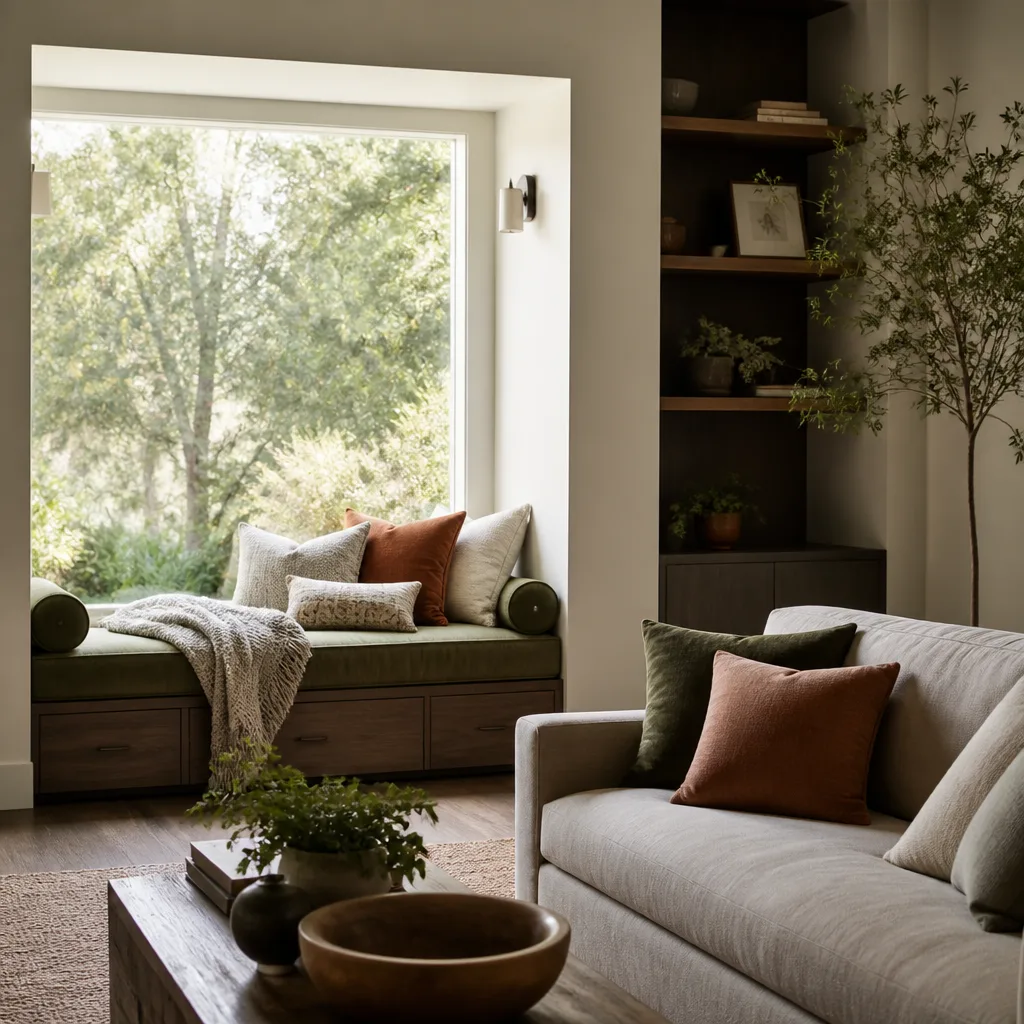
30Build a window nook with a daybed
A window nook fitted with a daybed, positioned near the main sofa, gives a cosy living room a second, quieter spot to curl up with a book or a nap. Building it into a window recess uses a space that might otherwise sit empty, and a run of cushions along the back turns a simple bench into something soft enough to lounge on. Keeping the daybed's height close to the sofa's seat height helps the two pieces feel connected rather than mismatched.
You need: A daybed frame or a built bench sized to the window recess, a mattress or thick cushion pad, several cushions.
- Measure the window recess or wall run for the daybed.
- Fit or build the bench frame to that length.
- Add a mattress or thick cushion pad cut to size.
- Layer cushions and a throw along the back.
- Position it within view of the main sofa for a connected feel.
Matching productScatter cushionsAmazon →
Explore
Read next
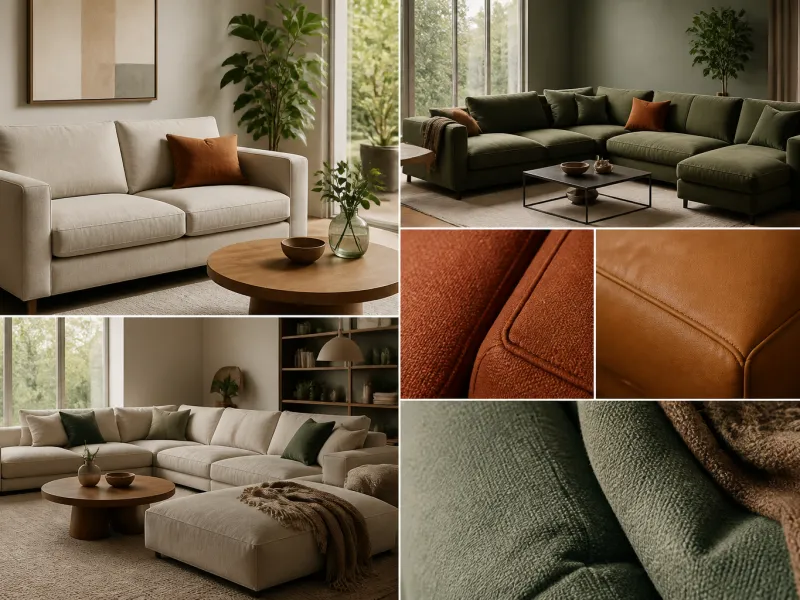 Sofa Types Explained: From Two Seater to SectionalAn overview of common sofa types, with a comparison table and links to deeper guides on sizing, materials and care.
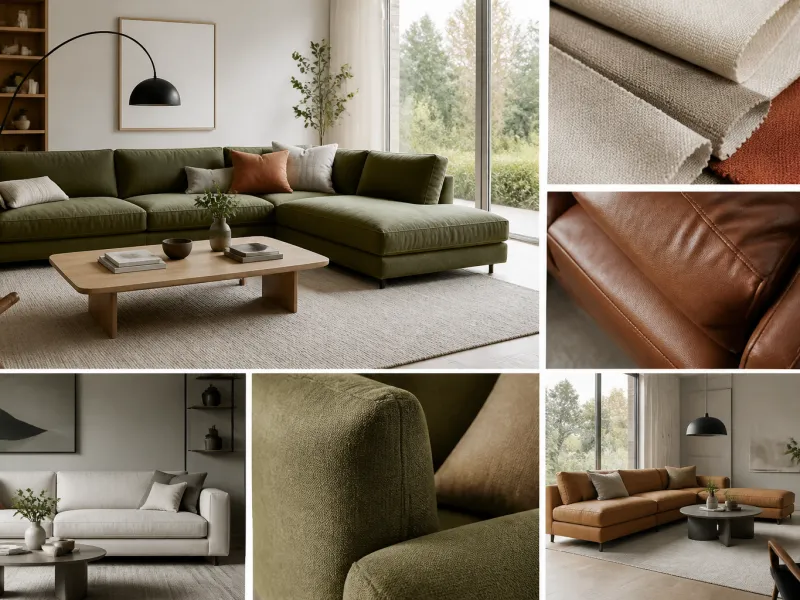 Sofa Buying Guide: How to Choose the Right SofaA step-by-step guide to buying a sofa, from measuring your room to checking frame, springs, foam and upholstery.
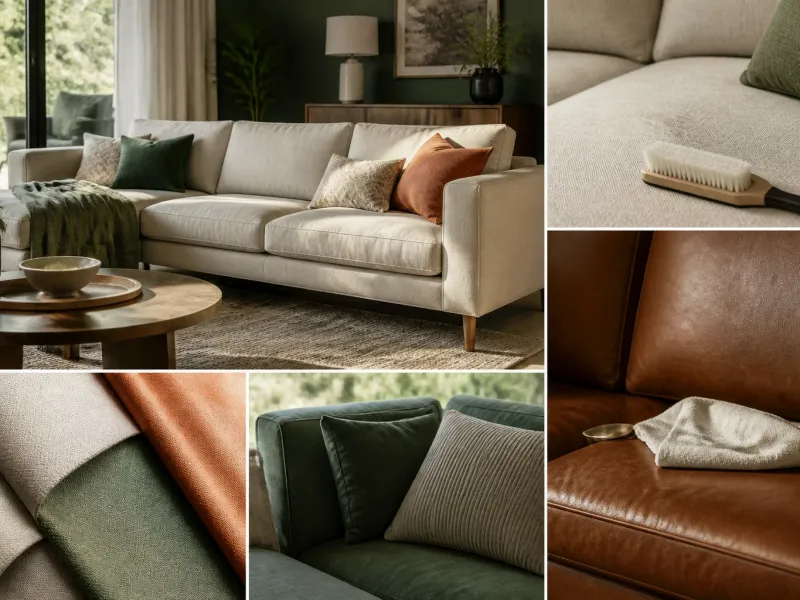 Sofa Care and Cleaning: A Guide by MaterialHow to clean and care for your sofa by material, with cleaning codes, a care table and quick stain first aid.