
5 min read
Pouf vs Ottoman vs Footstool: A Buying Guide
What sets a pouf apart from an ottoman or a footstool, which materials suit which room, and how to style one well.
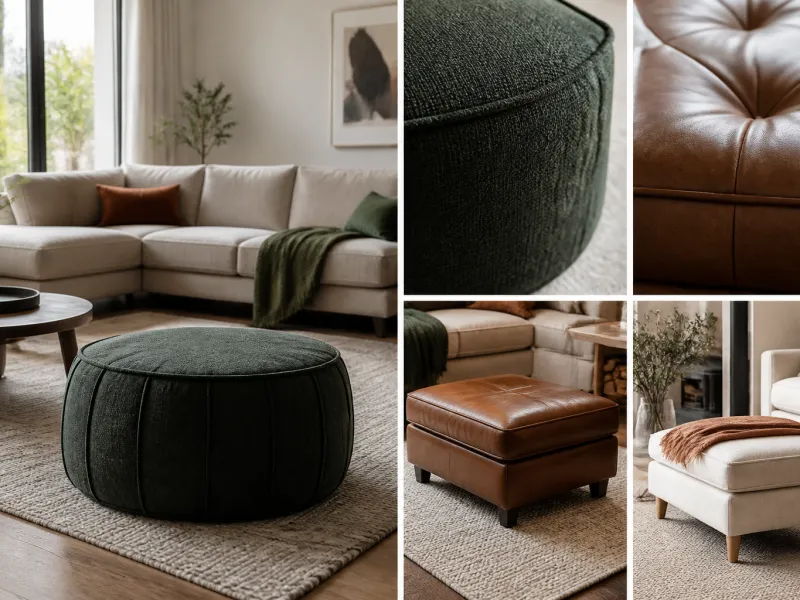
Small, low and endlessly useful, a pouf is one of those pieces of furniture that quietly does several jobs at once. It can be an extra seat when guests arrive, a footrest in front of a sofa, or a soft surface to rest a tray on. Yet the words pouf, ottoman and footstool are often used interchangeably, which makes shopping for one more confusing than it needs to be.
This guide sets out the real differences between these three pieces, looks at the materials commonly used to cover them, explains storage ottomans, and offers some practical styling ideas for using a pouf well in a living room, bedroom or hallway.
01
Pouf, ottoman or footstool: what is the difference?
The three terms overlap, but each has a slightly different traditional meaning.
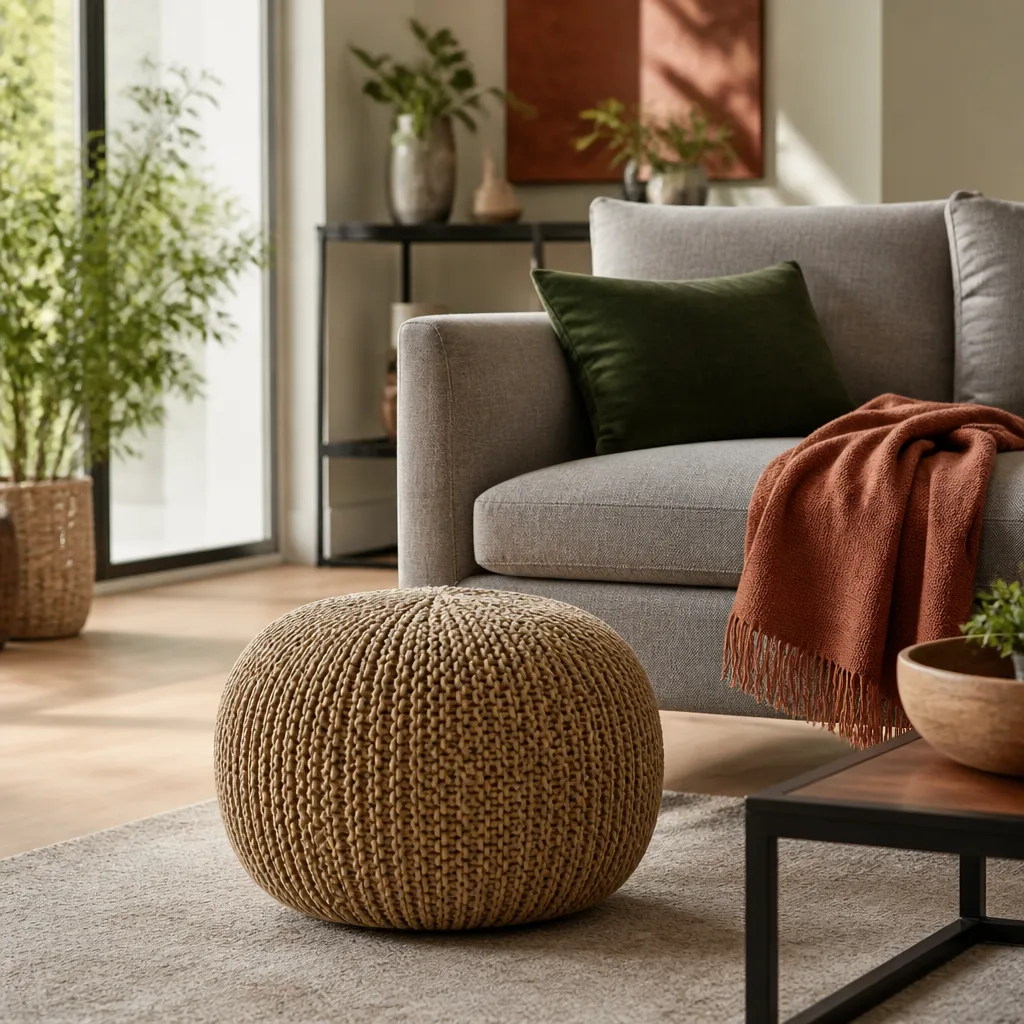
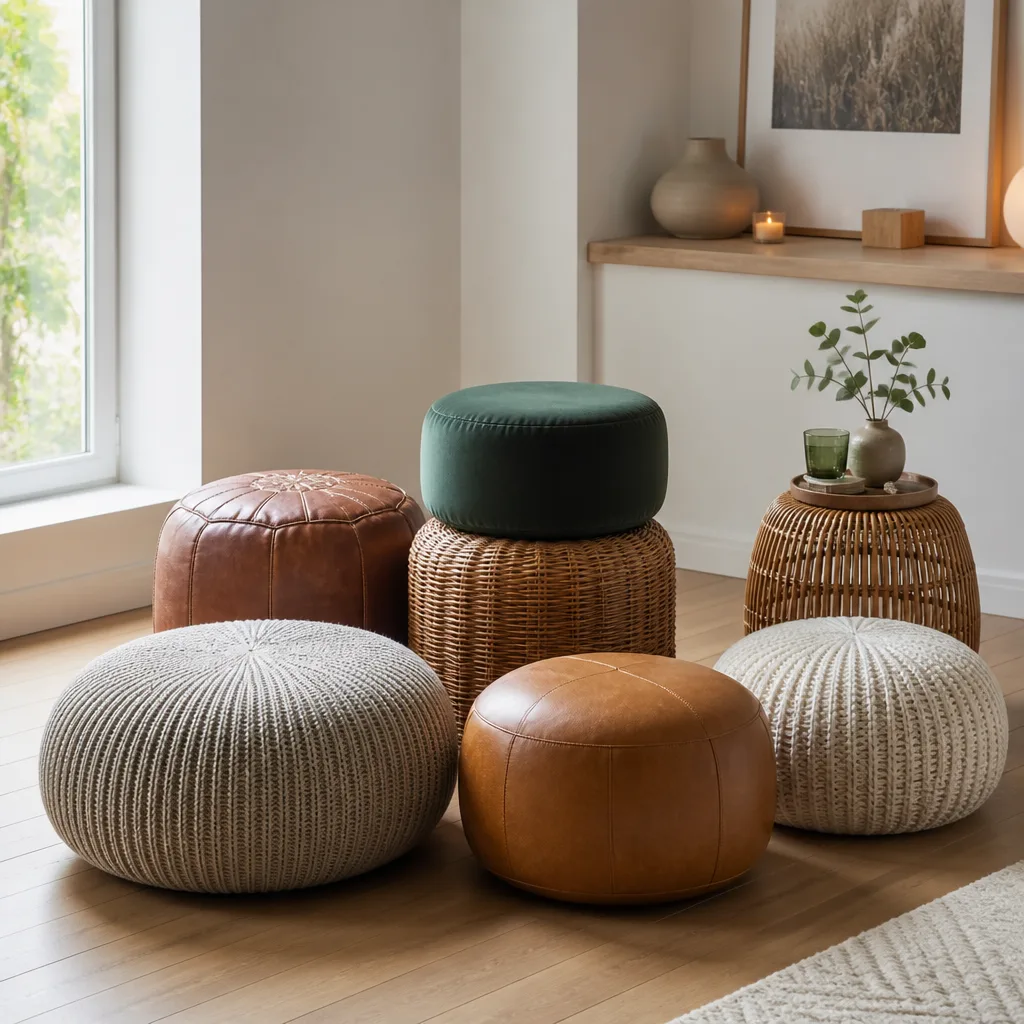
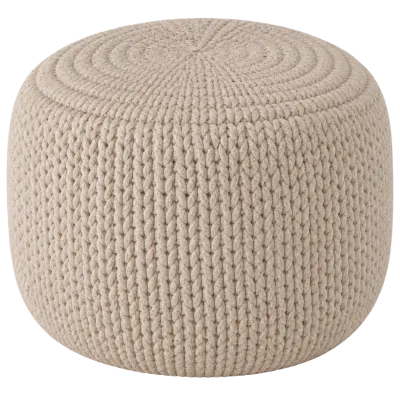
- Pouf: a soft, upholstered, backless seat, usually round, square or drum shaped, filled with foam, fibre or beads, without a rigid internal frame in the seating surface. Poufs are light, easy to move, and often knitted, woven or leather covered.
- Ottoman: traditionally a larger, padded, backless seat or bench, often with a wooden or upholstered frame and a firmer, more structured top. Many ottomans include internal storage under a hinged or lift off lid.
- Footstool: typically the smallest and lowest of the three, designed specifically to rest your feet on rather than to be sat on for long periods, sometimes matching a specific armchair.
In everyday use, especially in casual and international contexts, the terms blur considerably, and a small ottoman and a large pouf can be almost identical in practice. The clearest distinguishing features to look for when shopping are size, structure (soft and squashy versus firm and framed) and whether storage is included.
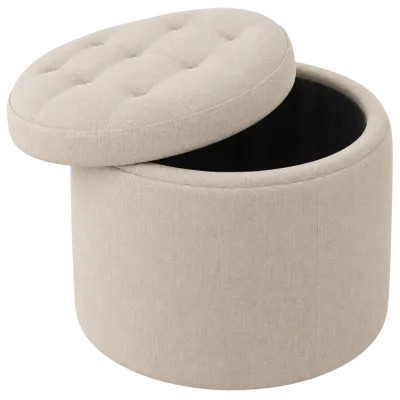 Matching productStorage ottomanAmazon →
02
Materials: leather, knitted fabric, rattan and velvet
The covering material shapes both the look and the practicality of a pouf.
| Material | Look and feel | Best suited to |
|---|---|---|
| Leather or faux leather | Smooth, durable, easy to wipe clean | Living rooms, homes with children or pets, easy care spaces |
| Chunky knit or wool | Soft, textured, warm looking | Bedrooms, Scandinavian or cosy interiors |
| Rattan or woven cane | Light, natural, breathable | Boho, coastal or conservatory style rooms |
| Velvet | Plush, rich colour, soft sheen | Formal living rooms, statement pieces |
Leather and faux leather poufs are particularly practical in busy households since marks wipe away easily, while knitted and velvet covers add texture and warmth but need more careful cleaning. Rattan and woven poufs bring a natural, textural note and work well as a lighter alternative to fully upholstered pieces, though they are generally firmer underfoot than foam filled versions. For more on fabric choice generally, see our guide to sofa fabrics.
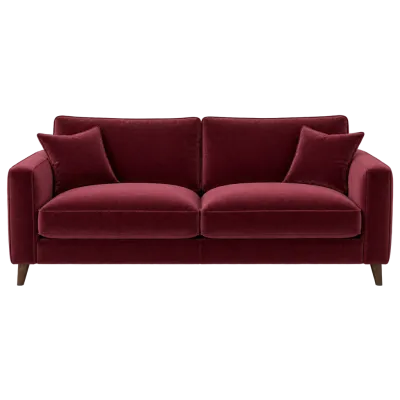 Matching productVelvet sofaAmazon →
03
Storage ottomans
One of the most practical variations on this piece of furniture is the storage ottoman, which hides a hollow compartment beneath a padded, hinged or lift off lid. Storage ottomans are especially useful in small living rooms or flats, where they can hold blankets, cushions, magazines, remote controls or children's toys out of sight.
When choosing a storage ottoman, check three things: the lid mechanism (hinged lids stay attached and are safer around children, while fully removable lids sometimes offer easier access), the internal lining (a washable or wipeable liner protects stored textiles from dust), and whether the lid is sturdy enough to double as an occasional seat or side table when closed.
04
Using a pouf as an extra seat, side table or footrest
Part of a pouf's appeal is its flexibility. The same piece can serve several roles depending on the moment:
- Extra seat: pull a pouf up to a coffee table or fireside when more guests arrive than there are chairs.
- Footrest: place one in front of a sofa or armchair to put your feet up, choosing a height that roughly matches or sits slightly below the seat cushion.
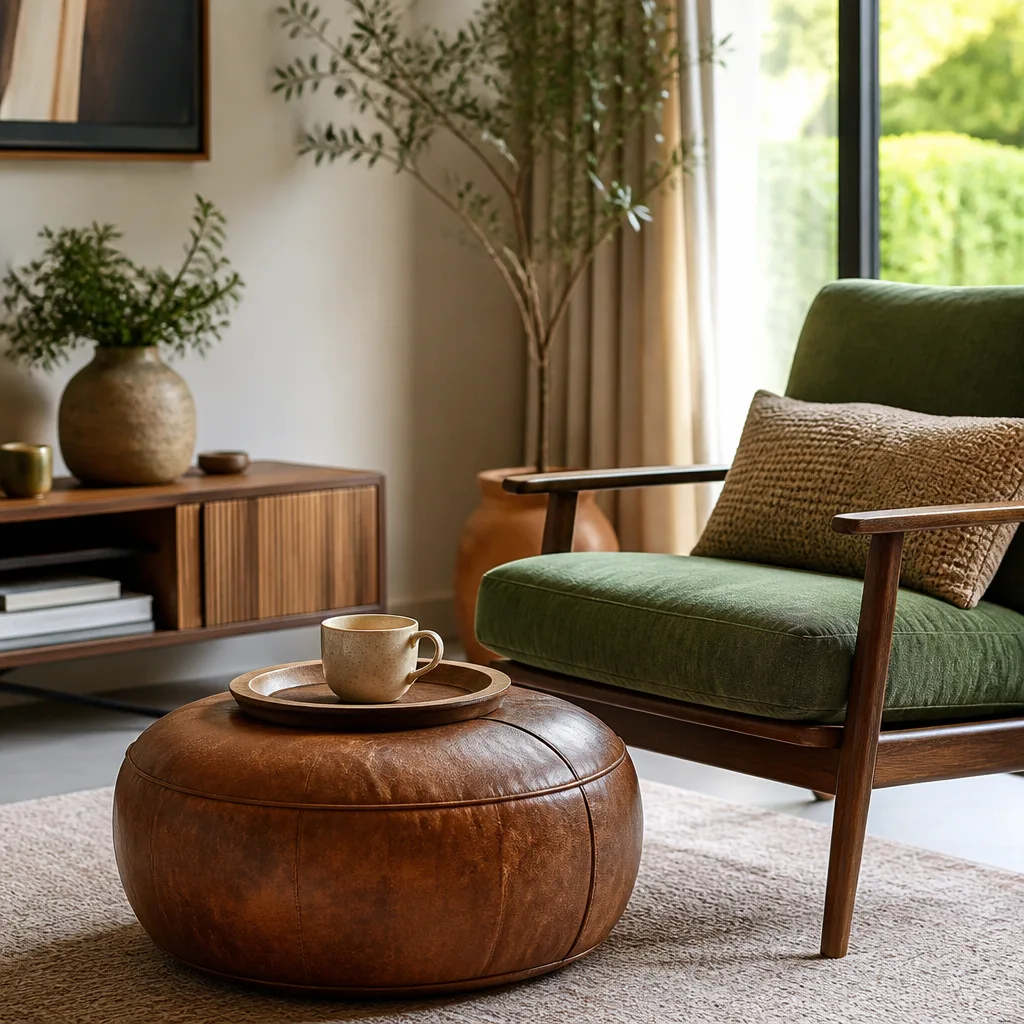
- Side table: rest a tray on top to hold drinks, books or a lamp, particularly useful with a flat topped, firmer pouf.
- Bedroom perch: use one at the end of a bed or in front of a dressing table as a low, informal seat.
Because most poufs are lightweight, they can be moved around a room easily, which makes them a flexible option in a small living room where furniture often needs to be rearranged for different occasions.
 Matching productPoufAmazon →
05
Styling a pouf in your room
A pouf works well as a colour or texture accent, since it is smaller and less visually dominant than a sofa or armchair. A few approaches that consistently work:
Pairing a neutral sofa with one or two poufs in a bold colour or pattern brings a focal point into an otherwise calm room. Alternatively, choosing a pouf that echoes a cushion fabric or rug colour ties a scheme together without matching everything exactly. Grouping two or three poufs of slightly different heights around a coffee table creates a relaxed, informal seating arrangement that suits open plan living spaces. In a hallway or reading nook, a single well chosen pouf can fill an awkward corner and add a seat where a full chair would not fit.
Scale matters too: a pouf that is too small relative to a large sofa can look lost, while an oversized pouf can overwhelm a compact room. As a rough guide, a diameter of around 40 to 55 cm (16 to 22 inches) suits most footrest and occasional seat uses, while larger 60 to 70 cm (24 to 28 inches) versions work better as a genuine extra seat.
06
Care and durability
Because poufs sit low and are often used as footrests, they take a different kind of wear than a sofa seat cushion. Rotating a pouf occasionally helps even out wear on the top surface, and checking the filling periodically (many are filled with foam, polystyrene beads or a mix) lets you top it up before it feels noticeably flatter. Leather and faux leather covers benefit from an occasional wipe with a slightly damp cloth, while knitted and fabric covers should follow their specific care label, and removable covers can usually be washed separately from the filling.
07
Frequently asked questions
Is a pouf comfortable enough to sit on for a long time?
A soft, well filled pouf can be comfortable for short to medium periods, but without a backrest it is generally better suited to occasional seating than to long sitting sessions, where a sofa or armchair is more supportive.
What size pouf should I choose for a footrest?
Aim for a height that sits level with or slightly lower than your sofa or chair seat, typically around 35 to 45 cm (14 to 18 inches), so your legs rest at a comfortable angle.
Can a storage ottoman replace a coffee table?
Yes, a flat topped storage ottoman with a sturdy lid can work well as a coffee table alternative, combining a surface for trays or books with hidden storage underneath.
Are knitted poufs hard to keep clean?
Knitted covers need a little more care than leather, generally spot cleaning or occasional gentle hand washing depending on the yarn, so check the manufacturer's care instructions before buying if easy cleaning is a priority.
Do poufs work in a small apartment?
Very well. Their light weight and flexible uses make poufs a practical choice for compact spaces, where they can be moved, stacked or tucked away as needed far more easily than a fixed piece of furniture.
Explore
Read next
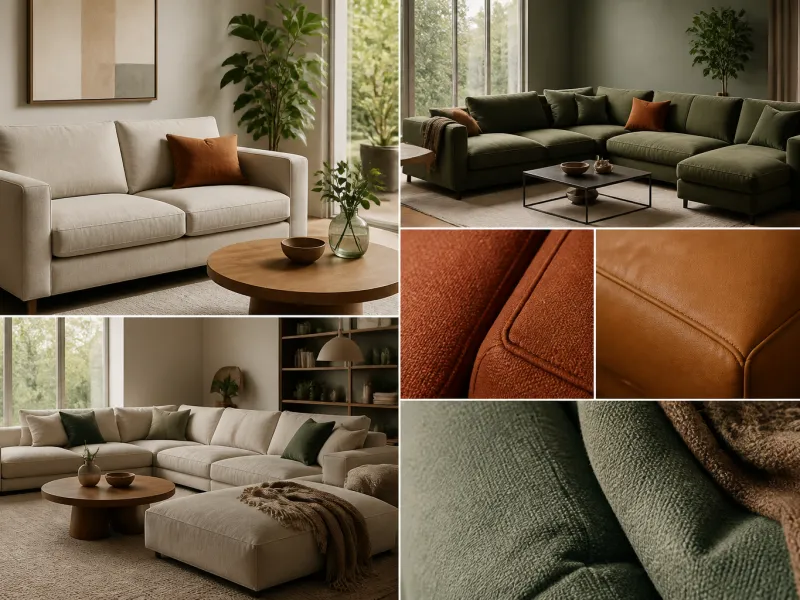 Sofa Types Explained: From Two Seater to SectionalAn overview of common sofa types, with a comparison table and links to deeper guides on sizing, materials and care.
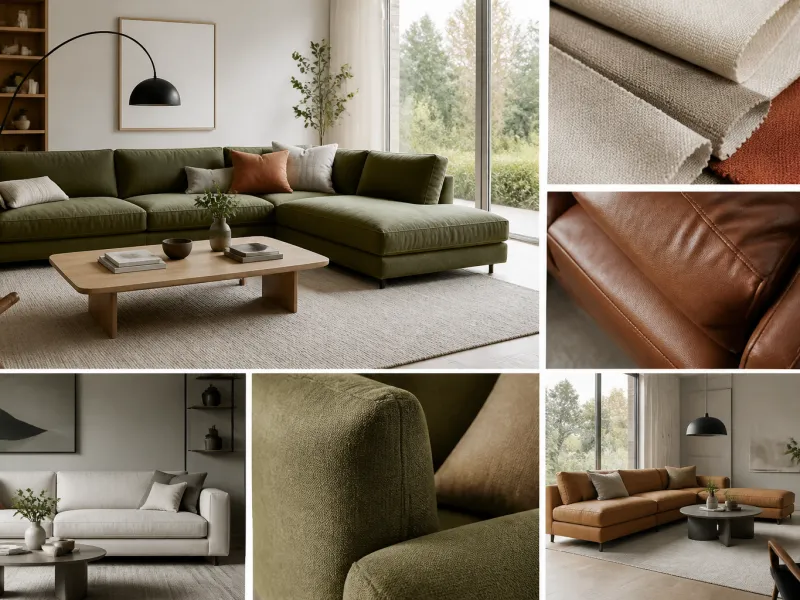 Sofa Buying Guide: How to Choose the Right SofaA step-by-step guide to buying a sofa, from measuring your room to checking frame, springs, foam and upholstery.
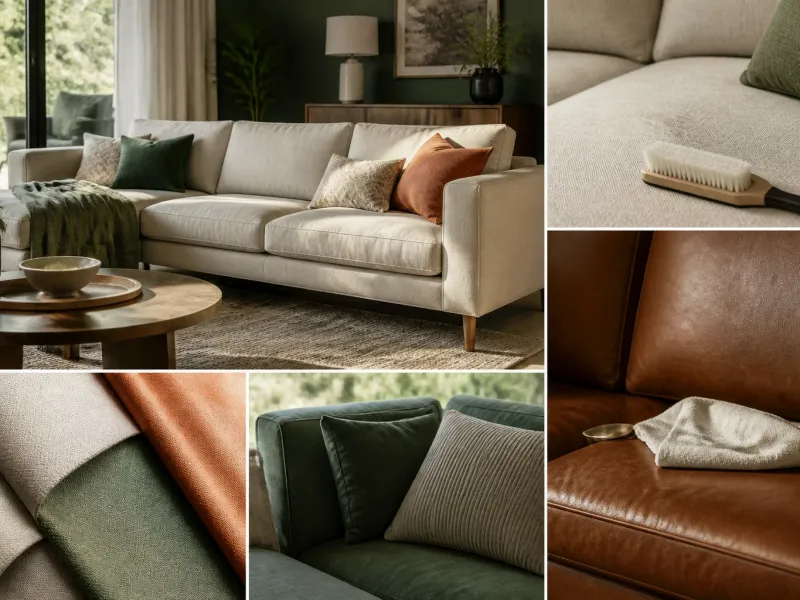 Sofa Care and Cleaning: A Guide by MaterialHow to clean and care for your sofa by material, with cleaning codes, a care table and quick stain first aid.