
6 min read
Sofa Fabrics Explained: Durability, Feel and Care
An honest comparison of sofa fabrics, how durable each one really is, and how to choose one that suits pets, children and daily life.
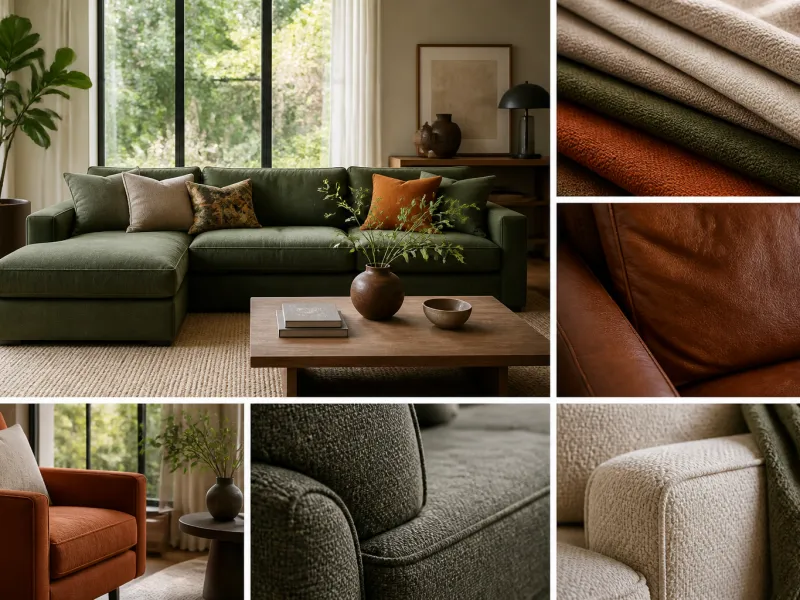
The fabric on a sofa affects how it looks, how it feels to sit on, and, just as importantly, how well it copes with daily life. Some fabrics are chosen mainly for softness and appearance, others for how easily they wipe clean, and the best choice depends on the room and the household using it. This guide compares the fabrics most commonly used on sofas, explains what a Martindale rub count actually measures, and looks at practical concerns like pilling, light fastness, and living with pets and children.
See our sofa types and buying guide pages for how fabric choice fits into the wider decision of choosing a sofa, and our leather sofa guide if you are weighing fabric against leather.
01
Natural fibre fabrics: cotton, linen and wool
Cotton is soft, breathable and takes dye well, giving a wide range of clear, even colours. On its own it can crease and wear at friction points such as arm fronts, which is why many sofa cottons are woven densely or blended with a small amount of synthetic fibre for extra strength.
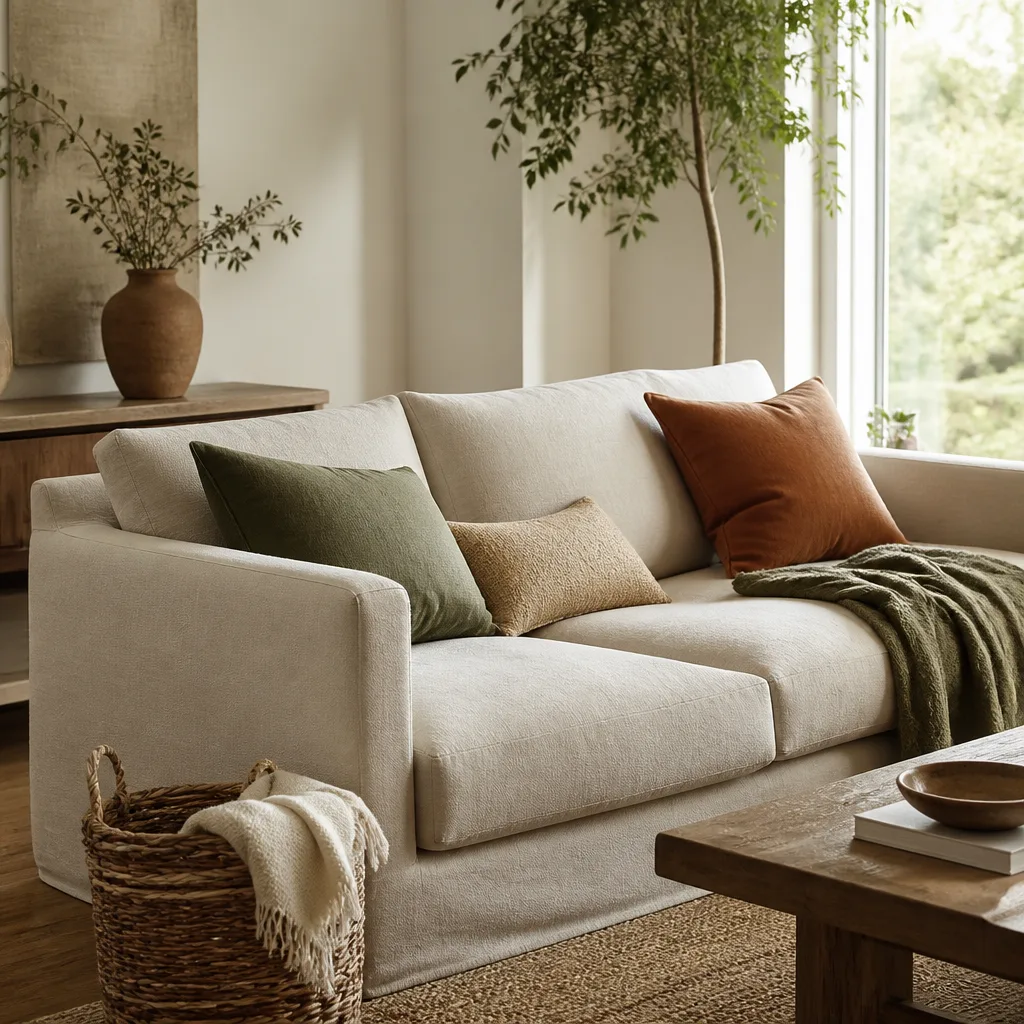
Linen, made from the flax plant, has a relaxed, slightly textured look with a natural, matte finish that many people find appealing for a calm, understated sofa. It creases readily, which some consider part of its character and others find impractical, and pure linen is generally less abrasion resistant than a tighter cotton or wool weave, so linen blends are common for upholstery use.
Wool upholstery fabric is naturally durable, resists soiling reasonably well because of its fibre structure, and has good resilience, meaning it bounces back from crushing rather than staying flattened. Wool can feel firmer than cotton or linen and is often blended with a small percentage of nylon for added strength.
02
Velvet, bouclé and chenille
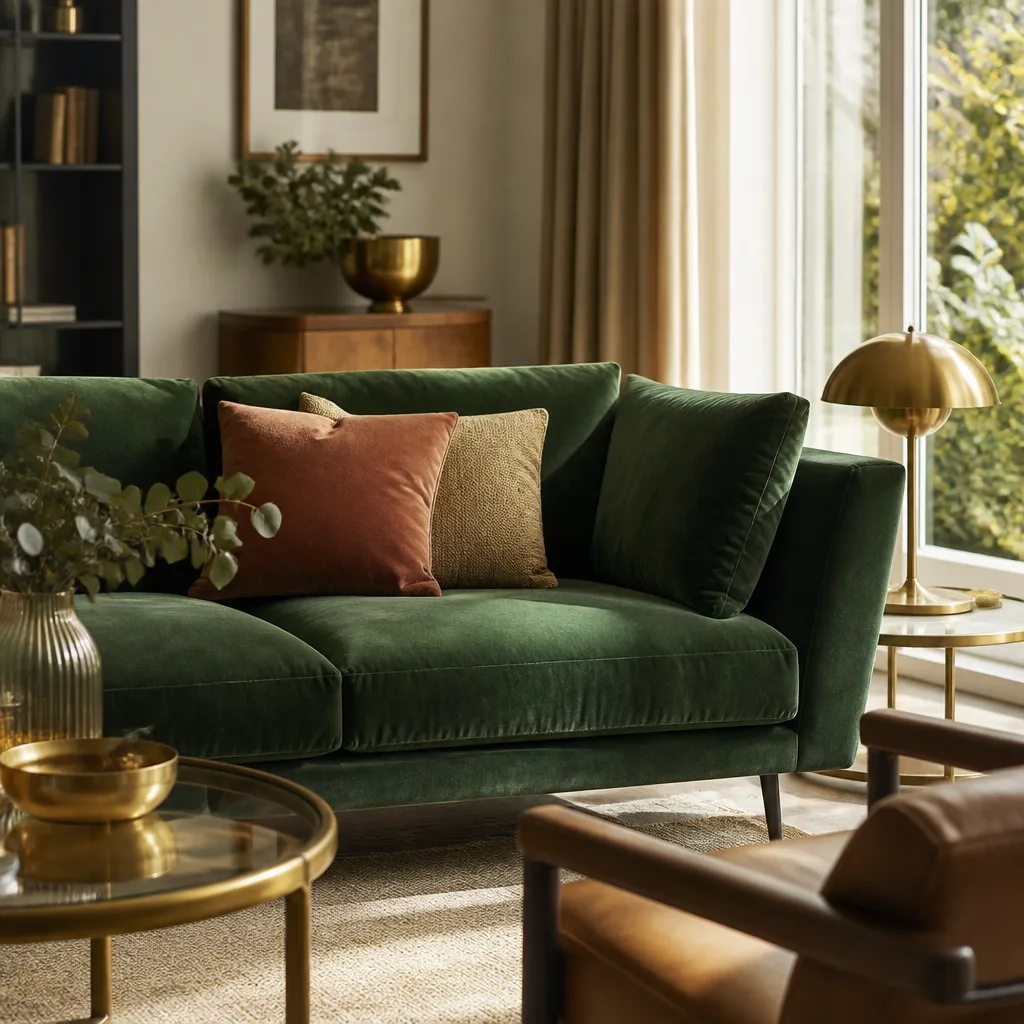
Velvet has a dense, cut pile that gives it a soft, plush hand and a distinctive sheen that shifts as light hits it from different angles. Modern upholstery velvets, particularly those woven from polyester or a polyester and cotton blend, are considerably more durable and easier to clean than traditional silk or rayon velvets, though the pile can still show pressure marks or "shading" where it is brushed in different directions. This is usually cosmetic and evens out again with light brushing.
Bouclé is defined by its looped, textured yarn, giving a nubbly, tactile surface often associated with mid-century and contemporary Scandinavian style furniture. It is generally durable and hides minor surface marks well because of its texture, though loose loops can occasionally snag on rings, buckles or claws.
Chenille has a soft, fuzzy pile similar in feel to velvet but constructed differently, with fibres wrapped around a core yarn. It is soft, reasonably durable, and often more affordable than velvet, though lower-quality chenilles can shed loose fibres and flatten in high-use areas over time.
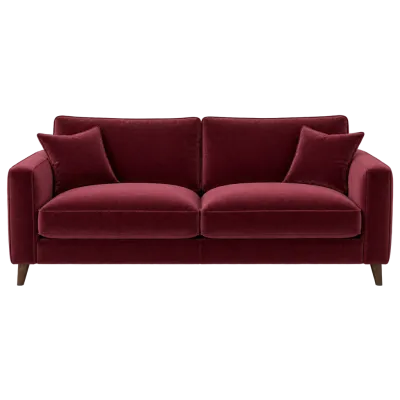 Matching productVelvet sofaAmazon →
03
Microfibre, polyester and performance fabrics
Microfibre is a very fine synthetic fibre, usually polyester, woven densely to create a soft, suede-like surface. It is popular for its stain resistance, since liquids tend to bead on the tightly woven surface rather than soaking straight in, and for its relatively low cost.
Polyester more broadly is used across a huge range of sofa fabrics, from smooth weaves to velvets and chenilles, because it is durable, colourfast and affordable, and blends well with natural fibres to add strength.
Performance fabrics are a specific category engineered for high durability and easy cleaning, often using solution dyed fibres (where colour is added during fibre production rather than afterward, giving strong resistance to fading) and a tight, liquid-resistant weave. Many performance fabrics can be cleaned with water and a mild cleaner rather than needing a specialist product, which makes them a popular choice for busy households, though they can feel slightly less soft than a natural fibre equivalent.
04
Understanding Martindale rub counts
The Martindale test measures abrasion resistance by rubbing a fabric sample against a standard abrasive material in a figure-eight motion, counting the number of rubs (cycles) it takes before the fabric shows visible wear. It is a widely used, standardised way to compare durability between fabrics, though it does not measure softness, colour, or how a fabric will look after years of general household use, which also depends on cleaning habits and sunlight exposure.
| Martindale rating | Suitability |
|---|---|
| Up to 10,000 rubs | Light domestic use, occasional seating, scatter cushions |
| 10,000 to 15,000 rubs | General domestic use, everyday sofas in average households |
| 15,000 to 25,000 rubs | Heavy domestic use, family living rooms, frequent daily use |
| 25,000 rubs and above | Contract and heavy-duty grade, suitable for the busiest households or commercial settings |
As a rough guide, a fabric sofa for a household with children, pets or frequent guests is worth choosing at 15,000 rubs or higher, while a lightly used formal living room sofa can perform well at a lower rating.
 Matching productScatter cushionsAmazon →
05
Pilling and light fastness
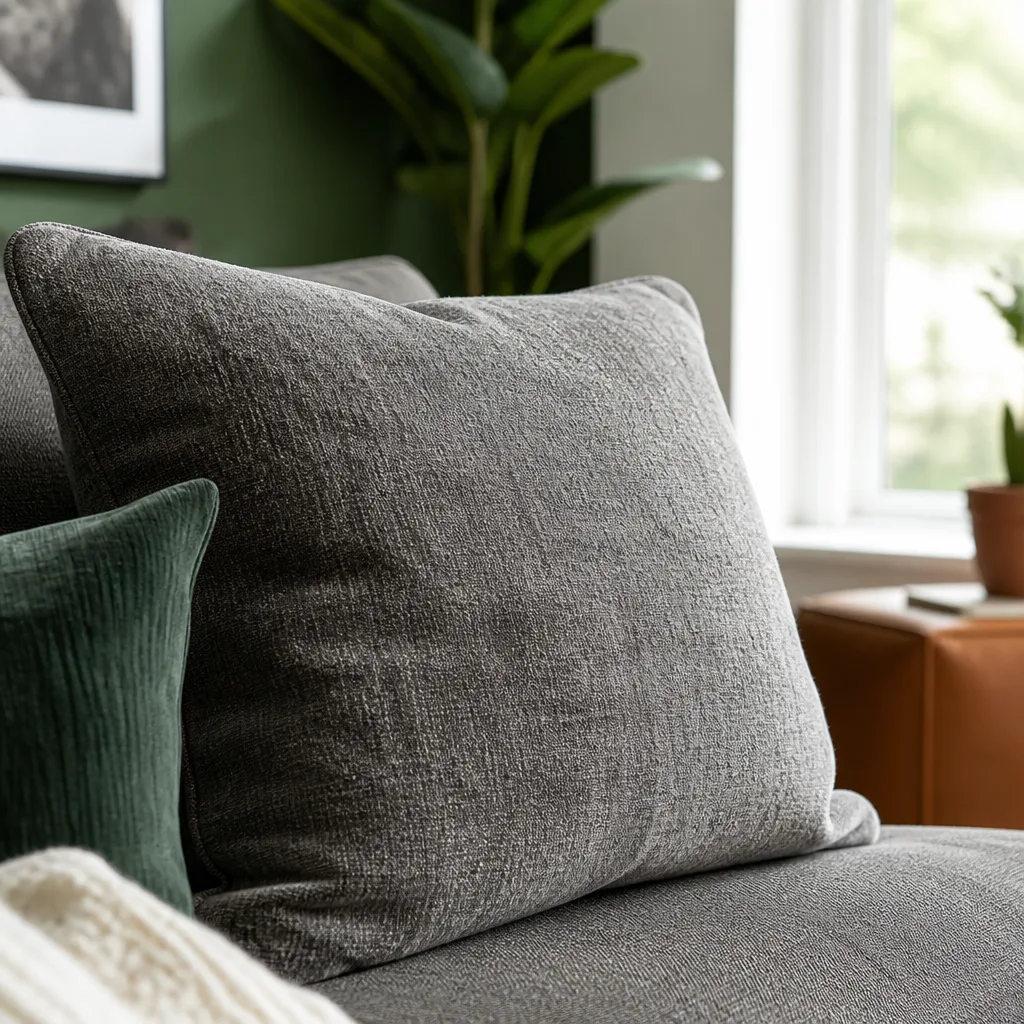
Pilling is the small, fuzzy balls of fibre that form on a fabric's surface from friction, most visible on synthetic and synthetic-blend fabrics such as polyester and some chenilles. A small amount of pilling is normal and can be removed with a fabric shaver, but fabrics with a tighter, denser weave generally pill less than loose, fluffy ones.
Light fastness describes how well a fabric resists fading from sunlight exposure, and it is measured on its own standard rating scale. Solution dyed synthetic fibres and wool generally have strong light fastness, while some natural fibre dyes, particularly in strong or dark colours, can fade more noticeably over years of direct sun exposure. A sofa placed directly opposite a large, unshaded window benefits from a fabric with good light fastness, or occasional rotation of loose cushions to even out fading.
06
Choosing a fabric for pets and children
Households with pets or young children generally do best with a tightly woven, higher Martindale rated fabric that resists snagging, such as a performance weave, a dense microfibre, or a tight wool or wool blend. Looser weaves, delicate velvets and pale, absorbent natural fibres in light colours are harder to keep looking fresh under claws, crayons and spilled juice. A patterned or textured fabric in a mid-tone colour also hides everyday marks and pet hair more effectively than a plain, pale, smooth weave. Our sofa for pets and kids guide covers this in more depth, and our sofa stains guide gives specific cleaning steps once a mark does happen.
 Matching productHandheld upholstery vacuumAmazon →
07
Frequently asked questions
What is the most durable sofa fabric?
Tightly woven performance fabrics and good quality wool blends generally offer the strongest combination of high Martindale ratings, stain resistance and long-term appearance, though "most durable" always depends on the specific weave and finish rather than the fibre type alone.
Is velvet practical for a family sofa?
Modern polyester or polyester-blend velvets are more practical than traditional velvets and can work well in family use, though the pile can show pressure marks and needs occasional brushing to keep an even appearance.
What Martindale count should I look for?
At least 15,000 rubs is a sensible minimum for an everyday family sofa, while 25,000 rubs or higher suits the heaviest use or households wanting the longest-lasting appearance.
Do natural fabrics wear out faster than synthetics?
Not necessarily. Wool, for example, is naturally durable and resilient, while some synthetics vary widely in quality. Durability depends more on the specific weave, density and any blending than on natural versus synthetic fibre alone.
Can I have a fabric sofa cleaned professionally?
Yes, most fabric sofas can be professionally cleaned, and checking the fabric's cleaning code (often found on a manufacturer's label) beforehand tells a cleaner whether water based or solvent based products are appropriate for that specific fabric.
Explore
Read next
 Sofa Types Explained: From Two Seater to SectionalAn overview of common sofa types, with a comparison table and links to deeper guides on sizing, materials and care.
 Sofa Buying Guide: How to Choose the Right SofaA step-by-step guide to buying a sofa, from measuring your room to checking frame, springs, foam and upholstery.
 Sofa Care and Cleaning: A Guide by MaterialHow to clean and care for your sofa by material, with cleaning codes, a care table and quick stain first aid.