
6 min read
Sofa Stain Removal: First Aid and a Stain by Stain Guide
Clear, practical first aid for sofa stains, cleaning code meanings, and specific steps for common marks on fabric and leather.
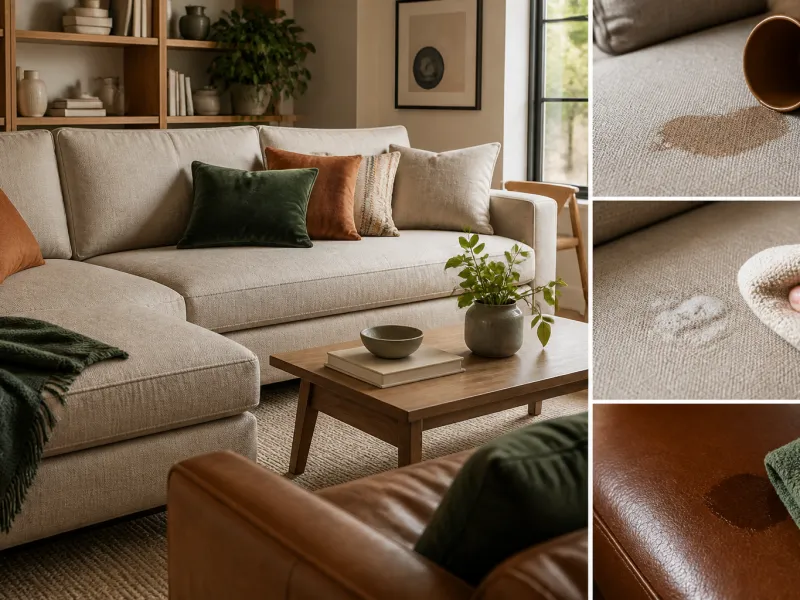
Almost every sofa collects a stain sooner or later, and how you respond in the first few minutes often matters more than which product you eventually reach for. This guide covers the general first aid principles for any spill, explains what cleaning codes on a sofa's label actually mean, walks through specific advice for common stains on both fabric and leather, and is clear about what to avoid and when a mark genuinely needs a professional.
For fabric specific background, see our sofa fabrics guide, and for leather care more broadly see our leather sofa guide.
01
First aid principles for any spill
A few core habits apply to almost any stain, on almost any material, and following them consistently prevents most marks from becoming permanent.
- Act quickly. A fresh spill is dramatically easier to remove than one that has dried and set into the fibres or leather surface.
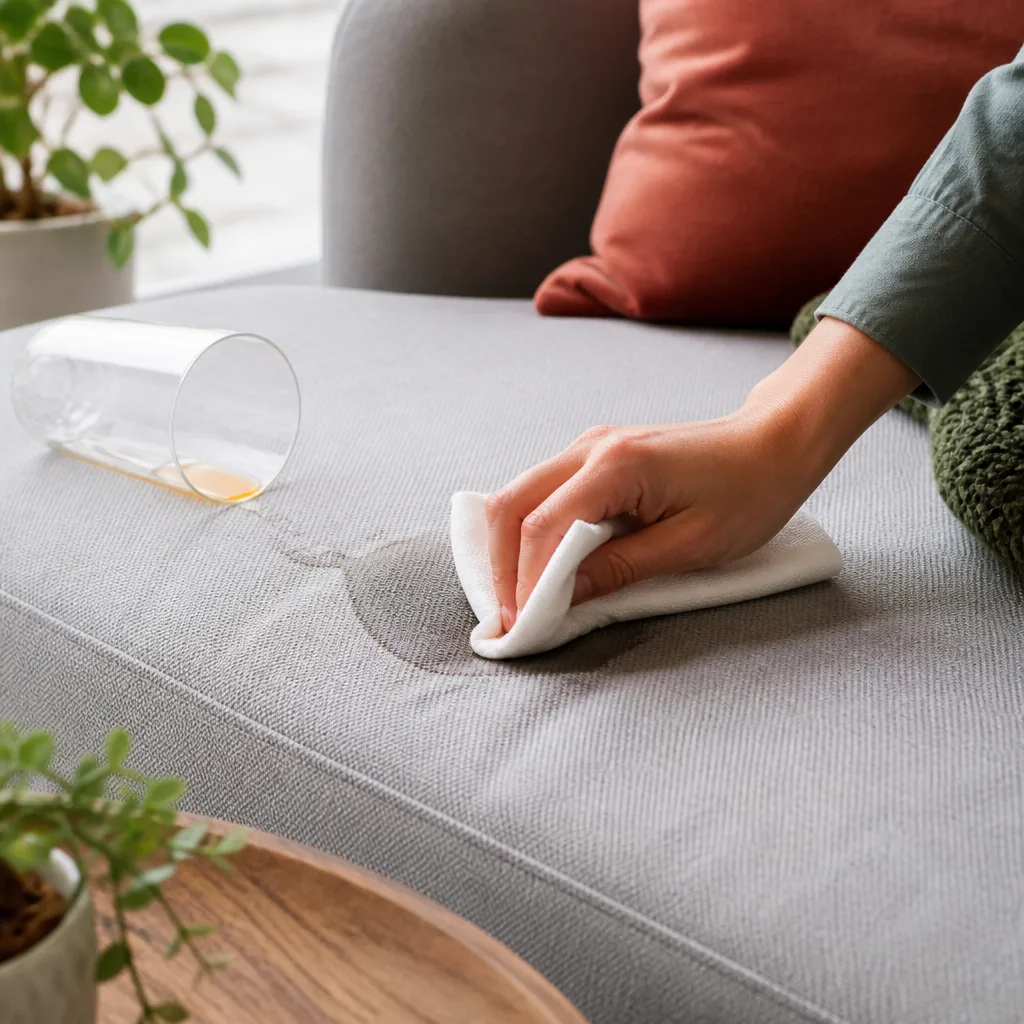
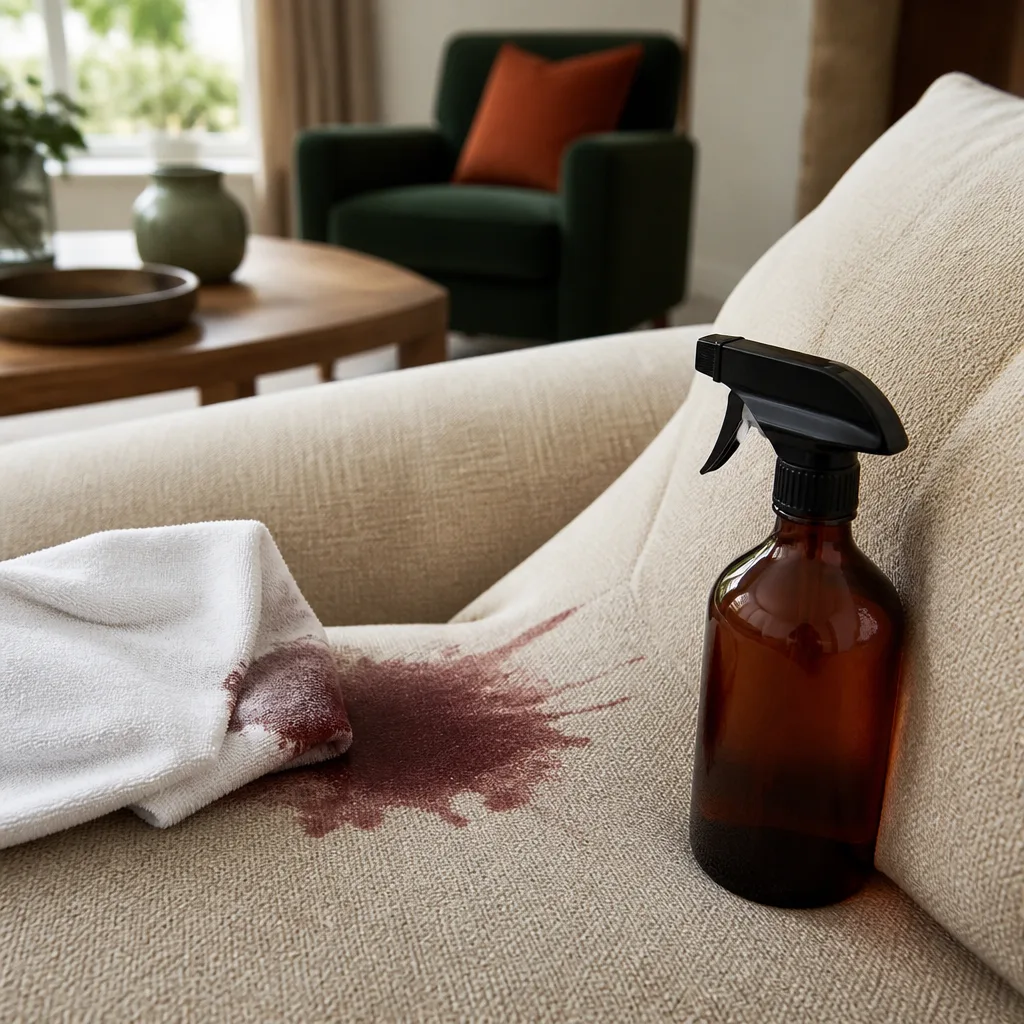
- Blot, never rub. Rubbing pushes a stain deeper into the fabric weave or leather grain and can damage the pile or finish. Press a clean, absorbent, light coloured cloth onto the mark and lift straight up, repeating with a clean section of cloth.
- Work from the outside in. Starting at the outer edge of a stain and working inward stops it spreading further across the surface.
- Remove solids first. For anything with solid content, gently scrape or lift it away with a blunt edge such as a spoon before treating the remaining liquid or residue.
- Test any product first. Apply a small amount of any cleaner to a hidden area, such as the underside of a cushion or the back of the sofa, and wait to check for colour change or damage before treating the visible stain.
- Let it dry naturally. Avoid direct heat sources such as a hairdryer to speed drying, since heat can set certain stains permanently and can damage some fabrics and leather finishes.
 Matching productUpholstery cleanerAmazon →
02
Understanding cleaning codes
Many sofas carry a cleaning code on a label, usually a single letter, which indicates what type of cleaning product is safe to use on that specific fabric.
| Code | Meaning |
|---|---|
| W | Water based cleaner only, use with a clean, damp cloth or a mild water based upholstery cleaner |
| S | Solvent based cleaner only, avoid water, use a dry cleaning solvent designed for upholstery |
| WS (or SW) | Either a water based or a solvent based cleaner can generally be used |
| X | Vacuum only, no liquid cleaners of any kind, professional cleaning recommended for stains |
Checking this code before treating any stain is one of the simplest ways to avoid making a mark worse, since using a water based product on a fabric coded S, for example, can leave a permanent watermark or ring.
 Matching productFurniture sliders and feet padsAmazon →
03
Stain by stain: fabric
The right first step varies noticeably by stain type, since some are protein based, some oil based, and some pigment based.
| Stain | First steps on fabric (check cleaning code first) |
|---|---|
| Coffee or tea | Blot excess immediately, treat with a small amount of water mixed with a little mild dish soap on a cloth (if coded W or WS), blot dry, repeat as needed |
| Red wine | Blot immediately, avoid rubbing, apply a small amount of cool water and mild soap if coded W or WS, blot repeatedly, do not use hot water which can set the pigment |
| Grease or oil | Sprinkle a light layer of baking soda or cornstarch to absorb the oil, leave briefly, vacuum away, then treat any remaining mark with an appropriate solvent based cleaner if coded S or WS |
| Ink | Blot gently, test a small amount of isopropyl alcohol on a hidden area first, dab carefully from the outside in if the fabric tolerates it, otherwise seek professional cleaning |
| Blood | Use cool water only, never hot, which sets protein based stains, blot repeatedly with a cloth dampened in cold water |
| Pet urine | Blot thoroughly, treat with a diluted vinegar and water solution or a dedicated enzyme based pet stain cleaner suited to the fabric, which helps break down odour causing compounds |
| Chewing gum | Harden the gum first with an ice cube in a plastic bag held against it, then gently scrape away once brittle, taking care not to pull the fabric fibres |
04
Stain by stain: leather
Leather needs gentler handling than fabric, since its surface can be damaged by harsh products or excessive moisture.
| Stain | First steps on leather |
|---|---|
| Coffee or tea | Wipe immediately with a barely damp cloth, dry promptly with a soft towel, avoid soaking the surface |
| Red wine | Blot immediately without rubbing, wipe with a barely damp cloth, dry thoroughly, treat with a leather cleaner suited to the finish if a mark remains |
| Grease or oil | Blot excess gently, avoid water, dust lightly with cornstarch to draw out oil, leave for a few hours, brush away gently |
| Ink | Test rubbing alcohol on a hidden area first, dab very gently with a small amount on a cotton swab if safe, otherwise treat as a job for a leather care professional |
| Blood | Wipe promptly with a barely damp cool cloth, never hot water, dry immediately with a soft towel |
| Pet urine | Wipe thoroughly with a barely damp cloth and a small amount of mild soap, dry completely, follow with a leather conditioner once dry to prevent the surface drying out |
| Chewing gum | Harden with an ice cube in a bag, then very gently lift away once brittle, taking care not to scratch the leather surface |
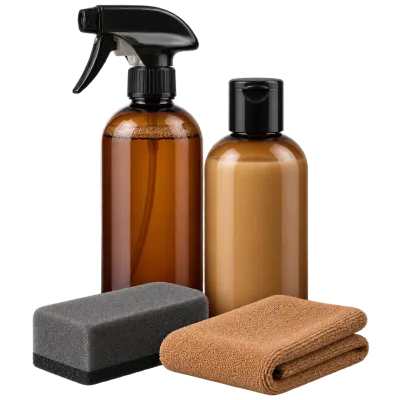 Matching productLeather care kitAmazon →
05
What never to do
- Never use bleach or strong undiluted chemical cleaners on either fabric or leather, since these can strip colour and damage fibres or finish permanently.
- Never scrub vigorously, on fabric or leather, since this can push a stain deeper or damage the surface texture.
- Never soak a fabric or leather sofa with large amounts of water, which can cause watermarks, shrinkage, or damage to the padding and frame underneath.
- Never use a hairdryer or other direct heat to speed up drying, since heat can permanently set many stains and can dry out or crack leather.
- Never mix cleaning chemicals, particularly anything containing bleach with anything containing ammonia, which can create harmful fumes.
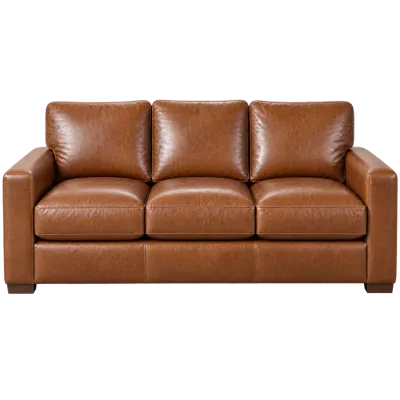 Matching productLeather sofaAmazon →
06
When to call a professional
Some situations are worth handing to a professional upholstery or leather cleaner rather than treating yourself:
- The fabric is coded X (vacuum only) and a liquid based stain has occurred.
- A stain has already dried and set, or has been treated unsuccessfully at home and seems to be spreading rather than lifting.
- The sofa is a delicate or valuable material, such as aniline leather, silk blend fabric, or a vintage piece, where an amateur attempt carries real risk of permanent damage.
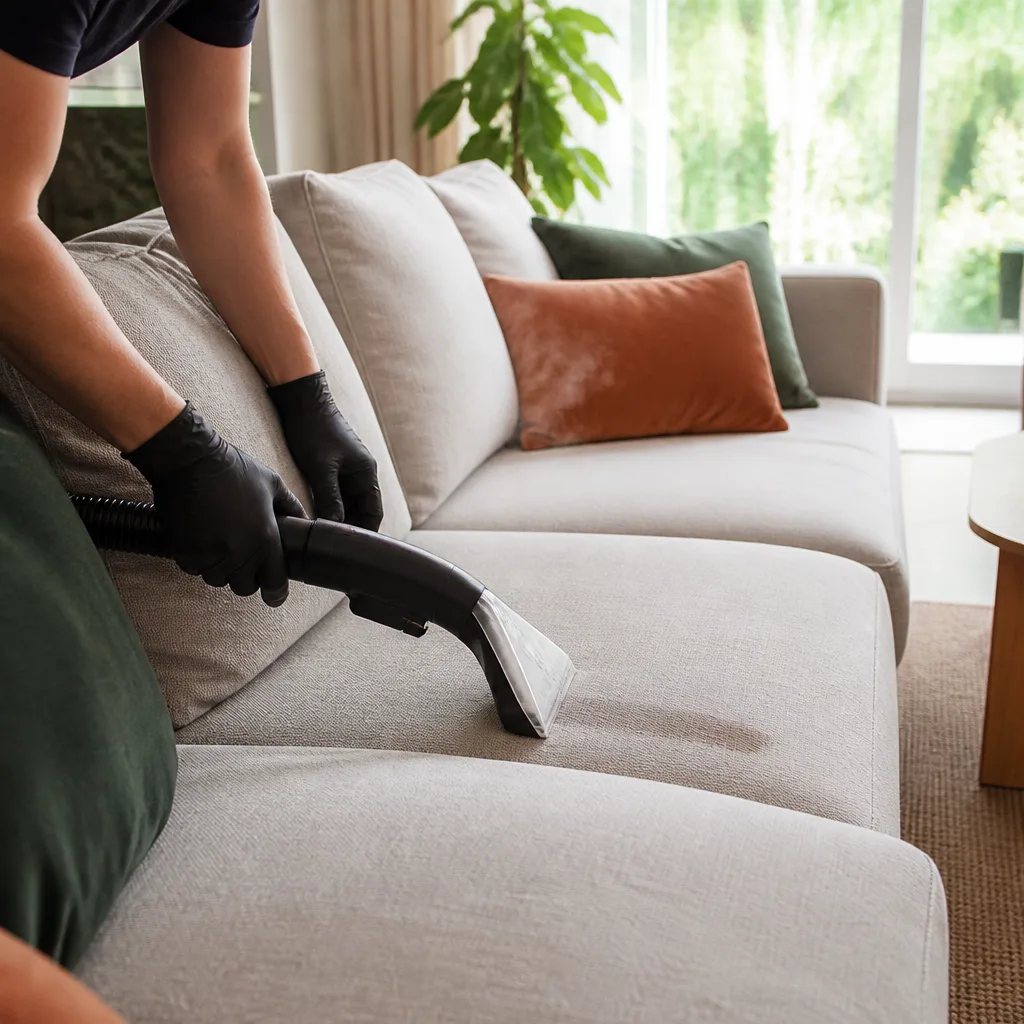
- A large area is affected, such as from a significant spill or pet accident, where a full clean rather than spot treatment gives a more even result.
A professional clean every one to two years, even without a specific stain to treat, also helps remove ground in dirt and refresh the surface of a well used sofa.
07
Frequently asked questions
What should I do the moment a stain happens?
Blot up as much liquid or solid as possible immediately, without rubbing, then check the sofa's cleaning code before applying anything further. Acting within the first few minutes makes the biggest difference to the outcome.
Can I use water on any fabric sofa?
Only if the cleaning code allows it. A fabric coded S should not be treated with water, since this can leave a permanent ring or watermark, and a solvent based product suited to that fabric should be used instead.
Is baking soda safe on leather?
A light dusting of baking soda or cornstarch to draw out grease is generally safe on leather when brushed away gently after a few hours, but always test a small hidden area first and avoid leaving it on for an extended period.
How do I get rid of a pet odour, not just the stain?
An enzyme based cleaner designed for pet stains, used according to its instructions, breaks down odour causing compounds more effectively than a general cleaner, and thorough drying afterward helps prevent lingering smell.
Why does my stain keep coming back after cleaning?
This often happens when only the visible surface residue was cleaned while some of the staining substance remains deeper in the cushion filling, which can wick back up to the surface as it dries. A professional clean is usually the most reliable fix for a recurring stain.
Explore
Read next
 Sofa Types Explained: From Two Seater to SectionalAn overview of common sofa types, with a comparison table and links to deeper guides on sizing, materials and care.
 Sofa Buying Guide: How to Choose the Right SofaA step-by-step guide to buying a sofa, from measuring your room to checking frame, springs, foam and upholstery.
 Sofa Care and Cleaning: A Guide by MaterialHow to clean and care for your sofa by material, with cleaning codes, a care table and quick stain first aid.