
8 min read
Sofa Buying Guide: How to Choose the Right Sofa
A step-by-step guide to buying a sofa, from measuring your room to checking frame, springs, foam and upholstery.
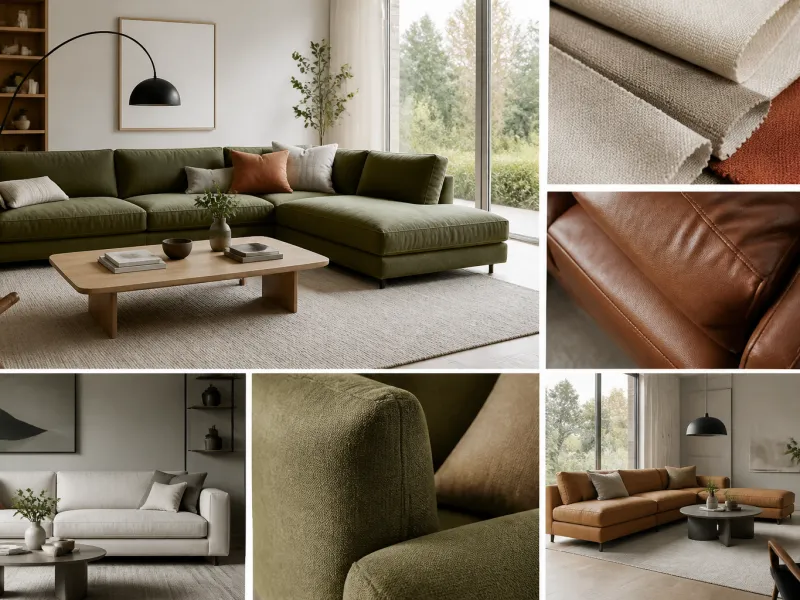
Buying a sofa is one of the bigger furniture decisions in a home, and it is also one of the easiest to get slightly wrong: a piece that looks right in a showroom can be too deep to sit in comfortably, too wide for the room, or upholstered in a fabric that shows every mark within a month. This guide walks through the decision step by step, in the order it usually makes sense to think about them.
Work through the sections below with a tape measure in hand and your own room in mind, rather than treating them as abstract advice. By the end you should have a clear list of the numbers and materials that matter for your specific space.
01
Step 1: measure the room and the doorways
Start with the room itself. Measure the length of the wall where the sofa will stand, and check the depth available in front of it, allowing space for a coffee table and comfortable walking room, typically at least 60 to 90 cm (24 to 35 in) of clearance. If the sofa will sit under a window, note the sill height so the back does not block too much light.
Then measure the route the sofa will travel to reach the room: front door width and height, hallway width, any turns or staircases, and the lift or stairwell if you live in an apartment building. Corner and sectional sofas are especially prone to arriving at a tight turn that a straight sofa would clear easily. Many manufacturers list a "flat pack" or "knock down" option, where legs, arms or sections detach for transport, which is worth checking if your access is limited.
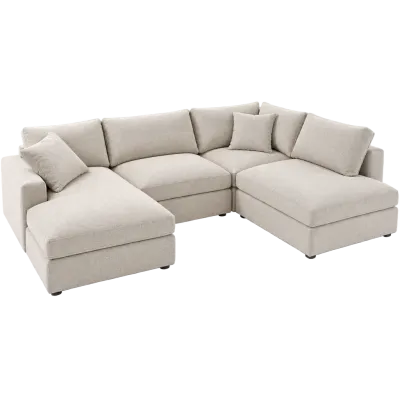 Matching productModular sofaAmazon →

02
Step 2: decide on size and seat count
Once you know the space available, decide how many people the sofa needs to seat regularly, not just on the busiest occasion. A three seater is the common default for a main living room sofa, while a two seater or loveseat suits smaller rooms or a secondary seat. If you often host more people than your household size, a corner sofa or modular sectional may serve better than a larger straight sofa, since it uses a room's corner rather than only its length.
Keep proportion in mind as well as raw size: a sofa that is technically small enough to fit can still look oversized in a room with a low ceiling, or undersized against a very large wall. As a rough guide, leave at least 30 to 40 cm (12 to 16 in) of clear space at each side of a sofa where possible, so it does not feel wedged into the room.
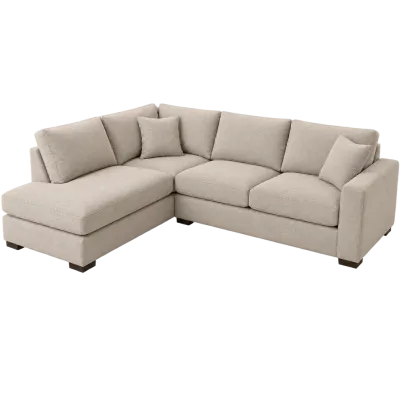 Matching productCorner sofaAmazon →
03
Step 3: seat depth and seat height
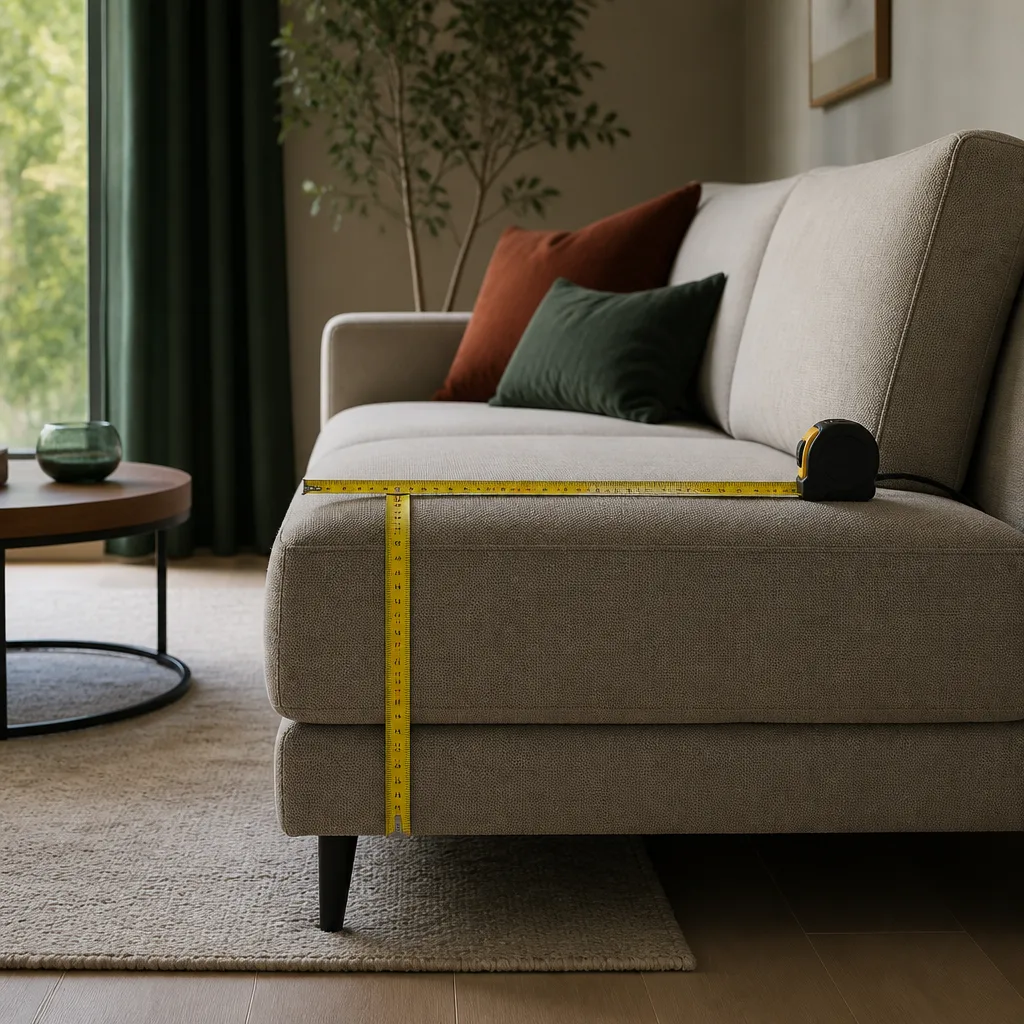
Seat depth, the distance from the front edge of the cushion to the backrest, has a big effect on comfort. A shallower seat depth of around 55 to 60 cm (22 to 24 in) suits people who like sitting upright with their feet flat and their back supported, which also tends to work well for shorter people. A deeper seat of 65 cm (26 in) or more suits lounging with your legs up, but can leave shorter sitters unable to reach the backrest without their feet lifting off the floor.
Seat height, measured from the floor to the top of the cushion, typically ranges from about 38 to 45 cm (15 to 18 in). Lower seats look more relaxed and contemporary but are harder to rise from, which matters for older users or anyone with knee or hip discomfort. If several people with different heights will use the sofa regularly, sitting on a floor sample, or checking a showroom model with the same dimensions, is worth the time before ordering.
 Matching productFurniture sliders and feet padsAmazon →
04
Step 4: frame and joints
The frame is the part of a sofa you cannot easily fix later, so it deserves attention even though it is hidden under the upholstery. Hardwood frames, such as beech, oak or ash, generally offer the best long term durability and hold screws and staples securely over years of use. Engineered wood, such as high grade plywood, is a reasonable and often more affordable alternative when well built. Softwood frames and low grade particleboard are more prone to sagging, cracking or loosening joints, particularly under repeated sitting and rising.
Joints matter as much as the wood species. Look for corner blocks, dowels, screws and glue used together at stress points such as arm to seat and back to base connections, rather than staples or nails alone. A sofa that feels rigid and does not creak or flex when you press down firmly on an arm or the seat corner is usually a good sign of solid joinery.
05
Step 5: springs and foam
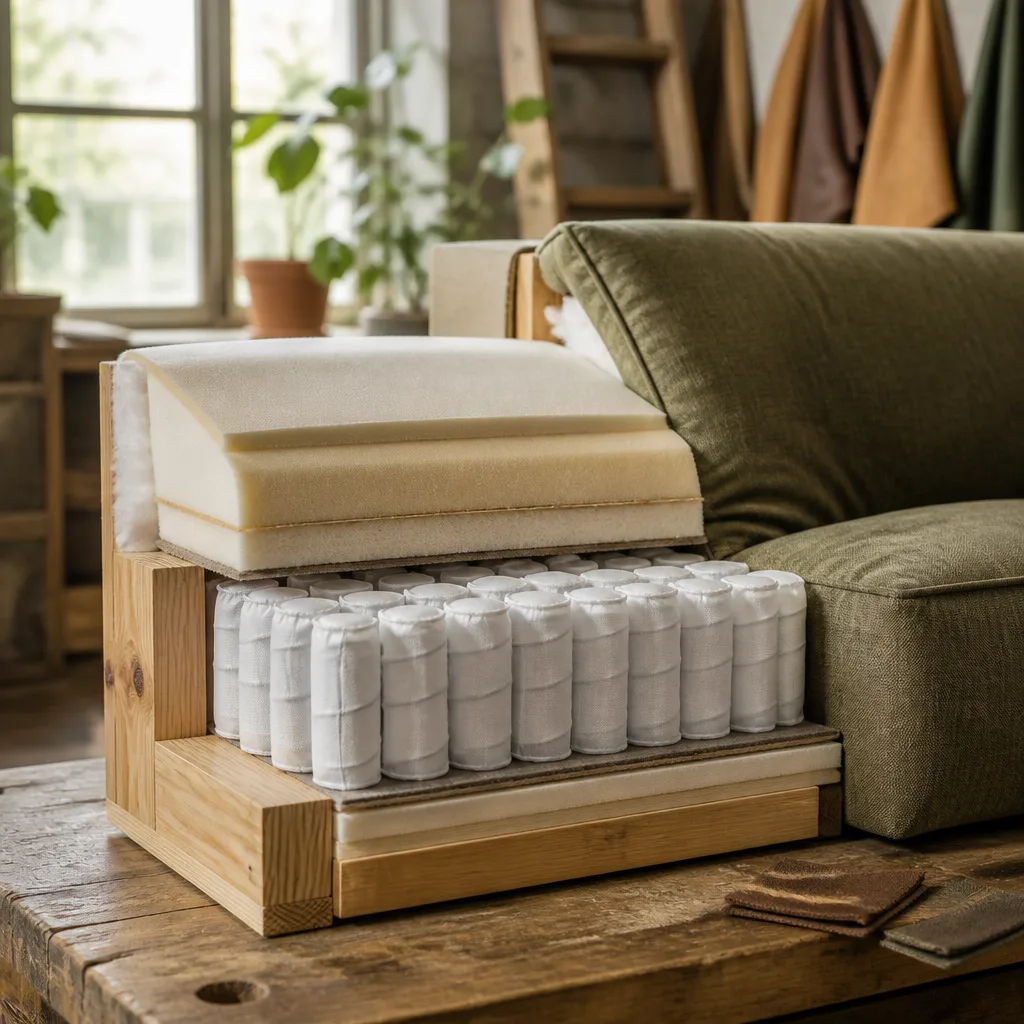
Support systems sit between the frame and the cushions, and they shape how a sofa feels to sit on from day one and how well it holds that feel over time. Pocket springs, individually wrapped coil springs, give a responsive, evenly distributed support and are common in higher quality sofas. Sinuous springs, zig zag wire strips running front to back, are lighter, less costly and still perform well in many sofas, particularly lighter use pieces. Rubber webbing or simple elastic webbing is used in more budget oriented or lightweight designs and gives a softer, less resilient base.
Foam density, not just thickness, determines how long a cushion keeps its shape. Higher density foam, generally described in kilograms per cubic metre, resists compressing permanently and springing back more slowly out of shape than low density foam, even if both feel similarly soft when new. Many quality sofas combine a higher density foam core with a softer top layer, sometimes wrapped in feather or fibre, to balance immediate softness with lasting support.
06
Step 6: cushions, loose or fixed
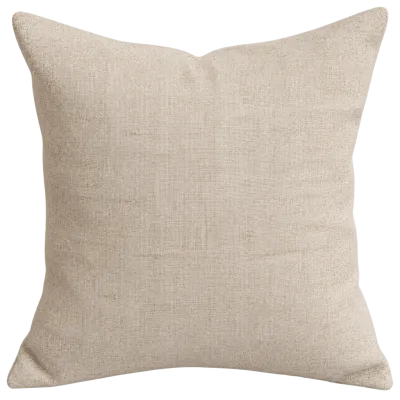
Loose seat and back cushions can be flipped, rotated and eventually replaced, which spreads out wear and lets you refresh the sofa's look later without buying new furniture. Fixed, tight back and seat cushions, as seen on many chesterfield and camelback sofas, give a cleaner, more tailored silhouette but cannot be rearranged and are more involved to repair if the foam degrades. Neither option is inherently better: it depends on whether you value a low maintenance, adjustable seat or a crisp, structured look.
 Matching productScatter cushionsAmazon →
07
Step 7: upholstery, leather versus fabric
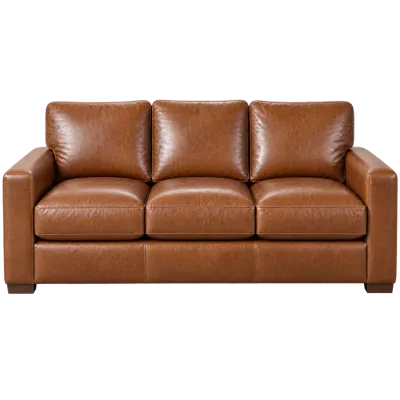
Leather and fabric each have real advantages, and the right choice depends on your household more than on fashion. Leather is generally easier to wipe clean of everyday spills, does not attract pet hair the way many fabrics do, and develops a patina with age rather than looking simply worn. It can feel cool in a cold room and warm quickly in direct sun, and it is usually a higher upfront cost. Fabric offers far more colour and texture choice, tends to feel warmer to sit on, and performs differently by weave: a tightly woven, high Martindale fabric holds up well to daily use, while looser, more decorative weaves are better suited to lower traffic rooms. Our leather sofa guide and fabric guide go into far more depth on grades and weaves.
The Martindale test measures how many rub cycles a fabric withstands before visible wear appears, and it is one of the more useful, standardised numbers to compare across brands. As a rough guide, fabrics rated from around 15,000 to 25,000 Martindale rubs suit domestic use, while 25,000 and above suits heavier household or semi commercial use. Our glossary entry on the Martindale test explains the method in more detail.
 Matching productLeather sofaAmazon →
08
Step 8: colour and pattern
Colour affects both how a sofa reads in a room and how forgiving it is day to day. Mid tone, muted colours and subtle patterns generally hide dust, pet hair and minor marks better than pure white or very dark solid colours, both of which show contrast more readily. If you are drawn to a bold colour or pattern, consider it for a smaller piece, such as a loveseat or an accent chair, and keep a larger three seater or sectional in a more neutral tone that will be easier to live with and to match later.
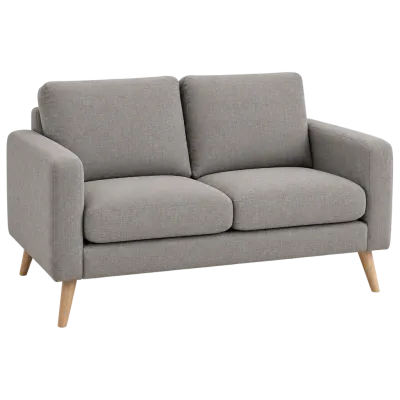 Matching productTwo-seater sofaAmazon →
09
Step 9: legs and overall style
Legs affect both the visual weight of a sofa and how easy it is to clean underneath. Exposed wooden or metal legs let light and air pass beneath the sofa, make the piece look lighter, and simplify vacuuming, while a skirted base that reaches the floor gives a more traditional, enclosed look and hides storage or cables. Consider how the leg style and overall silhouette, whether tuxedo, camelback, chesterfield or a plain contemporary shape, will sit alongside your existing furniture. Our sofa styles guide compares silhouettes in more detail.

10
Step 10: delivery and assembly
Before ordering, check the delivery method, expected lead time, and whether assembly is included or required on arrival. Some sofas arrive fully built, which demands more from doorways and stairwells, while others are designed to be assembled in the room, with legs, arms or backrests fitted on site, which can make a genuinely tight access route workable. Ask specifically about packaging dimensions if your access is limited, rather than relying on the sofa's finished dimensions alone.

11
Checklist before you order
- Room, doorway, hallway and staircase measurements taken and compared with the sofa's dimensions and packaging size.
- Seat depth and seat height checked against how you actually like to sit.
- Frame material and joint construction confirmed, ideally hardwood with reinforced corners.
- Spring type and foam density checked, not just cushion thickness.
- Upholstery chosen with your household in mind: pets, children, sunlight and daily use.
- Martindale rating checked for fabric options intended for daily use.
- Colour and pattern considered against how forgiving they will be to live with.
- Leg style and overall silhouette matched to the room's existing furniture.
- Delivery timeline, assembly requirements and access route confirmed before ordering.
12
Frequently asked questions
How long should a good sofa last?
A well built sofa with a hardwood frame, quality springs and resilient foam can comfortably last ten years or more of regular household use, while upholstery may need attention or replacement sooner depending on material and daily wear.
Is a higher price always a sign of better quality?
Not automatically, but price often correlates with frame material, spring type and foam density, three things worth checking directly rather than relying on price alone. Our sofa types overview and this guide's frame and support sections give you the vocabulary to compare specifications regardless of price point.
Should I choose loose or fixed cushions?
Loose cushions are easier to rotate and eventually replace, which suits households wanting flexibility, while fixed cushions give a crisper, more tailored look that some traditional styles rely on. Neither is objectively better, it depends on your priorities.
How do I know if a fabric is durable enough for daily use?
Check its Martindale rating: fabrics from around 15,000 rubs upward generally suit regular domestic seating, with higher numbers better suited to heavier use. See our Martindale glossary entry for more.
What should I do if my sofa needs to fit through a tight doorway?
Measure the doorway, hallway turns and any staircases first, then compare them against both the finished sofa dimensions and its packaged or flat pack dimensions, since many sofas can be partly disassembled for transport and rebuilt on site.
Explore
Read next
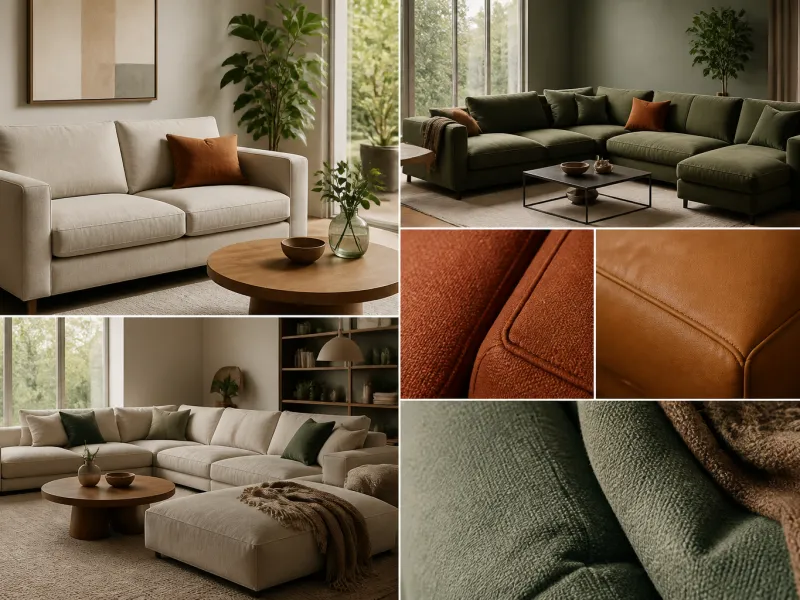 Sofa Types Explained: From Two Seater to SectionalAn overview of common sofa types, with a comparison table and links to deeper guides on sizing, materials and care.
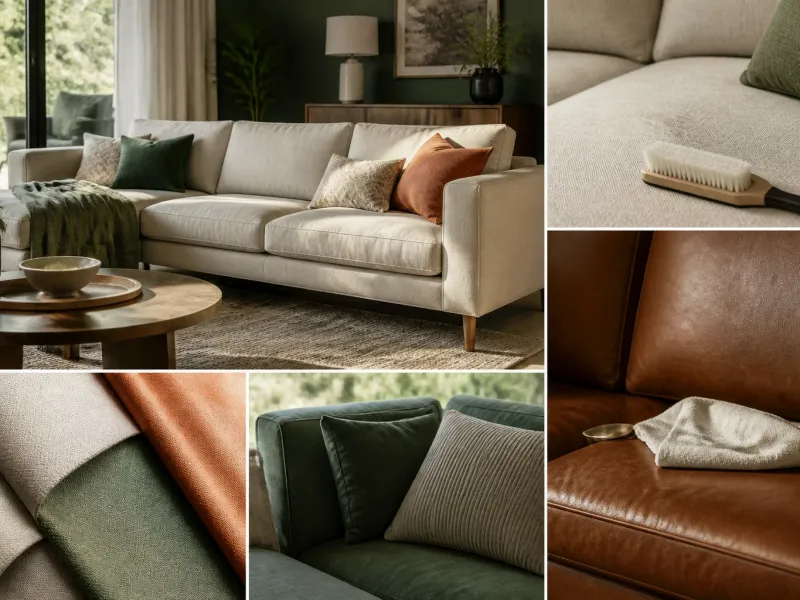 Sofa Care and Cleaning: A Guide by MaterialHow to clean and care for your sofa by material, with cleaning codes, a care table and quick stain first aid.
 Sofa Glossary: A to Z of Sofa TermsAn A to Z glossary explaining the terms you meet when shopping for a sofa, from leather grades to spring types.