
6 min read
Corner Sofa Guide: L-Shapes, Sizing and Placement
Everything to plan before buying a corner sofa: shape, hand orientation, measuring, and how to place it so it anchors the room.
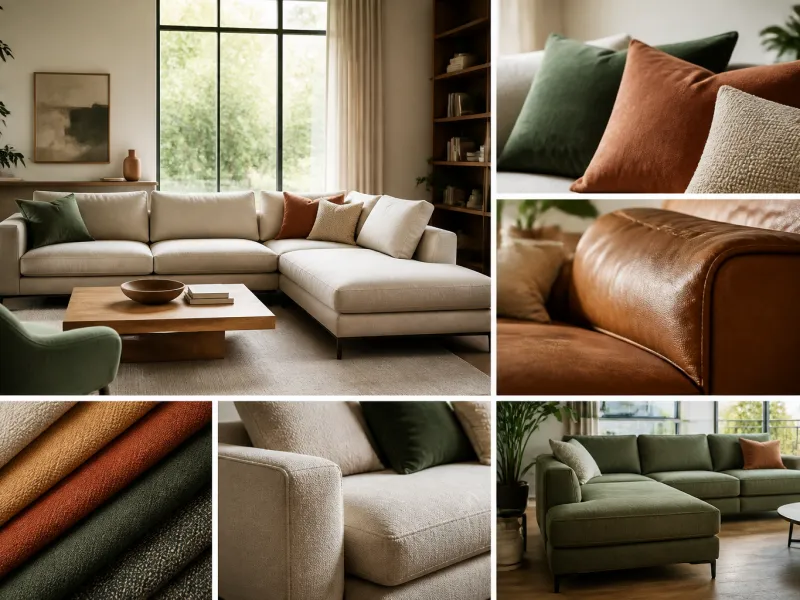
A corner sofa, often called an L-shaped sofa, turns a seating area into a room's natural gathering point. It gives more usable seating for the floor space it occupies than a row of straight sofas, and it can define an open-plan living and dining area without adding walls. Getting it right depends on a few decisions that are easy to overlook in a showroom: which way the chaise should face, how deep the corner really is, and how the sofa will travel through your doors on delivery day.
If you are still weighing a corner sofa against other layouts, our sofa types page compares the main shapes side by side, and our sofa size guide covers the general measuring steps that apply to any sofa.
01
What "L-shape" actually means
An L-shaped corner sofa is built from a straight run of seating joined to a shorter return section, usually finished with a chaise longue or a corner unit at the end. The two arms of the L are rarely equal in length: one side is typically a full run of three or more seats, while the return side is shorter, often extending just one or two seat widths beyond the corner. This asymmetry is what makes the "hand" of the sofa matter so much when you choose one.
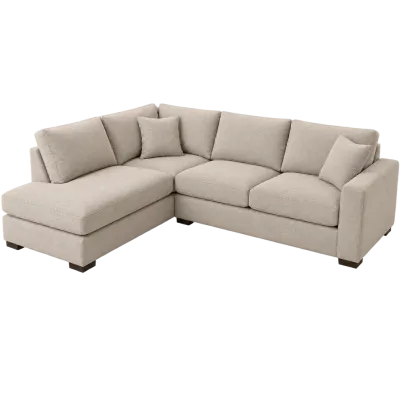 Matching productCorner sofaAmazon →
02
Left hand or right hand: how to decide
Corner sofas are usually described by the position of the chaise or the longer return when you are facing the sofa. A common convention, though retailers phrase it slightly differently, is to describe the orientation as seen when sitting on the sofa looking out into the room, or as seen from the front. Because the wording varies, always check a diagram rather than relying on the words "left hand" or "right hand" alone.
The practical way to decide is simpler than the terminology. Stand where the sofa will go and picture the room:
- Walk into the room and notice which side has the natural focal point, such as a fireplace, television wall or window view. The main, longer seating run usually faces this focal point directly.
- Notice which side has the main walkway or doorway. The short return or chaise should sit on the side that does not block that path.
- Think about how you will use the shorter side. A chaise end works well for stretching out with a book or resting with your feet up, and it is worth placing it where daylight or a view makes that appealing.
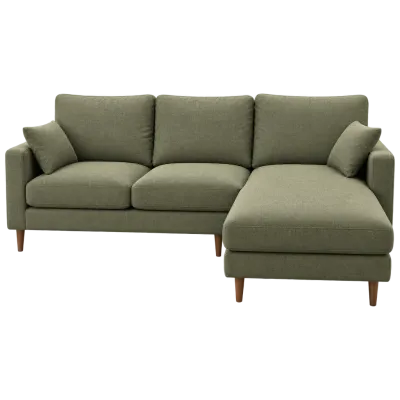 Matching productSofa with chaise longueAmazon →
03
Measuring the corner and the room
A corner sofa needs more careful measuring than a straight one because it occupies floor space in two directions at once and needs some clearance in front of both arms.
| Measurement | Why it matters | Typical guidance |
|---|---|---|
| Total footprint (length x depth) | Corner sofas can be 2.5 to 3.5 metres along each arm | Measure both arms and the outer corner to corner diagonal |
| Walkway clearance | Prevents the sofa from blocking circulation | Leave at least 90 cm (35 in) for a comfortable walkway |
| Distance to TV or focal wall | Comfortable viewing distance and conversation distance | Roughly 2.5 to 3.5 times the screen's diagonal for TV viewing |
| Doorway and hallway width | The sofa has to physically get into the room | Measure the narrowest doorway, hallway turn, and any stairwell along the delivery route |
| Ceiling height near stairs or landings | Diagonal manoeuvring needs headroom | Check corners and low ceilings on the delivery path, not just the room itself |
Many corner sofas are delivered as separate modules or with a detachable chaise for exactly this reason: it is far easier to bring two or three smaller pieces through a narrow hallway than one enormous L-shaped frame. When you order, ask whether the sofa arrives in one piece or several, and compare that against your narrowest doorway and any stairs or lift.
04
Open-plan rooms and zoning
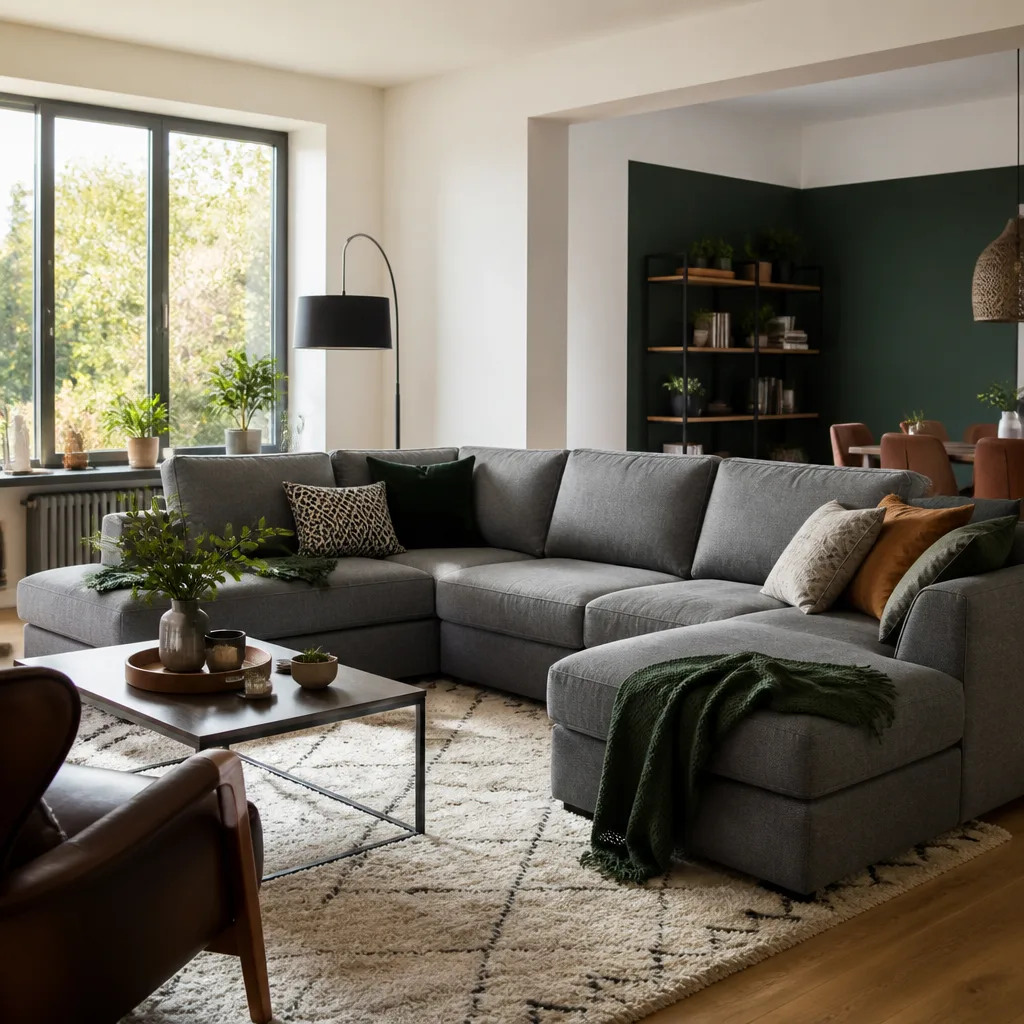
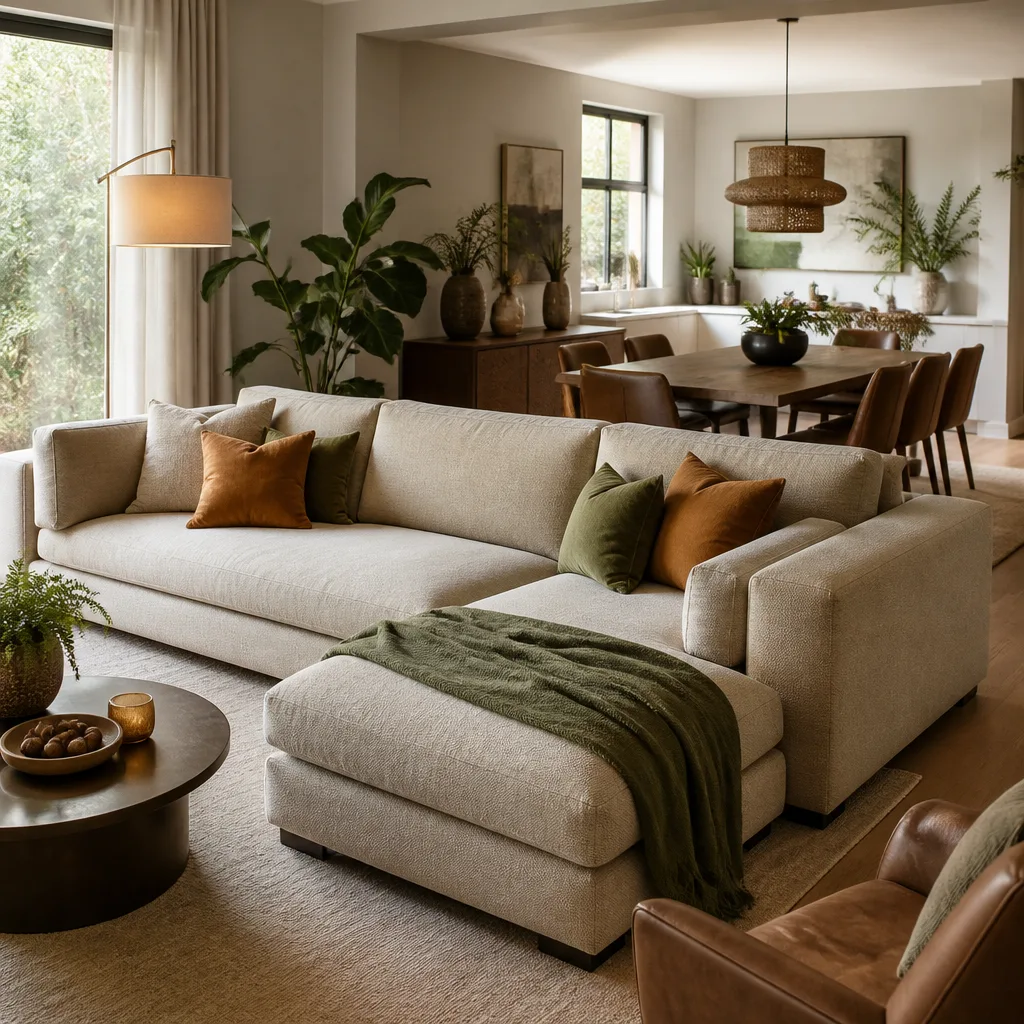
In an open-plan space, a corner sofa is a useful tool for creating a distinct living zone without a wall. Placing the back of the longer run so it faces, or partially faces, the dining or kitchen area helps separate the two functions visually while keeping the room open. A rug sized to sit under at least the front legs of the sofa reinforces this zoning and stops the seating area from feeling like it is floating in a larger open space. Leave enough gap between the back of the sofa and a dining table or kitchen island for people to walk through comfortably, generally at least 90 cm (35 in).
05
Chaise end versus a true corner unit
There are two common ways to build the return side of an L-shaped sofa. A chaise end has a solid, usually higher, closed side and an open lounging surface, so one person can stretch their legs out fully. It reads as a single continuous piece and suits a room where you want one clear "lounging" spot. A true corner unit uses two separate seat cushions meeting at a right angle at the corner, which gives more distinct individual seats and works well when several people will sit facing slightly different directions, such as toward both a television and a window.
06
Modular corner sofas
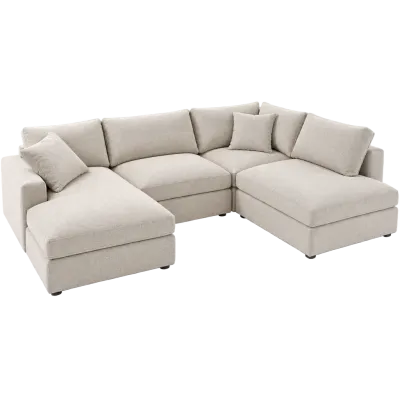
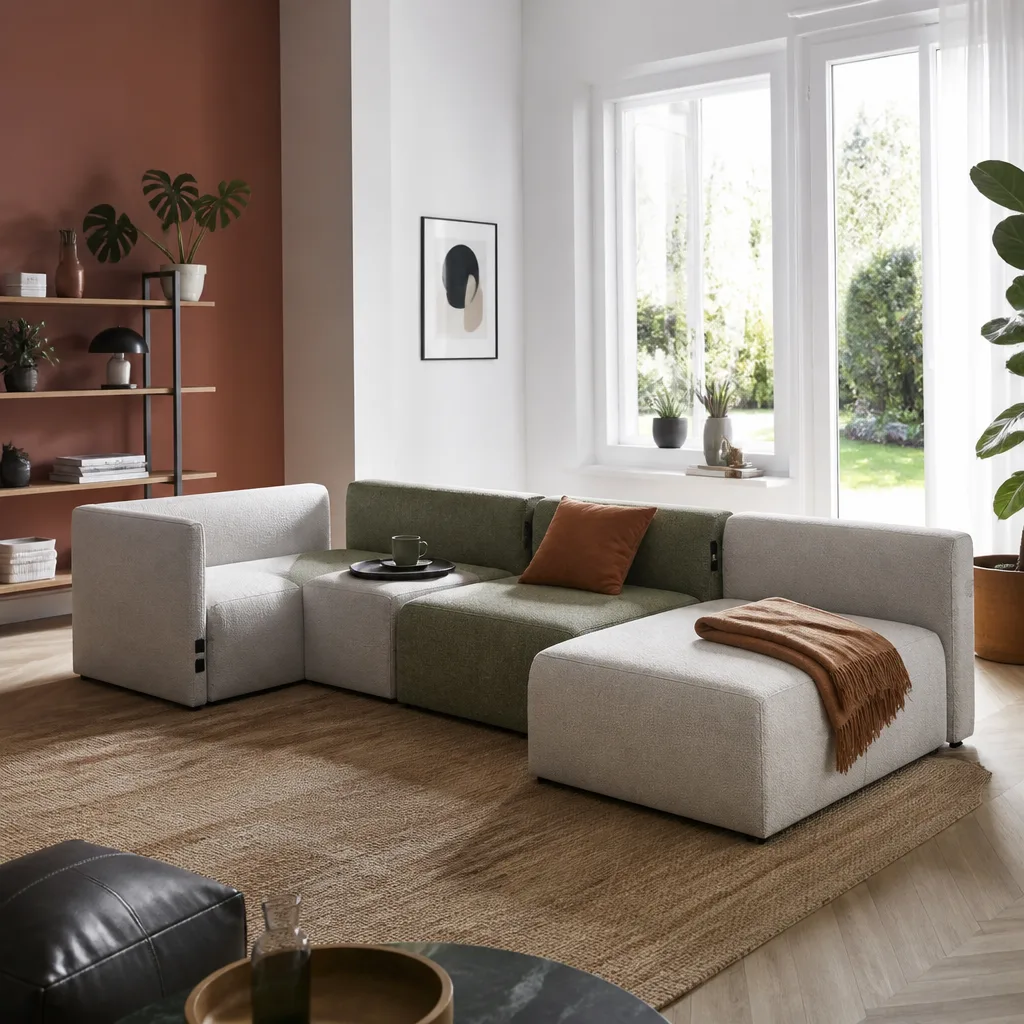
Many corner sofas today are modular, built from separate seat, corner and chaise units that connect with brackets or clips. This has two practical advantages. First, delivery and manoeuvring become much easier, since each module is a manageable size on its own. Second, the layout is not fixed forever: modules can often be rearranged into a straight sofa, a smaller L-shape, or even two separate seating pieces if you move house or redesign the room. See our dedicated modular sofa guide for how these systems are planned and connected in more detail.
 Matching productModular sofaAmazon →
07
Placement tips for a balanced room
A few habits consistently make corner sofas sit well in a room rather than crowding it.
- Pull the sofa slightly away from the wall, even a small gap of 5 to 10 cm, so it does not look pushed into the corner and light can reach behind it.
- Balance the visual weight of the longer arm with a floor lamp, a plant or a side table on the opposite side of the room, so the layout does not feel lopsided.
- Keep a clear path of at least 90 cm around the sofa on every side you expect people to walk.
- Choose a coffee table proportioned to the shorter arm rather than the full length of the sofa, so it does not overwhelm the seating nook.
- If the room is small, an L-shape tucked into an actual corner of the room, rather than floating in the middle, generally frees up the most usable floor space.
 Matching productFurniture sliders and feet padsAmazon →
08
Frequently asked questions
How do I know if I need a left hand or right hand corner sofa?
Stand in the room where the sofa will go and note which side has the main walkway and which side has the focal point, such as a window or television wall. The chaise or short return should sit on the side away from the main walkway, and the longer run should face the focal point.
Can a corner sofa be turned into a straight sofa later?
Modular corner sofas usually can, since their sections connect with brackets rather than being permanently joined. A fixed, one-piece L-shaped frame generally cannot be reconfigured, so check whether a sofa is modular before buying if flexibility matters to you.
Is a corner sofa a good choice for a small living room?
It can be, because an L-shape uses a room corner that is often otherwise wasted, and it seats more people per square metre of floor space than two separate sofas. A compact corner sofa with a shorter return arm suits small rooms better than a large one designed for open-plan spaces.
How many people does a corner sofa typically seat?
A mid-size corner sofa commonly seats four to five people comfortably, combining a three-seat run with a chaise or two-seat return, though exact capacity depends on the seat widths chosen.
Should the chaise face the window or the TV?
Either can work well. A chaise facing a window suits a spot for reading or relaxing in daylight, while a chaise angled toward a television suits households that spend more time watching together. Consider which activity happens more often in that room.
Explore
Read next
 Sofa Types Explained: From Two Seater to SectionalAn overview of common sofa types, with a comparison table and links to deeper guides on sizing, materials and care.
 Sofa Buying Guide: How to Choose the Right SofaA step-by-step guide to buying a sofa, from measuring your room to checking frame, springs, foam and upholstery.
 Sofa Care and Cleaning: A Guide by MaterialHow to clean and care for your sofa by material, with cleaning codes, a care table and quick stain first aid.