
8 min read
Leather Sofa: A Complete Guide to Types, Quality and Care
A clear look at every leather sofa type, how to tell real quality from clever finishing, and how to keep leather looking good for decades.
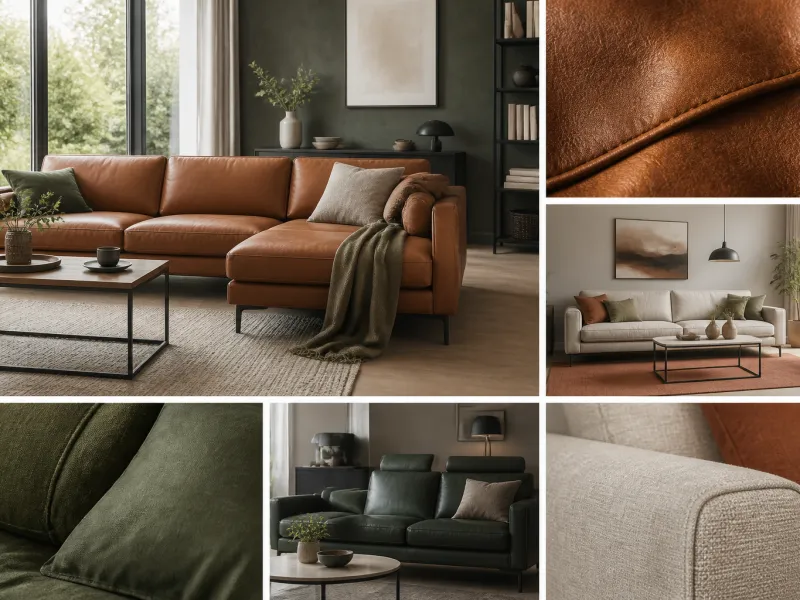
A leather sofa is one of the longer-term investments you make in a living room, and the word "leather" alone tells you very little. Full-grain, top-grain, corrected-grain, aniline, semi-aniline, pigmented, nubuck, suede, bonded and faux leather can all be sold under the same general heading, yet they differ enormously in look, feel, durability and price class. This guide walks through what each term actually means, how to judge quality with your own eyes and hands, which colours suit which rooms, and how to care for leather so it develops a good patina instead of premature wear.
Read this alongside our broader sofa types overview if you are still deciding between leather and fabric, or our buying guide for the practical steps of choosing and measuring a sofa before you order one.
01
Understanding the leather grades
Leather starts as a hide, and what happens to that hide after tanning is what separates one grade from another. Full-grain leather keeps the entire outer layer of the hide, including its natural markings, pores and minor imperfections. Nothing is sanded away, so the surface is exactly as the animal grew it. This is the most durable and the most expensive grade, because only a limited share of hides is flawless enough to use without correction.
Top-grain leather also uses the upper layer of the hide, but the very top is lightly sanded and a thin protective finish is applied. This evens out small blemishes while keeping most of the natural texture. It is a sensible middle ground: still a genuine, durable material, slightly more uniform in appearance than full-grain, and usually a step below it in price.
Corrected-grain leather goes further. The surface is sanded to remove scars and irregularities, then an artificial grain pattern is embossed on top and covered with a heavier pigmented coating. It looks tidy and consistent, resists stains well because the coating seals the surface, but it loses much of the natural feel and breathability of the hide underneath.
Two related fibre-based materials are worth knowing so you do not mistake them for genuine leather. Bonded leather is made from shredded leather scraps and fibres bonded to a fabric backing with polyurethane, then embossed to look like leather. It has only a small percentage of actual hide content and tends to crack or peel within a few years because the surface layer is not a continuous skin. Faux leather, sometimes called vegan or synthetic leather, contains no animal hide at all. It is a woven or knitted base coated in polyurethane or PVC. Modern faux leathers have improved a great deal and can be a practical, easy-care, animal-free choice, but they do not develop the ageing character of real leather and their lifespan depends heavily on the quality of the coating.
02
Aniline, semi-aniline and pigmented finishes
Alongside the grade of the hide, the way it is dyed and finished matters just as much for how the leather will look and behave.
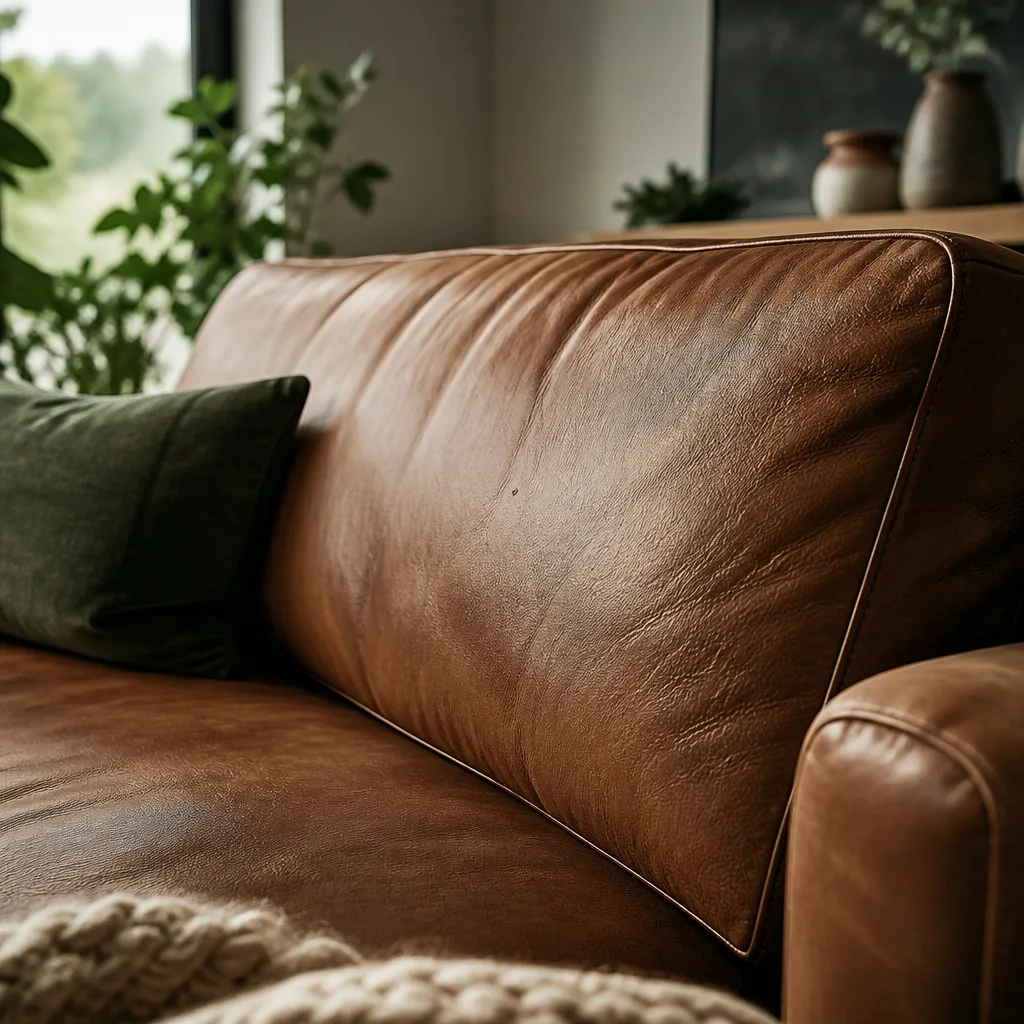
- Aniline leather is dyed all the way through with soluble dyes and receives no or almost no surface coating, so the natural grain, pores and even small scars remain visible. It feels soft and supple and shows changes in tone with use and light exposure, which is part of its appeal. It is also the most sensitive to spills and sunlight, so it suits households that accept a lived-in look developing over time.
- Semi-aniline leather starts the same way but gets a thin, evenly applied protective topcoat, sometimes with a small amount of pigment. This keeps most of the natural feel and appearance while adding meaningful resistance to stains and light fading. For many households it is the most practical balance between authenticity and everyday resilience.
- Pigmented leather (sometimes labelled protected or finished leather) has a heavier pigmented surface coating that largely hides the natural grain and provides the most uniform colour and the strongest resistance to stains, scuffs and fading. It is the easiest to live with day to day, at the cost of some of the tactile softness and character of aniline leathers.
 Matching productUpholstery cleanerAmazon →
03
Nubuck and suede: leather with a nap
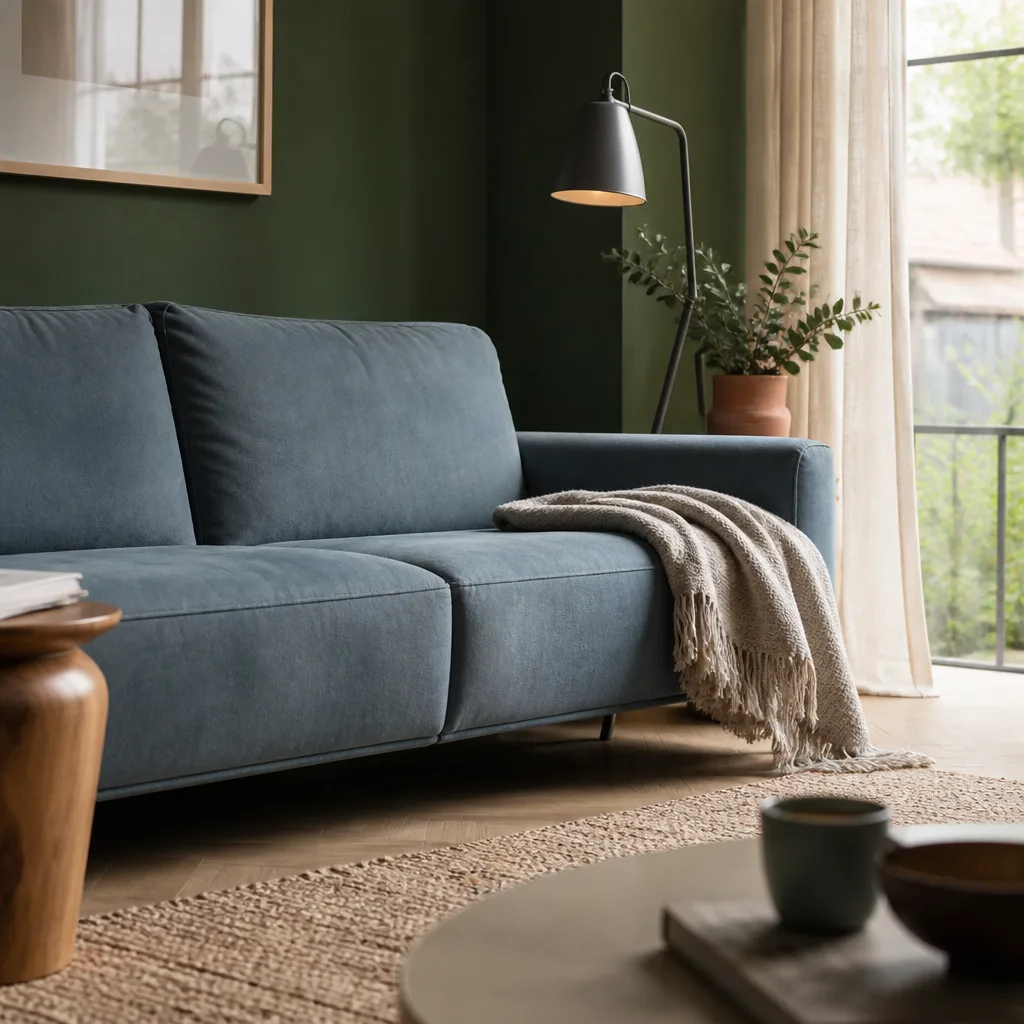
Nubuck and suede are not separate grades in the same sense as above, but different surface treatments. Nubuck is top-grain leather that has been sanded on the grain side (the outer, tougher surface) to create a short, velvety nap. Suede is usually made from the underside (split) of the hide, which is naturally softer but also weaker and less durable than the top layer. Both feel wonderfully soft and give a sofa a relaxed, textile-like appearance, but both absorb liquids readily and show watermarks and pressure marks easily. They need a dedicated suede or nubuck protector and a soft brush for regular care, and are better suited to lower-traffic rooms than to a household with young children or pets.
04
How to recognise real quality
You do not need to be a leather expert to judge a sofa reasonably well in a showroom or from detailed product photographs. A few checks go a long way.
| What to check | Sign of higher quality | Sign of lower quality |
|---|---|---|
| Surface pattern | Grain looks irregular and natural, small variations from panel to panel | Grain looks perfectly repetitive, identical pattern across every panel |
| Smell | Mild, warm, leathery scent | Strong plastic or chemical smell |
| Touch | Slightly warms to the hand, some give and softness | Stays cool and stiff, feels like plastic sheeting |
| Edges and back | Leather continues to seams and hidden panels, or matching leather-look fabric is used deliberately on the back | Vinyl or plastic substitute suddenly appears on sides or back |
| Stretch and rebound | Gently pressed leather springs back without a whitish crease | Presses leave a pale crease line that does not recover |
| Cushioning underneath | Firm structure under the leather, seat does not bottom out | Cushion collapses quickly, frame edges felt through the seat |
It is worth asking a retailer directly which grade and finish the leather is, and, if the answer is vague, treating that as useful information in itself. A well-made sofa will usually have this detail listed clearly, often alongside the country of hide origin and tannery process.
05
Choosing a colour
Leather colour behaves differently from fabric colour because the material itself has depth and sheen. Warm browns, cognac and tan tones are forgiving of scuffs and small marks because the natural variation in tone hides wear well, and they suit both traditional and contemporary rooms. Black and dark grey leather look sharp and formal but show dust, pet hair and fingerprints more visibly. Cream, white and pale grey leathers are striking in bright, airy rooms but need the most careful maintenance, especially in aniline finishes. If you are choosing leather for a family room with children or pets, a mid-tone brown or grey in a semi-aniline or pigmented finish is usually the most forgiving combination of style and practicality.
 Matching productHandheld upholstery vacuumAmazon →
06
A simple care routine
Leather does not need constant attention, but a short routine keeps it in good condition for many years.
- Dust weekly. Wipe the surface with a soft, dry or slightly damp microfibre cloth to remove dust and grit before it works into the grain.
- Blot spills immediately. Use a clean, absorbent cloth and blot rather than rub, working from the outside of the mark inward.
- Clean gently every one to two months. Use a cleaner made specifically for the leather finish you have, applied with a soft cloth, then buffed dry.
- Condition two to four times a year with a leather conditioner appropriate to aniline, semi-aniline or pigmented leather. This replaces natural oils and keeps the surface supple, which helps prevent cracking.
- Keep it out of direct, constant sunlight and away from radiators or heating vents, since both intense light and dry heat accelerate fading and drying.
- Rotate cushions where possible, so wear and fading spread evenly rather than concentrating on one favourite seat.
For deeper stains, follow the general first aid steps in our sofa stains guide, and always test any product on a hidden area first.
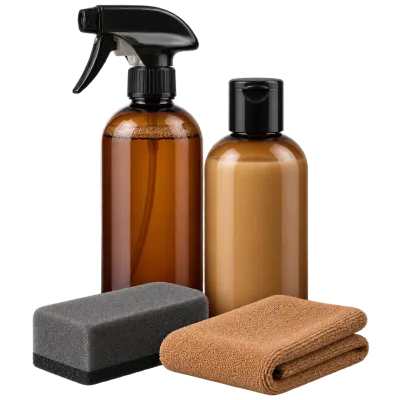 Matching productLeather care kitAmazon →

07
Ageing and patina
One of the reasons people choose real leather, particularly aniline and semi-aniline leather, is the way it ages. Unlike fabric, which mainly wears out, good leather develops patina: a softening and gentle darkening of high-contact areas such as armrests and the front edge of the seat, along with a subtle sheen that builds with handling. This is different from damage. A scuff that can be buffed out with a cloth or a light conditioning is part of patina; a crack, a torn seam or a colour loss down to the backing is wear that needs professional attention or repair. Choosing a leather and finish that suits how you actually live, rather than the most delicate option in a showroom, is the single biggest factor in whether your sofa ages gracefully or simply looks tired.
08
Frequently asked questions
Is top-grain leather as good as full-grain?
Top-grain leather is genuine, durable leather and works very well in daily use. It is generally considered a notch below full-grain in long-term character and breathability, but it is more consistent in appearance and often more affordable, which makes it a sound choice for most households.
Does leather crack over time?
Leather can crack if it dries out, if it is exposed to constant direct heat or sunlight, or if a lower-quality coated leather is bent repeatedly at the same point. Regular conditioning and keeping the sofa away from heat sources greatly reduce this risk.
Is leather a good choice with pets?
Leather resists pet hair better than most fabrics, since hair does not cling to a smooth surface and is easy to wipe or vacuum away. Claws can scratch softer aniline leathers, so a pigmented or semi-aniline finish is usually more forgiving in a household with cats or energetic dogs.
How long should a good leather sofa last?
A well-made leather sofa on a solid frame, cared for with regular dusting and conditioning, commonly lasts well over a decade, and full-grain leather on a quality frame can last considerably longer, often developing a richer patina the longer it is used.
Can faux leather look convincing?
Modern faux leather can look and feel very close to real leather at first, and it offers easy-care, animal-free practicality. It does not develop genuine patina and its surface coating will eventually show wear, typically peeling or cracking at stress points sooner than genuine top-grain or full-grain leather.
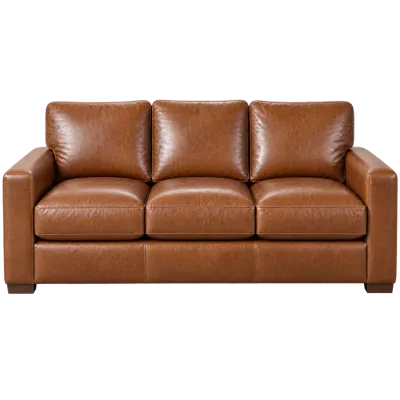 Matching productLeather sofaAmazon →
Explore
Read next
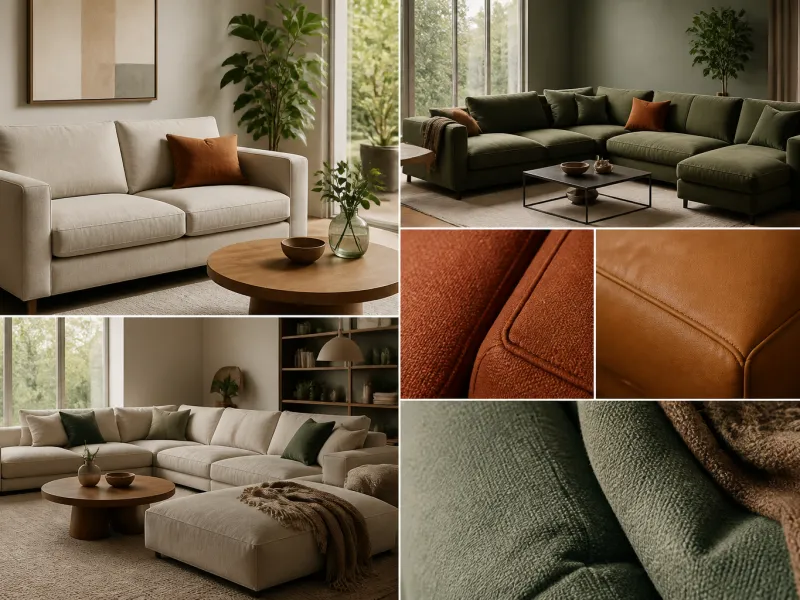 Sofa Types Explained: From Two Seater to SectionalAn overview of common sofa types, with a comparison table and links to deeper guides on sizing, materials and care.
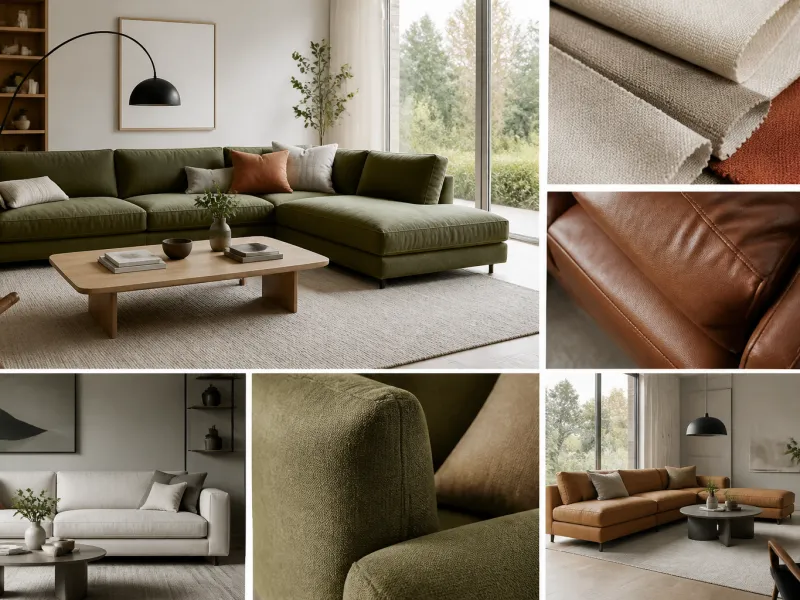 Sofa Buying Guide: How to Choose the Right SofaA step-by-step guide to buying a sofa, from measuring your room to checking frame, springs, foam and upholstery.
 Sofa Care and Cleaning: A Guide by MaterialHow to clean and care for your sofa by material, with cleaning codes, a care table and quick stain first aid.