
6 min read
Modular Sofa Guide: Sectionals, Planning and Moving
How modular sofa systems are built from separate units, how to plan a layout, and why they suit a home that keeps changing.
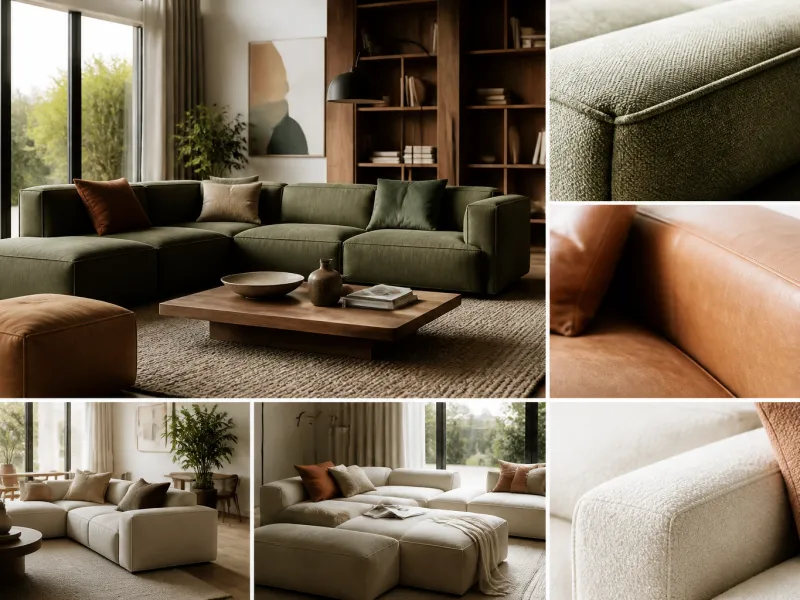
A modular sofa, sometimes called a sectional, is built from separate seat, corner, chaise and occasionally ottoman units that connect together rather than forming one fixed piece of furniture. That simple difference changes a great deal about how the sofa is delivered, how it can be arranged, and how well it adapts as a room or a household changes over time. This guide explains how modular systems are built, how to plan a configuration for your space, how the connectors work, and the honest pros and cons compared with a fixed sofa.
If you are choosing between a modular system and a fixed corner sofa, see our corner sofa guide, and for the wider range of shapes see sofa types.
01
How modular sofa systems are built
A modular sofa is made up of individual units, each a complete, self-supporting piece of furniture in its own right, typically including options such as an armless seat, a seat with one arm, a corner unit, a chaise, and sometimes a matching ottoman or console unit. Each module has its own legs or base and its own internal structure, and units are joined side by side using connectors, so the assembled sofa reads as one continuous piece despite being built from parts that can be separated again.
This construction is different from a fixed corner or sectional sofa, which is built as one continuous frame from the start and generally cannot be taken apart into separate usable pieces.
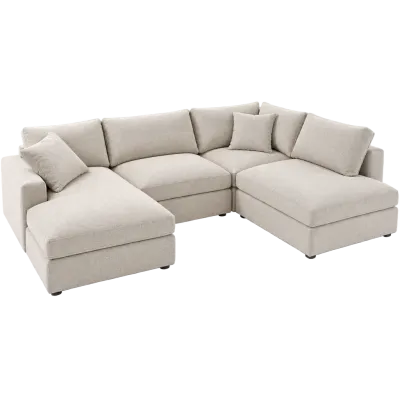 Matching productModular sofaAmazon →
02
Planning a configuration
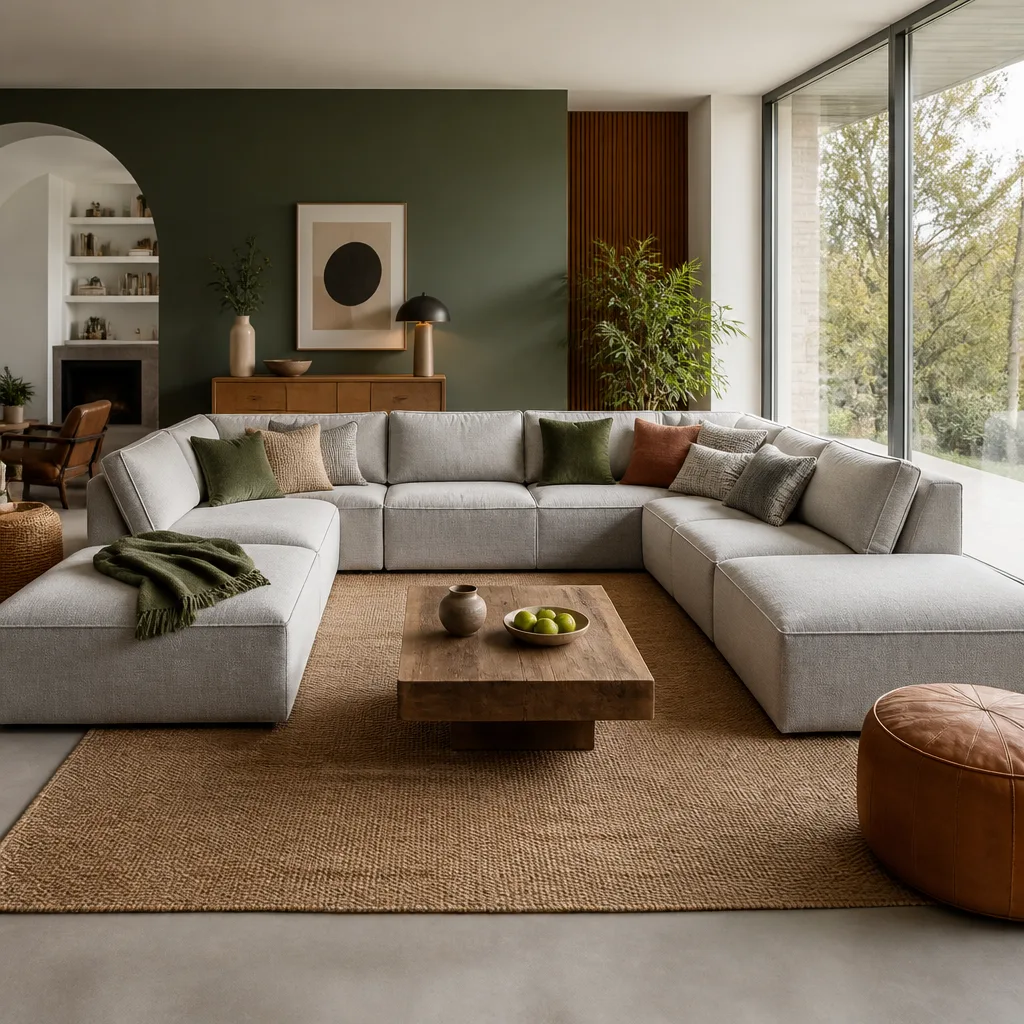
The appeal of a modular system is that the same set of units can usually be arranged in more than one way, so it is worth planning with some flexibility in mind rather than locking into a single fixed layout from day one. A few configurations that most modular ranges support:
- Straight run: units placed side by side in a single line, the simplest layout, useful against a long wall.
- L-shape: a straight run joined to a shorter return with a corner unit, similar in outline to a fixed corner sofa but rearrangeable.
- U-shape: two shorter runs joined by a central section, giving generous seating that faces inward, well suited to a large, open living space.
- Two separate sofas: some systems allow the units to be split entirely into two smaller, independent sofas, useful if a household later needs seating in two different rooms.
Before choosing a configuration, measure the room using the same principles as any sofa (see our sofa size guide), but also sketch out one or two alternative layouts the same units could form, since this is exactly the situation where a modular system earns its higher initial planning effort.
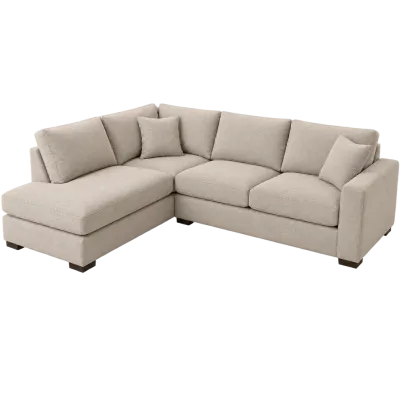 Matching productCorner sofaAmazon →
03
How connectors work
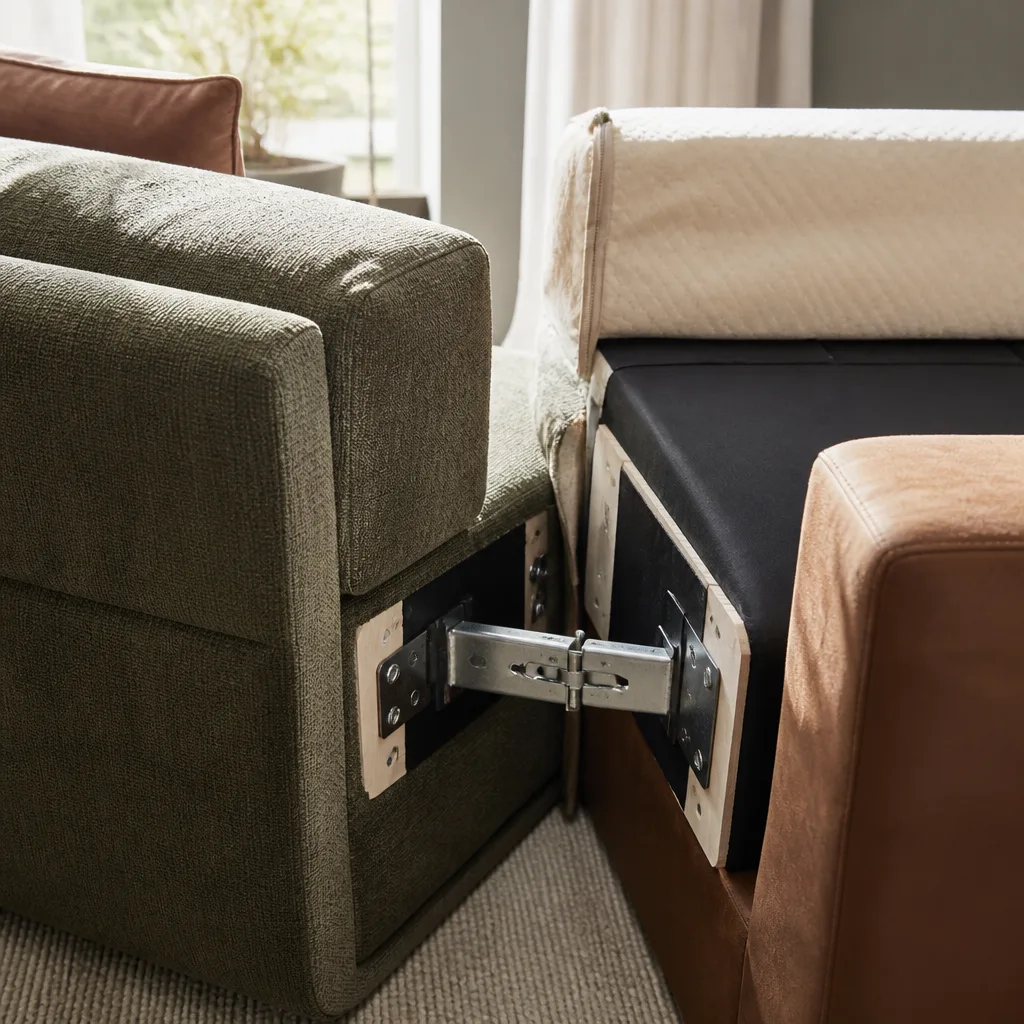
Most modular systems use one of a few common connector types, and understanding them helps when assembling, rearranging or troubleshooting a wobbly join.
| Connector type | How it works | Notes |
|---|---|---|
| Bracket and bolt | A metal bracket spans the underside of two adjoining units and is bolted or screwed into place | The most secure option, but needs a tool to assemble and disassemble |
| Clip or hook connector | Interlocking metal or plastic clips on the sides of each unit hook together | Quick to assemble and rearrange without tools, though can feel slightly less rigid than bolted brackets |
| Velcro or strap connector | A fabric strap or velcro strip joins units at the base | Simplest and fastest, common on lighter modular systems, generally holds units in place rather than locking them rigidly |
Whichever connector type a system uses, it is worth checking periodically that joins remain snug, especially in the first few months after assembly or after rearranging the layout, since cushions and frames can settle slightly with regular use.
04
Rearranging your modular sofa
One of the main practical benefits of a modular system is that a layout is not permanent. Rearranging typically involves lifting seat cushions to access the connectors underneath, releasing or unbolting the joins between the units you want to move, repositioning the units in the new layout, and reconnecting them. Depending on the connector type, this can take anywhere from a few minutes for a clip based system to a longer session with tools for a bolted one. It is worth keeping any tools or spare connector hardware that came with the sofa in a labelled bag or drawer specifically so a future rearrange, or a house move, does not turn into a search for the right screwdriver bit.
05
Moving house with a modular sofa
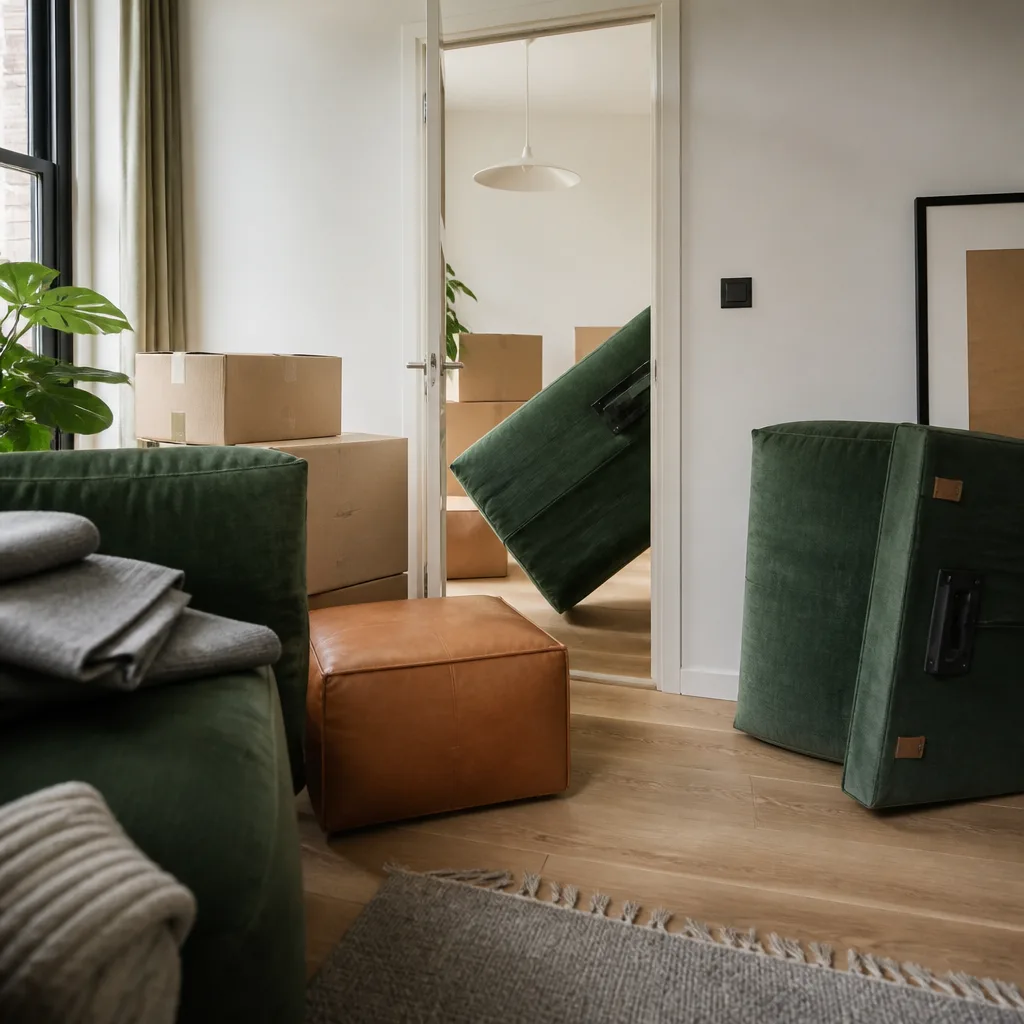
Modular sofas have a genuine practical advantage when moving home. Because each unit can be separated and carried individually, a modular sofa is usually far easier to get out of a tight doorway, down a narrow staircase, or into a small lift than an equivalent fixed corner sofa of the same overall size. It is also easier to adapt to a new room: a U-shape that suited a large open-plan living room can often be reconfigured into a smaller L-shape or straight run in a more modestly sized new home, using the very same units.
When moving, it helps to photograph the original configuration and label each unit (with a small tag on the underside is often least visible) before disassembly, so reassembly at the new address is straightforward, and to keep all connector hardware together in a clearly marked bag.
06
Pros and cons of modular sofas
| Advantages | Trade-offs |
|---|---|
| Flexible layouts that can change as the room or household changes | More initial planning needed to choose the right combination of units |
| Easier delivery and manoeuvring through tight doorways and stairs | Connector points can occasionally need tightening or checking over time |
| Units can often be added later to extend the sofa | Matching a new unit's fabric batch and cushion fill exactly to an older sofa is not always possible |
| Easier to move house or reuse in a different room shape | A fully joined, fixed sofa can feel marginally more solid underfoot on lower quality connector systems |
| Individual units can sometimes be replaced if damaged, rather than the whole sofa | Slightly higher cost in some ranges compared with an equivalent fixed sofa |
07
Choosing a modular system that suits you
If your household or living situation is likely to change over the coming years, a modular sofa is generally the more adaptable investment, since the same units can follow you through a move, a room redesign, or simply a change of mind about the layout. If you know exactly where the sofa will live for the long term and want the most solid, unified feel underfoot, a well-built fixed corner sofa is a perfectly reasonable choice too. Either way, checking the frame and cushion construction quality, not just the flexibility of the system, remains the most important factor in how comfortable and long-lasting the sofa will be. Our buying guide covers frame and cushion quality checks that apply to modular and fixed sofas alike.
08
Frequently asked questions
Can I add more units to a modular sofa later?
Many modular ranges allow additional units to be purchased later, though exact fabric matching depends on the manufacturer keeping the same fabric batch available, so it is worth asking about this when you first buy if you expect to extend the sofa in future.
Are modular sofas as sturdy as fixed corner sofas?
A well-built modular system with good quality bracket connectors is very sturdy in everyday use. Lower quality clip or strap connectors can feel slightly less rigid than a single fixed frame, so it is worth checking connector quality specifically if stability is a priority.
How long does it take to rearrange a modular sofa?
This depends on the connector type, ranging from a few minutes for a clip based system to a longer session with tools for a bracket and bolt system, though most households only rearrange occasionally rather than regularly.
Is a modular sofa easier to move house with?
Yes, generally. Because each unit separates and can be carried individually, modular sofas are usually easier to manoeuvre through doorways, stairs and lifts than an equivalent fixed sectional sofa of the same overall size.
What configurations can a modular sofa typically form?
Most systems can form at least a straight run, an L-shape and often a U-shape, and some allow the units to split into two entirely separate smaller sofas, though exact options depend on the specific range and units purchased.
Explore
Read next
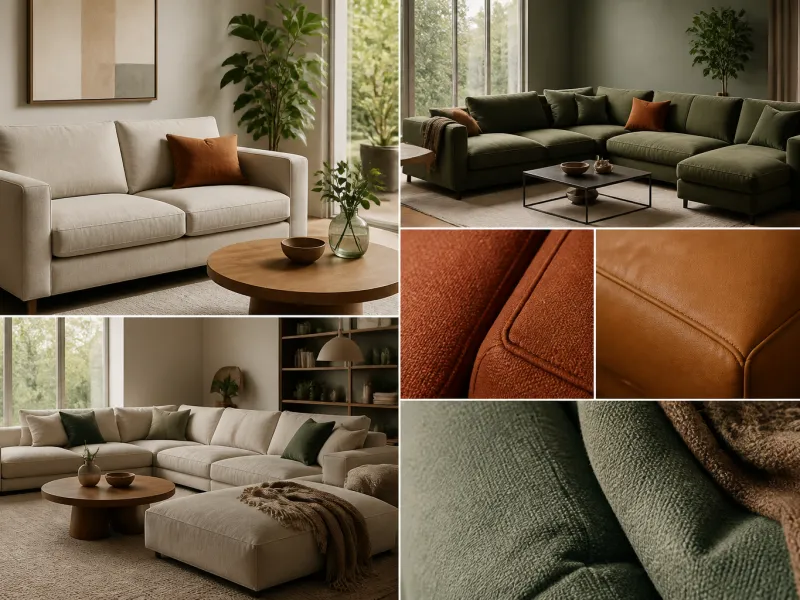 Sofa Types Explained: From Two Seater to SectionalAn overview of common sofa types, with a comparison table and links to deeper guides on sizing, materials and care.
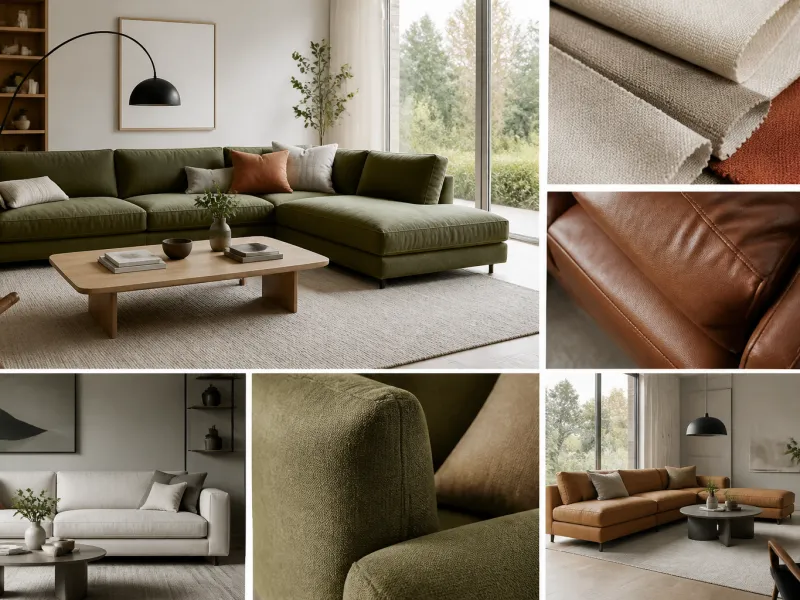 Sofa Buying Guide: How to Choose the Right SofaA step-by-step guide to buying a sofa, from measuring your room to checking frame, springs, foam and upholstery.
 Sofa Care and Cleaning: A Guide by MaterialHow to clean and care for your sofa by material, with cleaning codes, a care table and quick stain first aid.