
6 min read
Sofas for Small Living Rooms and Apartments
How to choose a sofa that fits a small living room comfortably, from loveseats and armless designs to smart measuring tricks.
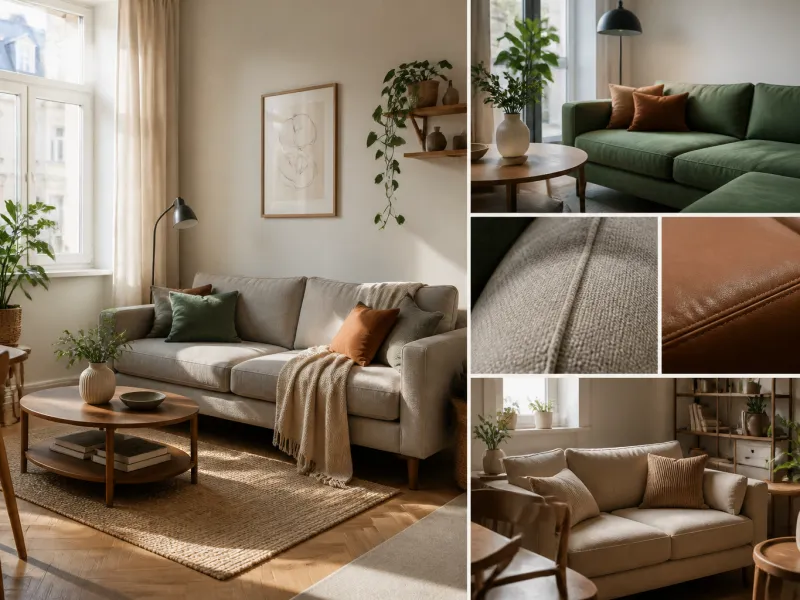
Furnishing a small living room comes with a particular challenge: the sofa is usually the single largest piece in the room, yet it also needs to leave enough space to move around comfortably. Choosing the right size, shape and colour of sofa can make a compact room feel considerably more open, while the wrong choice can make even a generously sized sofa feel cramped and overwhelming.
This guide covers the sofa types, proportions and small details that work best in limited space, along with practical tips for measuring before you buy.
01
Loveseats and compact two seaters
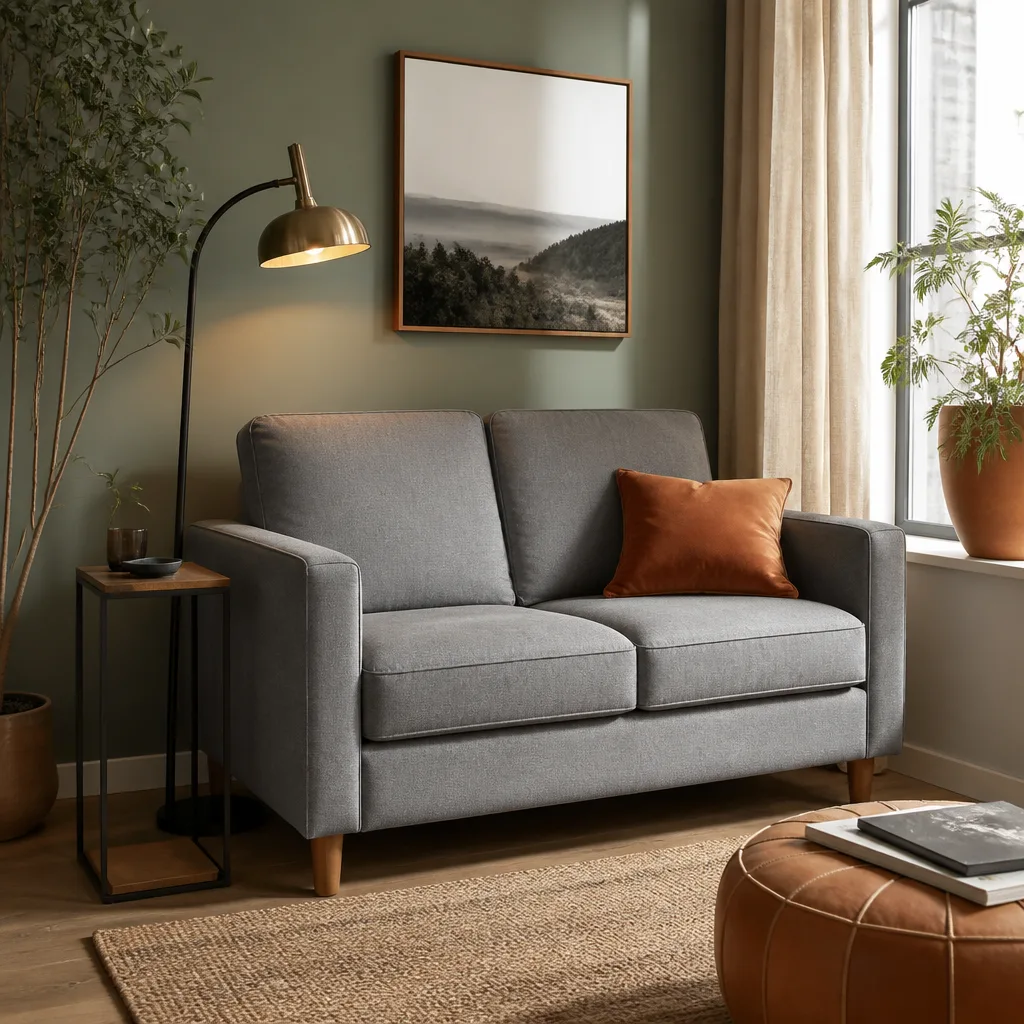
A loveseat, a compact sofa built for two people, is often the natural starting point for a small room. Typical widths run from about 130 to 160 cm (51 to 63 inches), considerably less than a standard three seater, which usually falls between 180 and 220 cm (71 to 87 inches).
Beyond the obvious space saving, a loveseat also tends to suit a small room proportionally better than a full three seater squeezed into the same footprint, since the smaller scale keeps sightlines open and leaves visible floor space around it, which reads as more generous than filling the same area with a single larger piece.
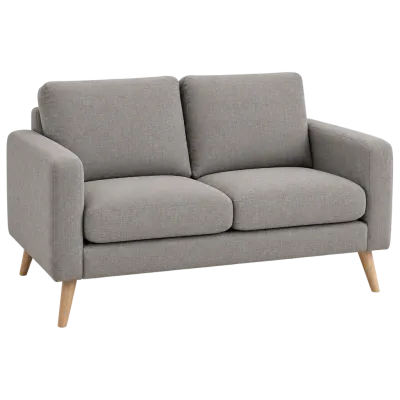 Matching productTwo-seater sofaAmazon →
02
Armless and slim arm designs
Arms take up more width than people often expect. A sofa with wide, padded arms can lose 20 to 30 cm (8 to 12 inches) of usable seat width compared with an armless or slim armed equivalent of the same overall footprint. For a small room, look for:
- Armless sofas: no side arms at all, maximising seat width, though they lose the side support an arm can offer for sitting sideways or resting an elbow.
- Slim track arms: narrow, low profile arms, typically 8 to 12 cm (3 to 5 inches) wide, which keep most of the width benefit of an armless design while still offering some side definition.
- Sofas without a wide skirted base: a skirt that reaches the floor can visually widen a sofa's footprint even when the seat itself is compact.
03
Raised legs and visual lightness
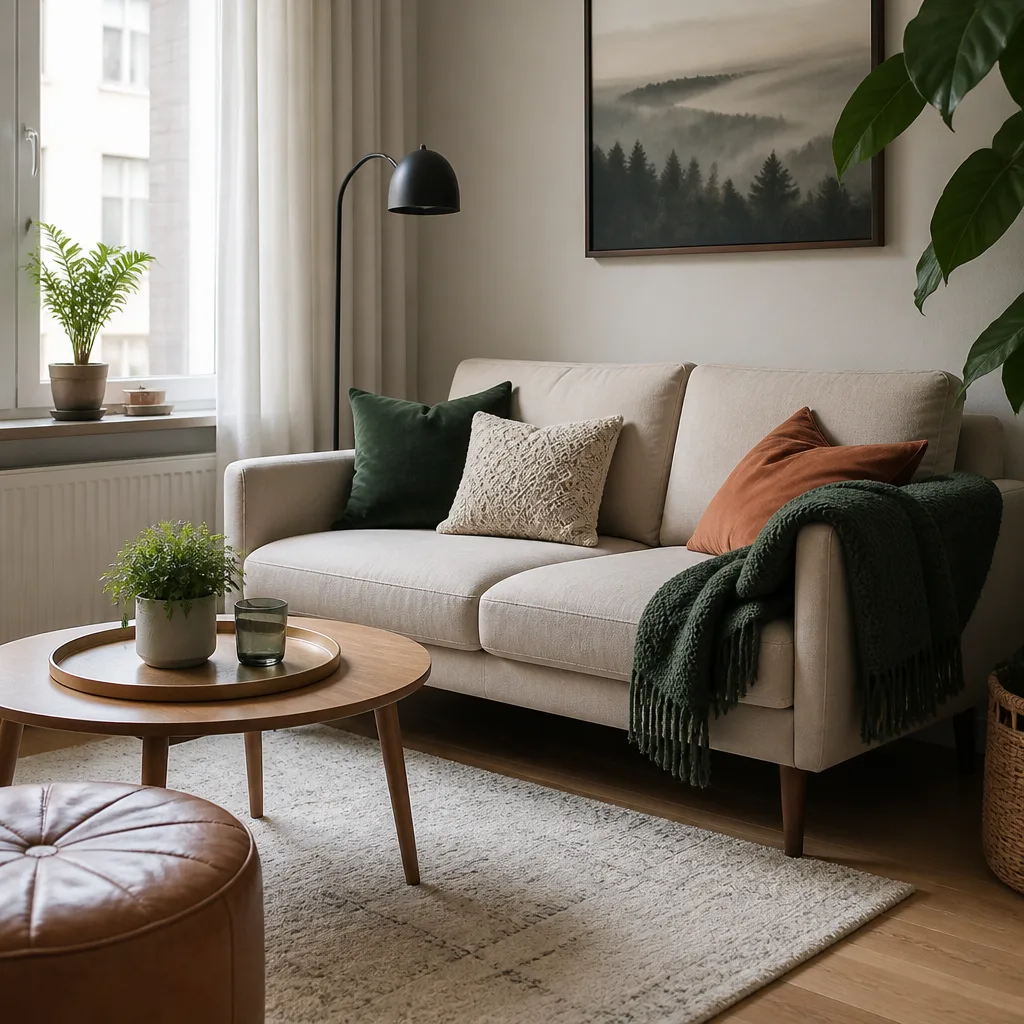
A sofa that sits on visible legs, rather than a skirt that reaches the floor, lets light and sightlines pass underneath it, which makes a small room feel noticeably more open. Slim, tapered legs in a light wood tone or slender metal reinforce this effect further, since they read as less visually heavy than a thick, dark leg or a fully upholstered base.
This same principle extends to other furniture in the room: choosing a coffee table, side tables and shelving with visible legs, rather than solid boxy bases, keeps the overall feeling of the room airy even when floor space is limited.
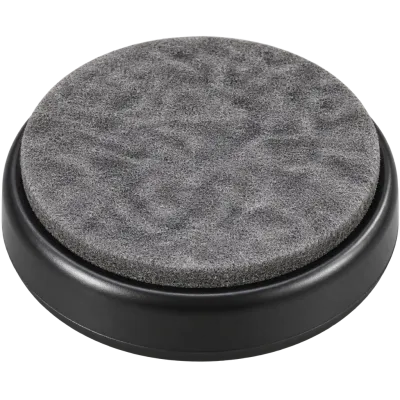 Matching productFurniture sliders and feet padsAmazon →
04
Colours that suit a small room
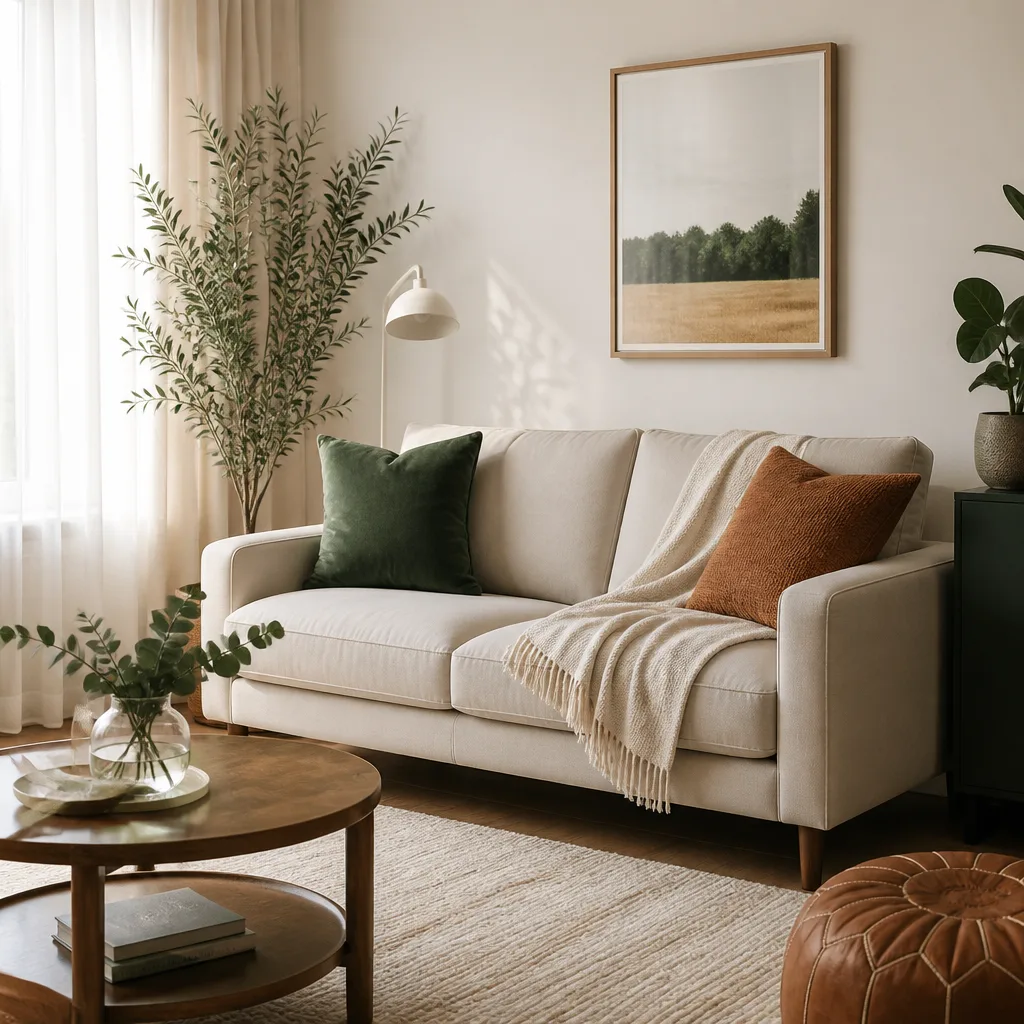
Light, muted colours, off white, pale grey, sand and soft blue among them, tend to make a sofa feel less dominant in a small space than a dark or highly saturated colour, since they blend more into the surrounding walls and floor rather than standing out as a solid block. This does not mean a small room cannot have a bold sofa, but a lighter base colour generally gives more flexibility and a more spacious feeling overall, particularly in a room with limited natural light.
| Choice | Effect in a small room |
|---|---|
| Light, neutral colour | Sofa recedes visually, room feels larger |
| Dark, saturated colour | Sofa becomes a strong focal point, can feel heavier |
| Visible slim legs | Light passes underneath, floor feels more open |
| Skirted, floor length base | Sofa reads as visually larger and heavier |
05
Sofa beds and storage for dual purpose rooms
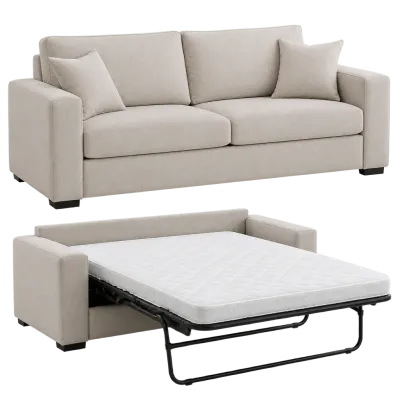
In a small apartment, a living room often needs to double as a guest room or occasional workspace. A well chosen sofa bed lets a room serve both functions without dedicating permanent space to a spare bed. Look for a mechanism that folds out smoothly without needing to move the sofa away from the wall first, and a mattress with a reasonable amount of built in padding, since thinner sofa bed mattresses can feel less comfortable over a full night's sleep.
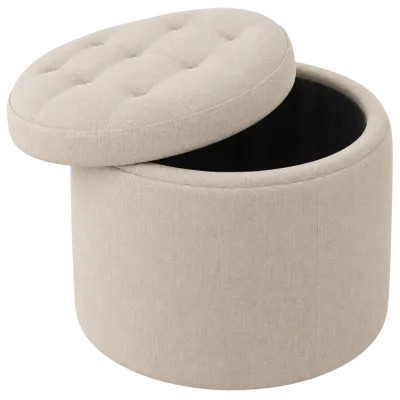
Storage focused designs help too: a sofa with a lift up seat base, or an ottoman used alongside it, gives somewhere to keep bedding, cushions or everyday clutter out of sight, which matters more in a small room where storage space is already limited.
 Matching productSofa bedAmazon →
06
Measuring before you buy
Careful measuring prevents the single most common small space mistake: buying a sofa that is technically the right size for the room but cannot actually get through the door, stairwell or corridor to reach it. Before ordering, measure and note down the width, height and depth of every doorway, hallway and staircase the sofa will need to pass through, as well as the sofa's own boxed dimensions, not just its finished size.
In the room itself, mark out the sofa's footprint on the floor with tape, and check that at least 60 to 90 cm (24 to 35 inches) of clear walking space remains between the sofa and other furniture or walls. Leaving this much circulation space makes a far bigger difference to how spacious a small room feels than choosing a slightly smaller sofa alone.
07
Tricks for making a small living room work
A few further tricks help a compact living room feel more comfortable:
- Float the sofa slightly away from the wall rather than pushing it flush, which can sometimes make a room feel more considered and less like storage against a boundary.
- Use a sofa's back as a natural room divider in an open plan space, rather than adding a separate partition.
- Choose one or two multi-functional pieces, such as a storage ottoman or a nesting side table, rather than several single purpose items.
- Keep cushions to two or three per seat, since piling on too many reduces usable seating space in a room where every centimetre counts.
For further ideas on arranging furniture in a compact space, see our living room ideas, and browse sofa types to compare shapes suited to smaller footprints.
 Matching productStorage ottomanAmazon →
08
Frequently asked questions
What is the smallest practical sofa size?
A compact loveseat starting around 130 cm (51 inches) wide is usually the smallest practical option that still offers comfortable seating for two people, though single armchairs or a modular single seat unit can go smaller still.
Should I choose an armless sofa for a small room?
An armless or slim arm sofa is a good choice if maximising seat width matters most, though a small amount of arm definition can still be worth keeping for comfort and a more finished look.
Do dark sofas always look wrong in small rooms?
Not always. A dark sofa can work well in a small room with good natural light and a mostly light, uncluttered surrounding palette, though as a general rule lighter colours make a compact space feel more open.
Is a sofa bed less comfortable than a regular sofa?
A good quality sofa bed can be just as comfortable to sit on as a regular sofa, since the difference lies mainly in the folding mechanism and mattress, so checking both the seating comfort and the mattress quality before buying is worthwhile.
How do I know if a sofa will fit through my door?
Measure your narrowest doorway or stairwell width and height, then compare it against the sofa's boxed or diagonal dimensions, which most retailers list alongside the finished size, rather than relying on the finished size alone.
Explore
Read next
 Sofa Types Explained: From Two Seater to SectionalAn overview of common sofa types, with a comparison table and links to deeper guides on sizing, materials and care.
 Sofa Buying Guide: How to Choose the Right SofaA step-by-step guide to buying a sofa, from measuring your room to checking frame, springs, foam and upholstery.
 Sofa Care and Cleaning: A Guide by MaterialHow to clean and care for your sofa by material, with cleaning codes, a care table and quick stain first aid.