
5 min read
Sofa Cushions Explained: Fillings, Firmness and Care
What is inside a sofa cushion, how different fillings feel and last, and how to care for and refresh them over time.

The cushions on a sofa do most of the work of making it comfortable, yet they are often the least understood part of the whole piece. Two sofas can look almost identical from across a showroom and feel completely different to sit on, purely because of what is inside the seat and back cushions.
This guide explains the main seat cushion fillings in use today, how back cushions differ from seat cushions, how firmness is chosen, how long different fillings typically last, and how to care for cushions so they stay comfortable for longer.
01
Seat cushion fillings
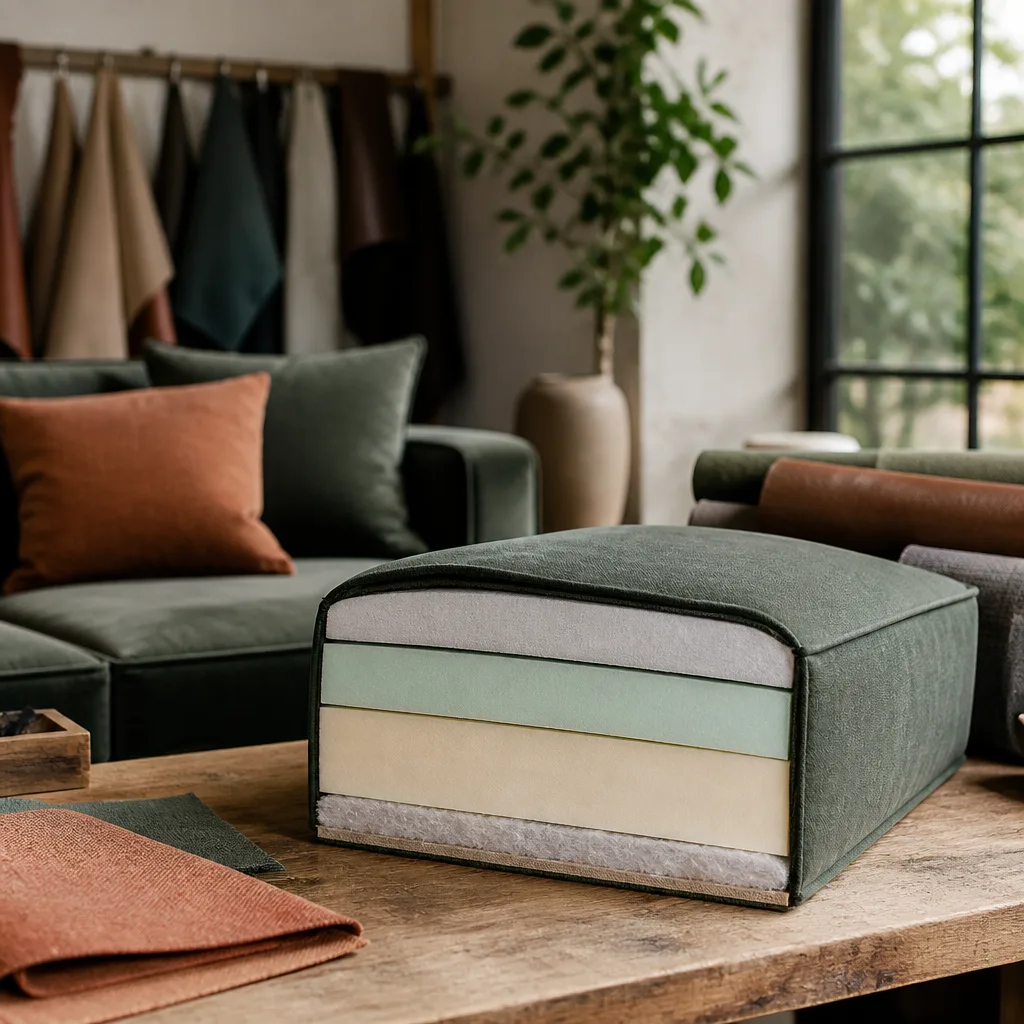
Most seat cushions are built from one of a small number of core filling types, sometimes combined for a specific feel.
| Filling | Feel | Typical lifespan |
|---|---|---|
| Standard polyurethane foam | Supportive, springs back quickly, firmness varies by density | Around 7 to 10 years with regular use, depending on density |
| Cold foam (high resilience foam) | Firmer support, more consistent give, slower to flatten | Often 10 years or more, a durable premium option |
| Memory foam | Slow moving, moulds closely to the body, softer sink in feel | Around 8 to 10 years, sometimes used as a top layer over firmer foam |
| Pocket springs | Bouncy, responsive, good airflow | Very durable, often 15 years or more when well made |
| Feather and fibre wraps | Soft, plush, needs regular plumping | Feather content needs more maintenance but can last many years if cared for |
Foam density, measured in kilograms per cubic metre, is the key figure to check when comparing foam cushions: a higher density foam generally holds its shape and support for longer than a lower density foam of the same thickness, even if the two feel similarly soft when new.
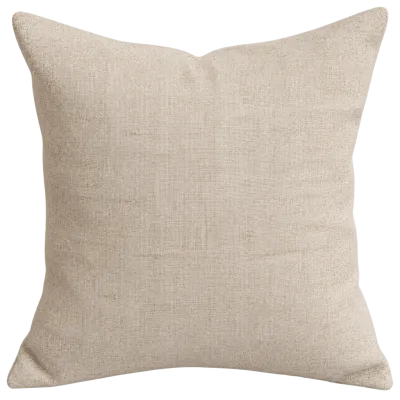 Matching productScatter cushionsAmazon →
02
Combination fillings
Many mid-range and premium sofas combine two or more fillings in a single cushion to balance support and softness. A common construction uses a firmer foam or pocket spring core, wrapped in a layer of softer fibre or feather, sometimes finished with a channel stitched cover that holds the wrap in place. This gives the supportive base of a firmer core with the plush, sink in surface feel of a softer wrap, at the cost of needing more regular plumping to keep that surface layer evenly distributed.
03
Back cushion types
Back cushions generally use softer, more forgiving fillings than seat cushions, since they support the upper body rather than bearing full sitting weight. Two broad approaches are common:
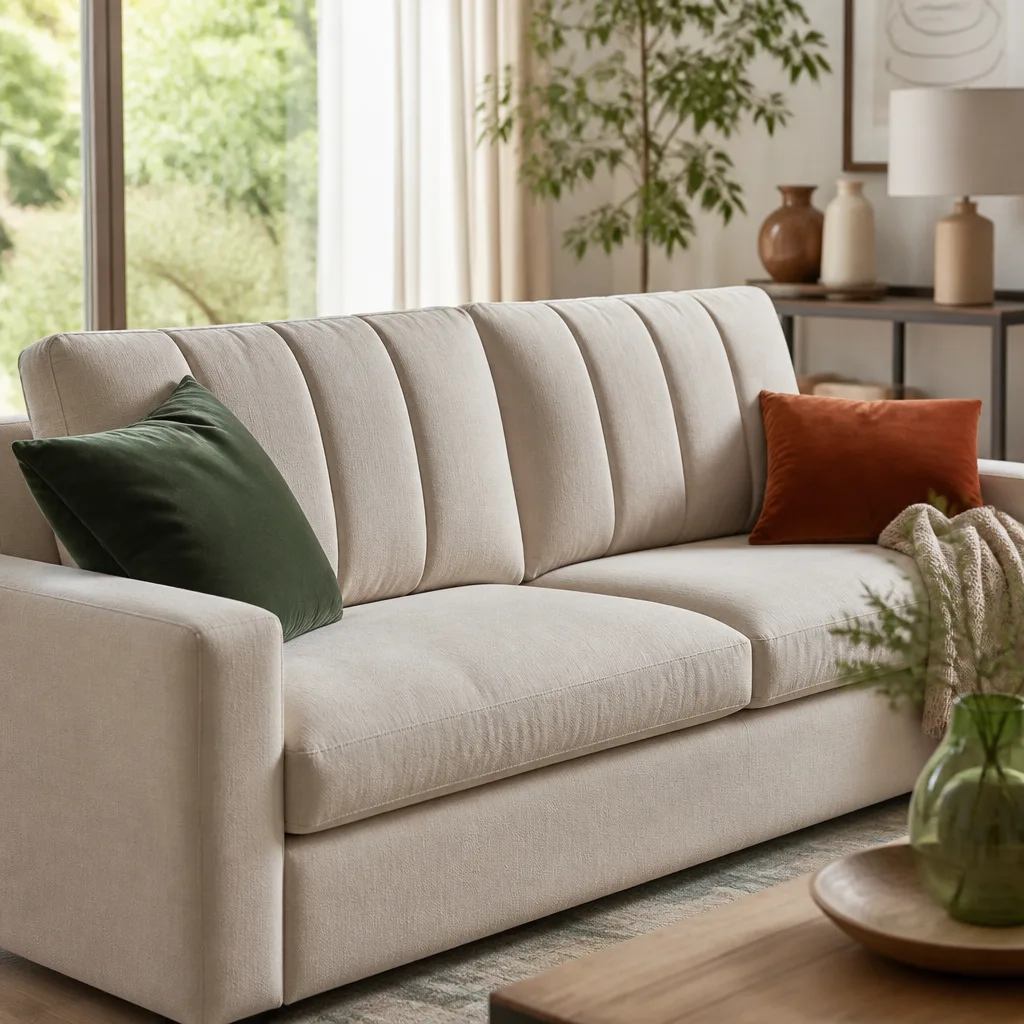
- Loose back cushions: separate cushions, usually filled with feather, fibre or a feather and foam mix, that can be plumped, rearranged and eventually replaced independently of the sofa frame.
- Tight back construction: the back cushioning is fixed and upholstered directly onto the frame, giving a neater, more tailored look with less need for daily plumping, though it cannot be replaced as easily if it eventually softens.
Loose back cushions suit anyone who likes an informal, plumped up look and does not mind a little daily fluffing, while a tight back suits a tidier, lower maintenance aesthetic. Some sofas combine the two approaches, using a tight back for structure with a few loose scatter cushions added on top purely for extra comfort and styling, which gives some of the softness of loose cushions without the full maintenance commitment.
04
Choosing the right firmness
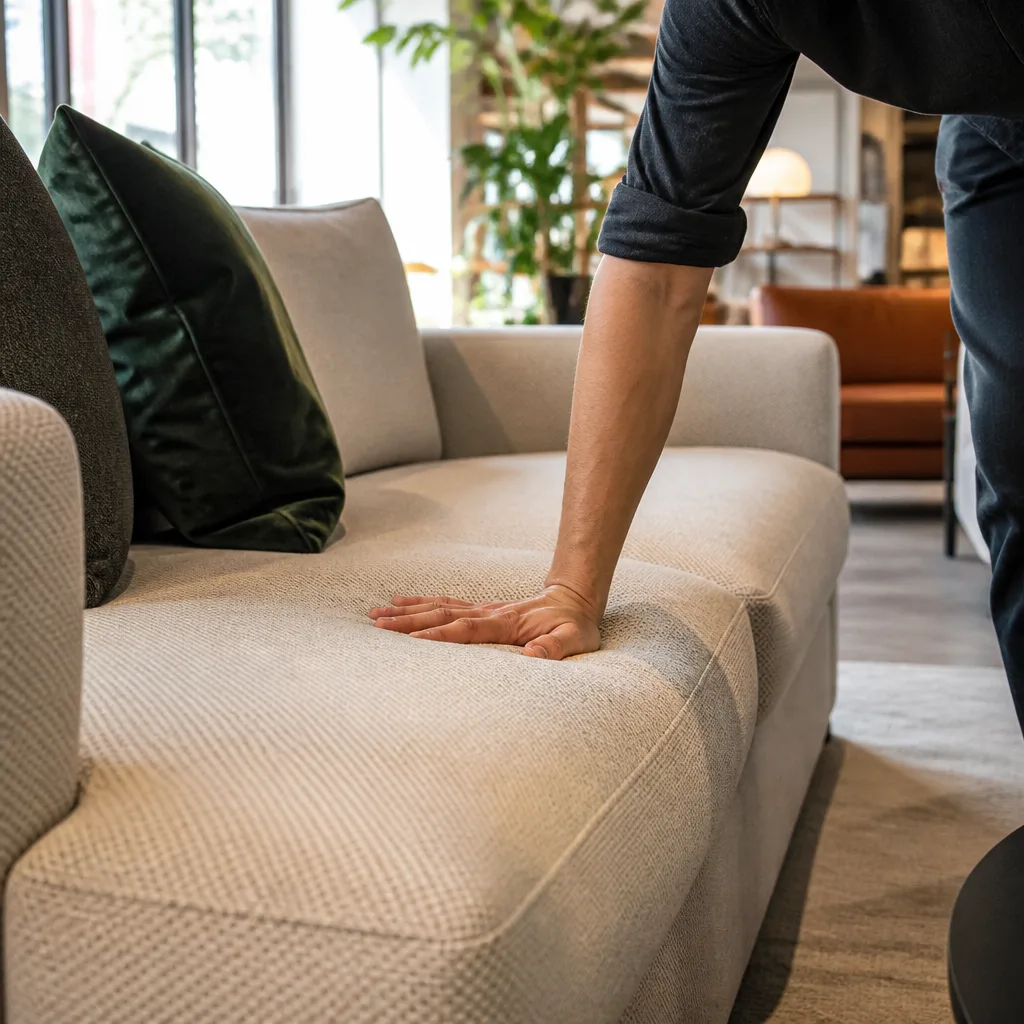
Firmness is a personal preference, but a few general points help when comparing sofas. A firmer seat cushion generally suits people who prefer to sit upright, find it easier to get up from a firmer seat, or use the sofa for long periods of focused activity such as reading or working. A softer, deeper cushion suits more relaxed lounging and a sense of sinking into the seat, though very soft cushions can feel less supportive for a full evening of sitting and can be harder to rise from for some people.
Sitting on a sofa for at least ten minutes in a showroom, rather than a brief perch, gives a much better sense of how a cushion firmness will feel over a longer period, since some foams feel firmer in the first moment and then settle into a different level of support.
05
How long cushions last and when to replace foam
Even a good quality cushion filling will eventually lose some of its original loft and support. Signs that a cushion is due for attention include a noticeable dip or hollow where you usually sit, cushions that no longer spring back within a few seconds of standing up, or a seat that feels distinctly lower than when new.
In many cases, a sofa's frame and springs remain in excellent condition long after the foam has softened, which means replacing the foam inserts, rather than the whole sofa, can restore comfort at a fraction of the cost. Foam suppliers can usually cut replacement inserts to match an existing cushion's size and cover, and choosing a higher density than the original often extends the next replacement interval considerably.
06
Cushion care
A little regular care goes a long way toward keeping cushions comfortable for longer:
- Plump and rotate loose cushions daily or every few days, redistributing feather and fibre filling evenly and reducing permanent dips.
- Flip reversible seat cushions periodically, if the design allows it, to even out wear between the two sides.
- Vacuum cushion covers regularly and air cushions out of direct sunlight occasionally to reduce moisture build up.
- Avoid consistently sitting in exactly the same spot on a sofa built for multiple seats, since this concentrates wear on a single cushion rather than spreading it evenly.
- Follow the care label for washing removable covers, and check whether cushion inserts themselves can be spot cleaned or need a specialist clean.
For more on the fabrics that cover these cushions, see our guide to sofa fabrics, and for the seat structure underneath the cushions themselves, our buying guide covers spring systems and frame construction in more detail.
07
Frequently asked questions
What is the most durable seat cushion filling?
Pocket springs, often combined with a foam or fibre topper, tend to offer the longest lifespan among common fillings, though high density cold foam is also a very durable choice for a purely foam based cushion.
Can I replace just the foam in my sofa cushions?
In most cases yes, provided the outer cover and cushion casing are in good condition, replacing worn foam inserts is a practical and cost effective way to refresh an otherwise sound sofa.
Why do feather cushions need daily plumping?
Feather and fibre fillings move and settle with body weight more than foam does, so regular plumping redistributes the filling evenly and keeps the cushion looking and feeling full.
Is memory foam a good choice for a sofa seat?
Memory foam offers a soft, close moulding feel that many people find comfortable, particularly for lounging, though it can feel slower to move in and warmer than other foams, so it suits some sitting styles better than others.
How firm should a sofa cushion be?
There is no single correct firmness, since it depends on personal comfort and how you use the sofa, but sitting for several minutes in a showroom, rather than judging firmness by a brief touch, gives the most reliable sense of what will suit you.
Explore
Read next
 Sofa Types Explained: From Two Seater to SectionalAn overview of common sofa types, with a comparison table and links to deeper guides on sizing, materials and care.
 Sofa Buying Guide: How to Choose the Right SofaA step-by-step guide to buying a sofa, from measuring your room to checking frame, springs, foam and upholstery.
 Sofa Care and Cleaning: A Guide by MaterialHow to clean and care for your sofa by material, with cleaning codes, a care table and quick stain first aid.