
6 min read
Recliner Sofas: Manual, Power and How to Choose
How manual and power recliner sofas differ, what to check before buying, and who gets the most benefit from one.
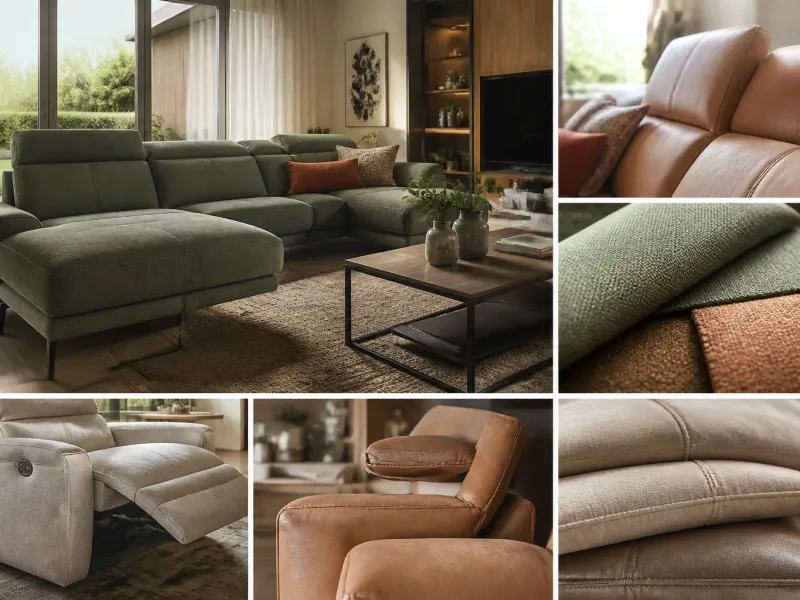
A recliner sofa lets you tilt the backrest and raise a footrest at the touch of a lever or button, turning an ordinary seat into a fully supported lounging position. Once associated mainly with a single armchair tucked in a corner, recliner mechanisms are now built into full two and three seater sofas, sectionals and even loveseats, making reclining comfort part of the main seating in a living room.
This guide compares manual and power recliner mechanisms, explains wall-hugger designs, headrests and USB charging, and looks at durability and who benefits most from this type of sofa.
01
Manual vs power recliners
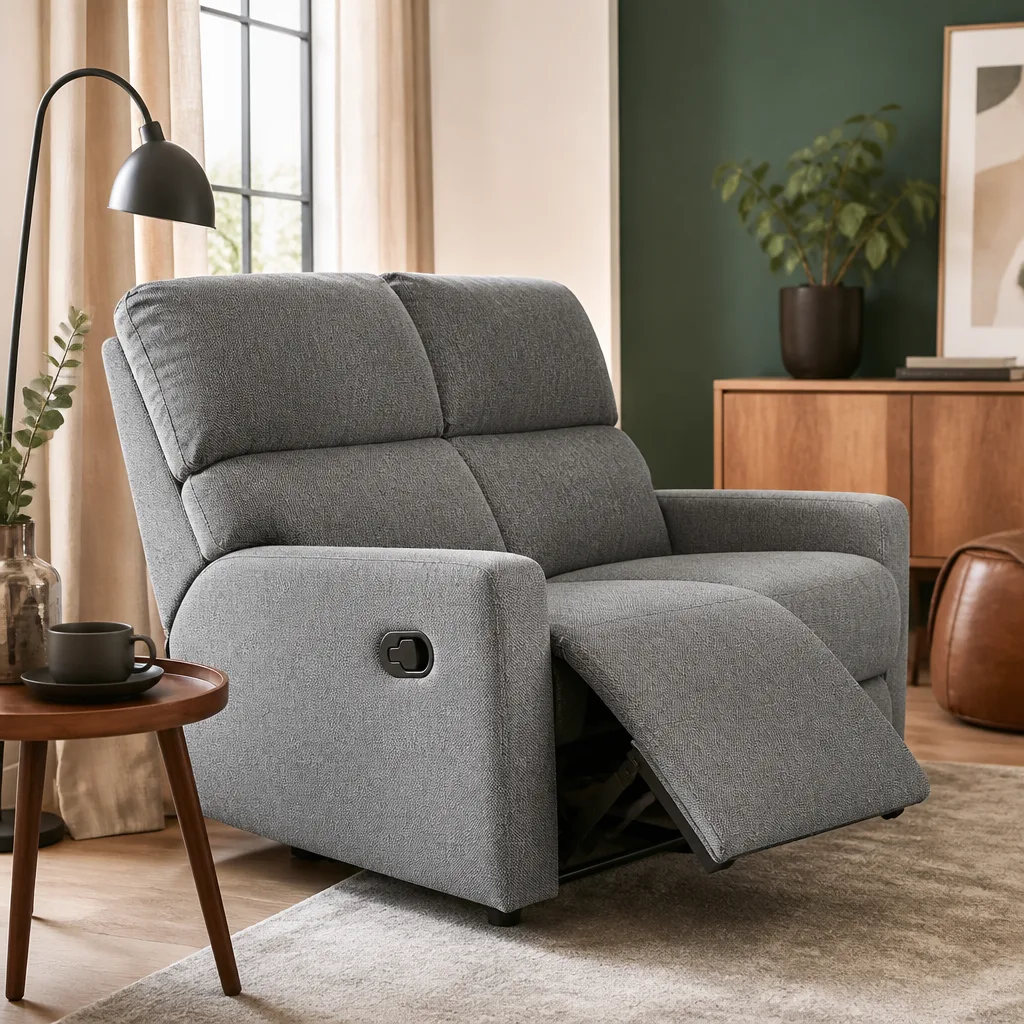
Manual recliners are operated by a side lever or handle, usually positioned along the outer edge of the seat. Pulling or pushing the lever releases a spring loaded mechanism that extends the footrest and reclines the back. Manual mechanisms are mechanically simple, which generally means fewer parts to fail, a lower price point, and no dependence on a power outlet.
Power recliners use an electric motor, controlled by a button or small panel built into the arm of the sofa, to move the footrest and backrest smoothly and quietly. Because there is no lever to pull, power recliners are easier to operate for people with limited grip strength or mobility, and many models allow the seat to stop at any position along its range, rather than the more limited set positions typical of manual mechanisms.
The trade off is that power recliners need a nearby power socket, cost more to buy, and rely on an electric motor and control unit that can eventually need servicing or replacement, whereas a manual mechanism has no electronics to go wrong.
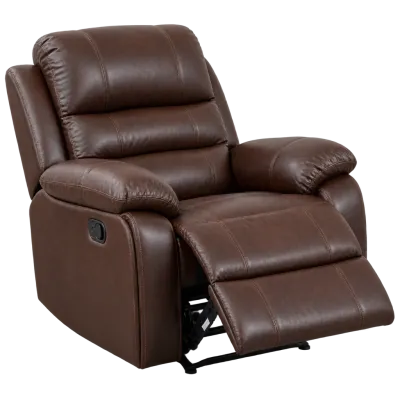 Matching productRecliner sofaAmazon →
02
Wall-hugger designs
A standard recliner needs clearance behind it to tilt back, typically 30 to 45 cm (12 to 18 inches) depending on the model. A wall-hugger, sometimes called a wall away or zero clearance recliner, uses a different mechanism that slides the whole seat forward as it reclines, rather than tilting backward into empty space. This lets the sofa sit much closer to a wall, often within just a few centimetres, while still reaching a full reclined position.
Wall-hugger mechanisms are particularly useful in smaller rooms or where a sofa needs to sit against a wall for layout reasons, though they do require a little floor space in front of the sofa to slide into as they recline, so it is worth checking both dimensions before buying.
03
Headrests, USB ports and other features
Beyond the basic recline function, many modern recliner sofas add further adjustment and convenience features:
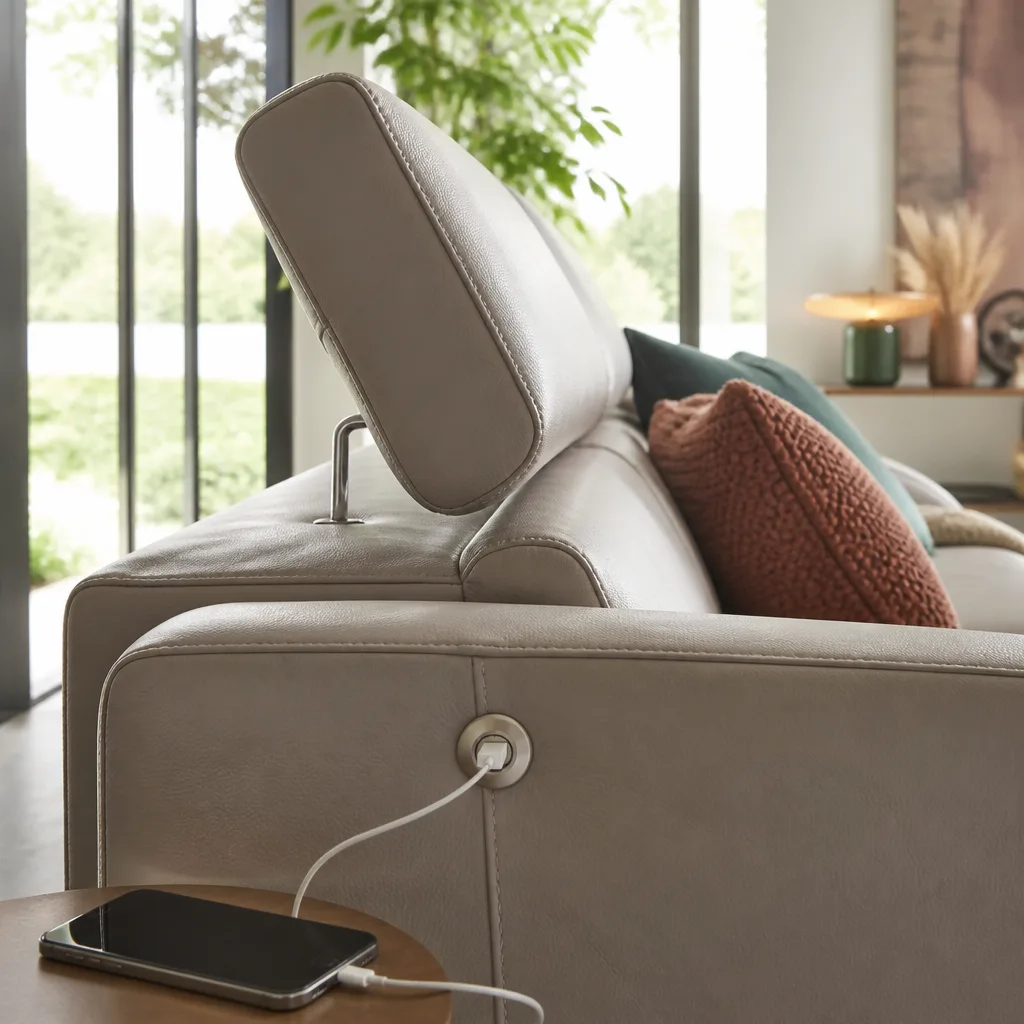
- Adjustable headrests: an independent headrest that tilts forward, useful for supporting the neck whether you are sitting upright or fully reclined.
- Power lumbar support: an inflatable or motorised bladder in the lower back area that adjusts firmness independently of the recline position.
- USB and USB-C charging ports: built into the arm or console, useful for charging a phone or tablet without trailing cables.
- Console storage: a fold down or fixed centre section with cup holders and a small storage compartment, common on sectional recliner sofas.
- Memory settings: on higher end power recliners, a saved position that the seat returns to at the touch of a button.
These features add convenience but also add cost and complexity, so it is worth thinking about which ones you would genuinely use regularly rather than choosing the most heavily featured model by default.
04
Space planning behind and around a recliner sofa
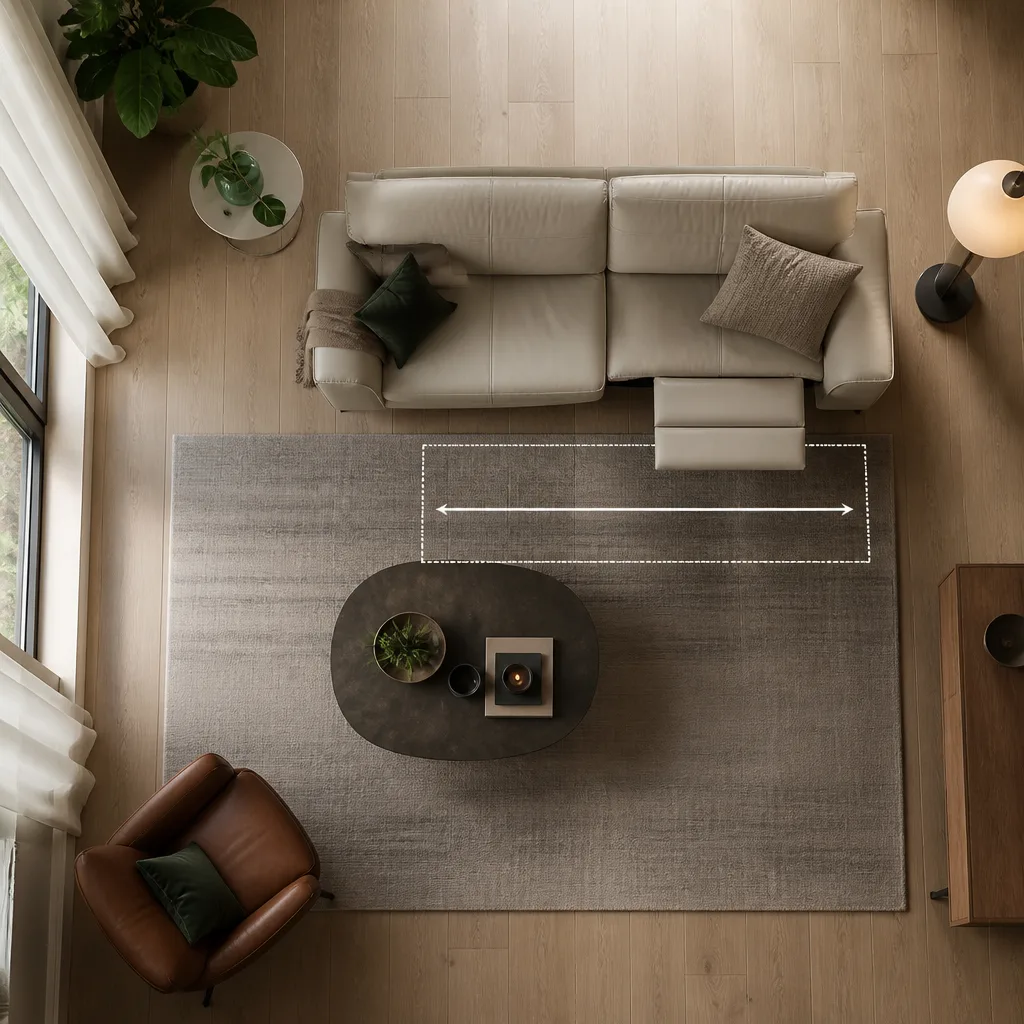
Because a recliner sofa changes shape and footprint as it moves, it needs more careful space planning than a fixed sofa. Beyond the clearance behind a standard recliner, allow enough room in front for the footrest to extend fully, generally at least 90 to 100 cm (35 to 39 inches) of open floor space, so the sofa does not end up blocked by a coffee table when reclined.
Measuring the room, the doorway and any stairs or corridors the sofa needs to pass through before ordering is particularly important with recliner sofas, since the mechanisms add depth and weight compared with an equivalent fixed sofa. Our general sofa size guide covers measuring a room and a sofa in more detail.
05
Mechanisms and durability
| Aspect | Manual | Power |
|---|---|---|
| Moving parts | Spring and lever mechanism | Electric motor, gears, control unit, wiring |
| Typical lifespan of mechanism | Long, few components to wear out | Good quality motors last many years, but electronics can eventually fail |
| Ease of use | Requires a firm pull or push | Effortless button operation |
| Power dependency | None | Requires a nearby socket |
| Repair complexity | Generally simple | May need a specialist for motor or control board issues |
Whichever mechanism you choose, the frame underneath matters just as much as the recline action itself. A solid hardwood or reinforced steel frame supports the additional stress that a moving mechanism places on the sofa's structure far better than a lighter weight frame designed only for static seating. Our buying guide has more on assessing frame quality generally.
It is also worth asking how a recliner sofa is upholstered around the moving sections. Leather and tightly woven, low pile fabrics tend to cope better with the folding and stretching that happens at the seams during reclining than a loosely woven or heavily textured fabric, which can show wear at these stress points sooner.
06
Who benefits most from a recliner sofa
Recliner sofas suit a wide range of households, but a few groups tend to benefit particularly:
People who spend long periods sitting, whether working from home, reading or watching television, often find that the ability to change position throughout the day reduces stiffness compared with a fixed seat. Older adults and anyone with limited mobility or strength often find power recliners considerably easier to use than manual levers, and a wall-hugger power recliner can bring this comfort into a smaller room. Families who want flexible seating for both upright activities and relaxed lounging also benefit from a recliner sofa or sectional, since different family members can adjust their own section independently.
07
Frequently asked questions
Do recliner sofas need to be plugged in permanently?
Power recliners need to be near a socket whenever you want to use the motorised function, though most are only drawing power briefly while moving, and many include a backup manual release in case of a power cut.
Are recliner sofas as comfortable for sitting upright as a normal sofa?
A well made recliner sofa should feel just as comfortable in the upright position as a standard sofa, since the seat cushions and back support are designed for both positions, though it is worth sitting in a showroom model in the upright position specifically to check this.
Can a recliner sofa go against any wall?
A standard recliner needs clearance behind it to tilt back, so check the manufacturer's specified clearance distance, or choose a wall-hugger design if the sofa needs to sit close to a wall.
How much maintenance does a power recliner need?
Very little day to day, though keeping the tracks and moving joints free of dust and avoiding overloading the footrest helps the mechanism run smoothly for longer.
Is a manual or power recliner better value?
Manual recliners are generally the more budget friendly option with fewer parts to maintain, while power recliners offer easier operation and finer position control at a higher price, so the better value option depends on how much you will use and benefit from the extra convenience.
Explore
Read next
 Sofa Types Explained: From Two Seater to SectionalAn overview of common sofa types, with a comparison table and links to deeper guides on sizing, materials and care.
 Sofa Buying Guide: How to Choose the Right SofaA step-by-step guide to buying a sofa, from measuring your room to checking frame, springs, foam and upholstery.
 Sofa Care and Cleaning: A Guide by MaterialHow to clean and care for your sofa by material, with cleaning codes, a care table and quick stain first aid.